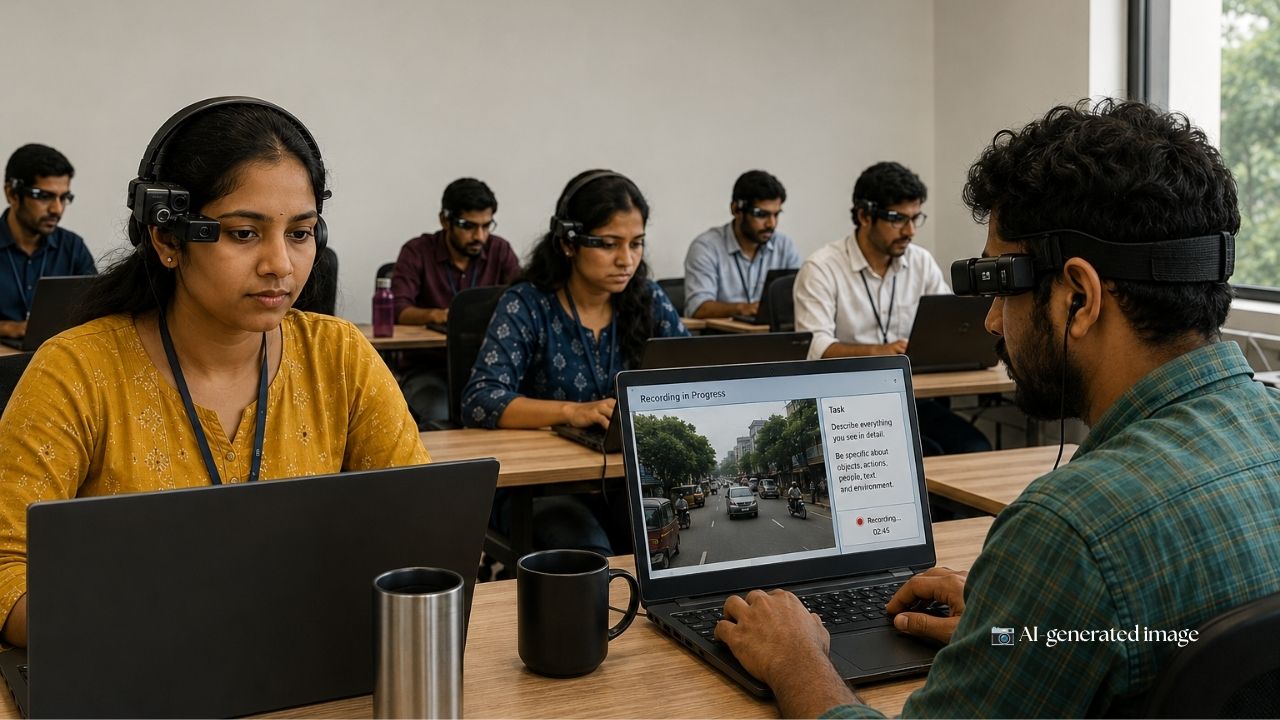
India’s gig workers and factory labourers are becoming an important part of the global AI industry. Many workers are now wearing body cameras, smart glasses, and headgear to help train humanoid robots and Physical AI systems.
The technology records real human movements that robots cannot learn properly through computer simulations alone.
How the AI Training Works
Unlike AI chatbots that learn from internet text, robotics AI needs to learn physical actions and movement. These systems are called Large Behaviour Models (LBMs). Workers wear devices fitted with RGB-D cameras. These cameras capture colour, depth, and motion data from a first-person view.
The recordings track small human actions like hand movement, grip strength, wrist motion, and finger timing.
Read More | Lost Your Job to AI? China Says That’s Not Legal—Here’s Why
Tasks Being Recorded
The AI companies are collecting data from daily work activities, including folding clothes, stitching garments, stacking items, mopping floors, washing dishes, etc. The goal is to help robots perform these tasks more naturally in homes, factories, and warehouses.
Startups Behind the Trend
Several startups are leading this growing business. Human Archive, a Y Combinator-backed company, has reportedly deployed more than 1,000 camera headsets. The company works with domestic, hotel, and restaurant service firms to gather training data for robotics labs linked to companies like OpenAI and Nvidia.
Pronto, a Bengaluru-based home services platform, launched a pilot project where gig workers wore outward-facing body cameras while working inside customer homes. Egolab AI is collecting first-person footage from garment factory workers at suppliers such as Pearl Global for robotics projects worldwide.
Read More | India-France Science and Space Partnership Gains Momentum with Focus on AI, Spaceflight and Innovation
Privacy and Job Loss Concerns
The trend is also facing criticism. Some workers said they were not clearly informed that the recordings would be used to train AI systems that may later replace human jobs. Privacy concerns have also increased, especially in projects where workers record video inside private homes. Reports say India’s IT Ministry has raised questions over such practices.
Critics also argue that low-paid workers are helping build the technology that could eventually reduce their own employment opportunities in the future.

Indrani Priyadarshini is a journalist and editorial professional specialising in technology, artificial intelligence, smart cities, green energy, and digital transformation. With over four years of experience in tech journalism and digital media, she is known for turning complex industry developments into clear, engaging, and insightful stories. Her expertise spans reporting, editorial strategy, digital publishing workflows, and in-depth coverage of emerging technologies shaping the future.