NVIDIA has partnered with Japanese AI company Noetra Corp. to build the world’s first national AI factory dedicated to physical AI. The new facility will provide the computing power needed to develop advanced AI models for robotics, manufacturing, logistics, healthcare, telecommunications and other industries.
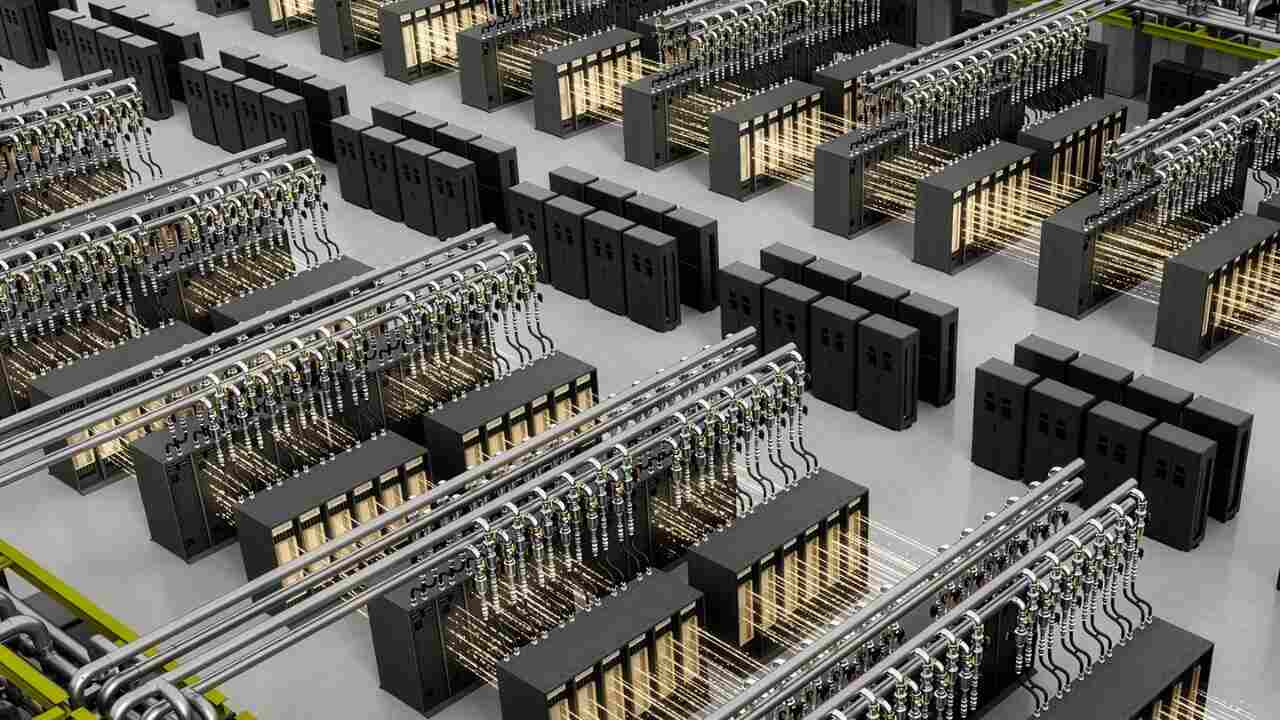
The AI factory will be powered by 13,750 NVIDIA Vera CPUs and 27,500 NVIDIA Rubin GPUs. It will be built using NVIDIA Vera Rubin NVL72 racks based on the NVIDIA DSX platform and connected through NVIDIA Spectrum-X Ethernet networking. The infrastructure is designed to train and deploy large multimodal AI models that can understand text, images, video and real-world data.
Read More | Nvidia Wants Humanoid Robots to Work Safely Alongside Humans
The project will serve as the computing backbone for Japan’s FRONTia Project, a national initiative launched by the Ministry of Economy, Trade and Industry (METI). The programme aims to develop reliable multimodal foundation models that can support robotics, digital twins, AI agents and other physical AI applications.
Japan’s strong manufacturing ecosystem will play a key role in the project. By combining industrial data with advanced AI infrastructure, the initiative aims to create foundation models that can be used across a wide range of real-world industries.
Noetra said the pretrained weights of its multimodal foundation models will be made available to Japanese AI developers and businesses. Developers will also gain access to NVIDIA technologies including Nemotron, Cosmos, Isaac GR00T open models and NeMo libraries. This is expected to speed up the development of AI agents and intelligent robotic systems.
Read More | ‘100% Liquid Cooling’: NVIDIA Unveils Technology That Could Nearly Eliminate Data Centre Water Use
NVIDIA founder and CEO Jensen Huang said Japan transformed global manufacturing and is now building the AI infrastructure for the next industrial era. He added that NVIDIA is proud to work with Japan and its industrial partners to create AI factories that will support innovation and economic growth.
Japan’s Minister of Economy, Trade and Industry, Ryosei Akazawa, said the FRONTia Project will become the centre of the country’s physical AI ecosystem. He said the collaboration between Japanese companies and global technology leaders such as NVIDIA will help develop highly reliable multimodal AI models while addressing global industrial challenges.
Noetra CEO Hironobu Tamba said building physical AI requires massive computing power, high-quality data and collaboration across industries. He added that the company will work with partners in Japan and around the world to develop multimodal foundation models and expand the use of physical AI across Japanese industries.
Read More | Nvidia Unveils RTX Spark: The AI Chip Set to Transform Personal Computers
The AI factory will be built on NVIDIA’s Vera Rubin DSX architecture and will provide 140 megawatts of data centre capacity. It will also use NVIDIA Spectrum-X networking and BlueField DPUs to improve AI performance, increase efficiency and support large-scale AI training. According to NVIDIA, the DSX platform serves as a reference architecture for AI factories, helping organisations deploy AI infrastructure faster while improving reliability, energy efficiency and computing performance.
The announcement also supports Japan’s broader AI Robotics Strategy, released earlier this year. The strategy aims for Japan to secure more than 30% of the global AI robotics market by 2040, representing an estimated $133 billion opportunity.
Read More | NVIDIA Unveils 24/7 AI Agents for Telecom Networks as Industry Pushes Towards Autonomous Operations
As the AI factory expands, it will be capable of training trillion-parameter AI models, giving researchers, developers and businesses in Japan access to one of the world’s most advanced AI computing environments. The project is expected to strengthen Japan’s position in industrial AI, robotics and next-generation intelligent manufacturing.

Indrani Priyadarshini is a journalist and editorial professional specialising in technology, artificial intelligence, smart cities, green energy, and digital transformation. With over four years of experience in tech journalism and digital media, she is known for turning complex industry developments into clear, engaging, and insightful stories. Her expertise spans reporting, editorial strategy, digital publishing workflows, and in-depth coverage of emerging technologies shaping the future.