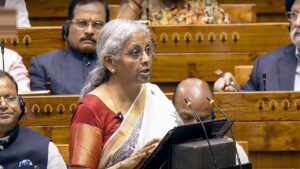
Amid an Opposition walkout, the Rajya Sabha on August 10, passed the Bankers’ Books Evidence Bill and returned the Taxation and Other Laws (Amendment) Bill to the Lok Sabha. A key issue during the debate was the proposed change linked to digital payments. Opposition parties raised concerns that the amendment could eventually put a cost on UPI transactions and increase the financial burden on small traders and consumers.
Read More | Government May Levy Merchant Charges on UPI Payments Above ₹2,000; Proposal Under Review
Finance Minister Nirmala Sitharaman, however, clarified that UPI payments will continue to remain free for consumers. She said the proposed legal change does not introduce a tax or transaction fee on people using UPI for everyday payments.
UPI Users Will Not Have to Pay a Transaction Fee
Sitharaman said consumers would continue to use UPI without paying a transaction charge. This includes routine digital payments such as sending money to another person or paying a shopkeeper through UPI.
The clarification is important because the proposed amendment has led to concerns that users could soon be charged every time they make a UPI payment. According to the Finance Minister, that is not what the amendment does. UPI has remained free for consumers since its launch in 2016, and there is currently no proposal to impose a direct fee on users.
Read More | UPI Offline Payments: NPCI Plans Tap-and-Pay Transactions Without Internet
What Is Merchant Discount Rate or MDR?
The main change being discussed relates to the Merchant Discount Rate (MDR). MDR is a fee associated with processing digital payments and is generally paid by merchants or other participants in the payments ecosystem rather than directly by consumers.
Sitharaman said a future MDR framework could be introduced for certain categories of merchant transactions. However, no final decision has been taken on the categories, transaction threshold or rate.
The proposed amendment is therefore an enabling provision. It creates a legal framework under which the government can specify which electronic payment modes or transactions should remain protected from charges. It does not itself announce a new UPI fee.
Most Everyday Merchant Payments Expected to Stay Free
The government has indicated that the vast majority of ordinary, low-value merchant transactions would continue to remain free for consumers. This means a person paying for groceries at a neighbourhood store, buying something from a small vendor or transferring money to another individual should not suddenly see an additional UPI fee because of the amendment.
Read More | Smaller UPI Players Raise Concerns Over NPCI’s UPI Meta Plan
Any future MDR, if introduced, would be limited to specified merchant categories and transactions above a threshold that is yet to be decided. The exact structure will become clearer only after the government notifies the relevant framework and the payments ecosystem works out the details.
NPCI to Play a Key Role in MDR Framework
Sitharaman said that if an MDR framework is considered, the UPI and Services Steering Committee headed by the National Payments Corporation of India (NPCI) would play a role in deciding whether MDR should be introduced and what its scope and structure should be.
This means the amendment does not automatically result in a charge being applied to UPI transactions. A separate process will determine which transactions, if any, could attract MDR.
Why the Issue Matters for Small Businesses
The debate around UPI charges is significant because digital payments have become a major part of everyday commerce in India. Small merchants, street vendors and local businesses have increasingly adopted UPI because it allows them to accept digital payments without relying on cash.
Sitharaman highlighted the contribution of small merchants to the growth of UPI and financial inclusion. India processed 2,366 crore UPI transactions worth around ₹29.9 trillion in July 2026, showing the scale at which the payment system is now being used.
Read More | UPI Payments May Attract MDR as Government Seeks Power to Levy Charges
Because of this scale, even a small change in the cost of processing UPI payments could have a wider impact on businesses and the digital payments ecosystem.
Will UPI Become Chargeable for Consumers?
For now, no. The government has made it clear that consumers will not be charged a transaction fee for routine UPI payments under the proposed change. The amendment creates the possibility of a future MDR framework for selected merchant transactions, but it does not end free UPI payments for consumers today.
The next step will be to see whether the government notifies specific transaction categories for MDR and what recommendations are made by NPCI’s UPI and Services Steering Committee. For everyday UPI users, there is currently no need to expect an additional charge when making routine digital payments.

Indrani Priyadarshini is a journalist and editorial professional specialising in technology, artificial intelligence, smart cities, green energy, and digital transformation. With over four years of experience in tech journalism and digital media, she is known for turning complex industry developments into clear, engaging, and insightful stories. Her expertise spans reporting, editorial strategy, digital publishing workflows, and in-depth coverage of emerging technologies shaping the future.