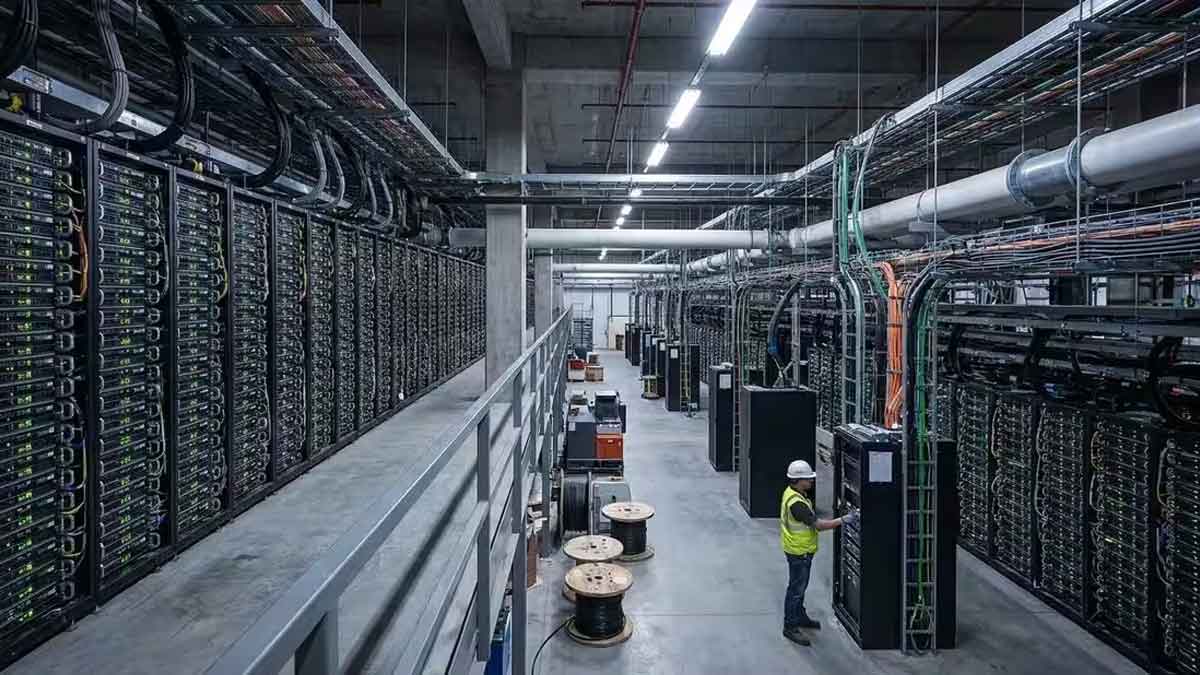
The global AI infrastructure build-out is struggling to keep pace with demand, pushing hyperscalers toward alternative ways to power large computing facilities, according to a Goldman Sachs report.
Delays in connecting new projects to electricity grids are emerging as a key constraint, while spending on AI infrastructure continues to rise sharply.
Goldman Sachs expects global hyperscaler capital expenditure to exceed $760 billion in 2026, or about $2 billion a day. US hyperscalers are expected to account for the largest share of that spending, alongside capital deployment by Middle Eastern sovereign wealth funds, European industrial players and Asian regional supply chains.
Also Read: Great Nicobar May Host Green AI Data Centre Amid ₹92,000 Cr Infra Push
AI Infrastructure Faces Rising Power and Equipment Constraints
The scale of demand is also visible in the race for computing capacity. Google has agreed to pay SpaceX about $920 million a month, totalling nearly $30 billion through mid-2029, for access to around 110,000 Nvidia GPUs, according to the report.
At the same time, power networks are facing a sharp increase in requests to connect new data centre projects. Grid operators are receiving applications with energy requirements far above the levels used in their planning models three years ago.
That has contributed to multi-year backlogs for electrical distribution equipment from major manufacturers, adding another hurdle for companies trying to bring AI computing capacity online.
Also Read: Samsung Plans Floating AI Data Centres on Ships as Demand for Computing Power Surges
Islanded Data centres Emerge as an Alternative
The delays are helping drive interest in fully islanded data centres, facilities that can operate without relying on a conventional grid connection.
Goldman Sachs said such projects were rare a year ago. Over the past 12 to 18 months, however, they have moved from an edge case to a credible development route for hyperscale AI infrastructure.
The report said the shift is driven by both prolonged grid interconnection delays and the economics of AI computing. Estimates now suggest that one-third of future data centre capacity could be islanded.
The development highlights a growing gap between the speed at which AI computing demand is expanding and the time required to build the power infrastructure needed to support it.
The next phase of the AI infrastructure race may depend as much on access to reliable power as on chips and computing capacity. For hyperscalers, getting around grid bottlenecks is increasingly becoming part of the data centre strategy.

Samarjit Kaur is a journalist and communications professional covering technology & emerging digital trends. With a focus on clarity and context, she reports on developments shaping industries and governance. When not reporting, she chooses to plug-in and relax on her playlists and plan her next bucket-list trips!