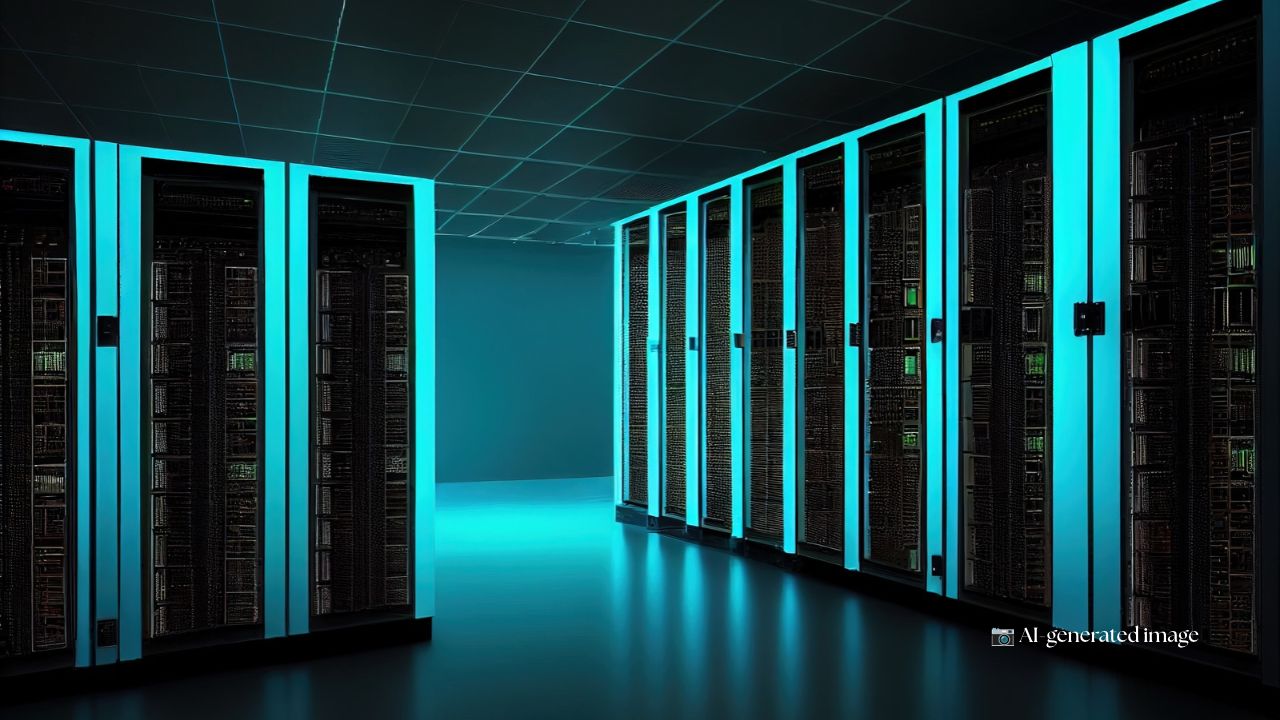
Mumbai is no longer just India’s financial capital. It is increasingly becoming the country’s digital infrastructure capital too. The city’s data centre market is expanding rapidly as banks, cloud providers, technology companies and AI businesses demand more computing capacity. According to CII-CBRE data, Mumbai’s share of installed data centre capacity across India’s Tier-I markets could rise from 52% in the first half of 2026 to 68% by 2030. Its installed capacity is expected to more than double from around 0.9 GW to more than 2 GW during the period.
Read More | India Is the World’s Best Location for Data Centres, Says Piyush Goyal
That growth is changing more than Mumbai’s technology landscape. It is beginning to influence where land is developed, how power infrastructure is planned, where new connectivity is built and how cities think about water and other essential resources.
Why is Mumbai becoming India’s biggest data centre hub?
Mumbai has several advantages that make it difficult for other Indian cities to displace it. Its position along major international submarine cable routes gives the city strong global connectivity. It is also close to major internet exchange points and has a large concentration of financial institutions and businesses that generate significant demand for data storage, cloud services and high-performance computing.
These advantages have already made Mumbai India’s largest data centre market. By September 2025, India had around 1,530 MW of operational data centre capacity, with Mumbai accounting for about 53%. Chennai, Delhi-NCR and Bengaluru followed with 20%, 10% and 7%, respectively. Together, the four cities accounted for nearly 90% of India’s total capacity.
How are data centres changing Mumbai’s urban development?
A data centre may look like another large industrial or commercial building from the outside. Its infrastructure requirements, however, are very different. These facilities need large amounts of reliable electricity, high-speed fibre connectivity, cooling systems, backup power and suitable land. That means the surrounding urban infrastructure becomes just as important as the building itself.
Read More | SpaceX and Nvidia Plan to Put AI Data Centres in Orbit
As a result, areas with access to power, fibre networks and large land parcels are becoming increasingly attractive for data centre development. Chandivali, Navi Mumbai, the Thane-Belapur corridor and Panvel are among the areas seeing capacity growth, supported by their land availability, connectivity and power infrastructure.
This is gradually changing the traditional idea of what drives urban development. In the past, commercial growth was closely tied to offices, housing, retail and transport. Increasingly, digital infrastructure is becoming another factor shaping where investment flows.
Is Mumbai’s data centre growth only about technology?
No. It is also becoming a real estate and infrastructure story. Data centres require large, specialised facilities and supporting infrastructure. Developers therefore need access to suitable land, electricity connections, fibre networks and transport links.
Read More | Semiconductor Equipment Market Set to Reach $344 Billion by 2032 as AI, Data Centres Drive Chip Demand
JLL’s India data centre market research estimates that the sector could reach 1.8 GW of capacity by the end of 2027, while requiring significant additional real estate to support new capacity. Mumbai and Chennai are expected to account for a substantial share of new additions. This makes data centres an increasingly important part of India’s commercial real estate and infrastructure investment landscape.
What does the data centre boom mean for Mumbai’s power supply?
Power could become one of the biggest factors determining how quickly Mumbai’s data centre market can grow. Unlike conventional offices, data centres operate around the clock. Even a short interruption can affect critical digital services, so operators require highly reliable electricity and extensive backup systems.
The scale of planned investment is significant. CBRE reported that India attracted around $38 billion in data centre investment commitments during the first half of 2026, reflecting growing interest in AI-ready infrastructure.
Read More | Vizag Data Centres Won’t Affect City’s Water Supply, Says Nara Lokesh
For Mumbai, this means urban planning cannot treat data centres as isolated real estate projects. Grid capacity, substations, transmission networks and renewable power procurement will increasingly have to be considered alongside new digital infrastructure.
What about water consumption?
Data centres generate substantial heat because thousands of servers can operate continuously. Cooling systems are therefore essential, and some cooling technologies can require significant amounts of water.
This becomes particularly important in cities where water resources are already under pressure. A recent Moody’s assessment identified Mumbai, Hyderabad and Chennai among India’s major data centre markets facing water-stress concerns. It also highlighted the need for cooling technologies, alternative water sources and better planning to manage these risks.
For Mumbai, the challenge is therefore not simply how many data centres the city can accommodate. It is whether their growth can be supported without putting additional pressure on essential urban services.
Could data centres reshape the Mumbai Metropolitan Region?
As land becomes more expensive and difficult to assemble within Mumbai, large-scale digital infrastructure can move towards areas with greater land availability and suitable power and connectivity. That is already visible across parts of the Mumbai Metropolitan Region.
The shift could create new infrastructure corridors around Navi Mumbai, Thane, Panvel and other emerging locations. These areas could attract not only data centres but also fibre networks, power infrastructure, construction activity and specialised services.

Indrani Priyadarshini is a journalist and editorial professional specialising in technology, artificial intelligence, smart cities, green energy, and digital transformation. With over four years of experience in tech journalism and digital media, she is known for turning complex industry developments into clear, engaging, and insightful stories. Her expertise spans reporting, editorial strategy, digital publishing workflows, and in-depth coverage of emerging technologies shaping the future.