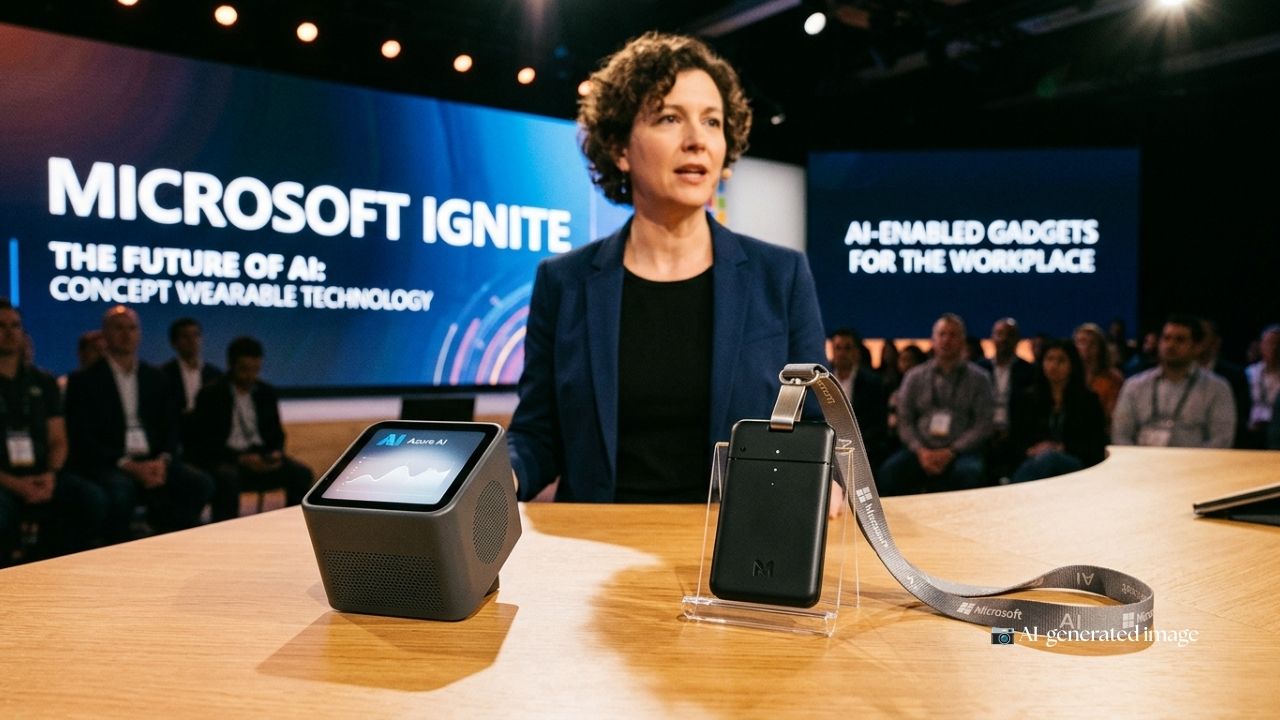
Microsoft has revealed two new AI-powered device concepts at its annual developer conference. The products are designed to help people who use AI tools regularly at work. The first device is a small cube-shaped gadget with a touchscreen and voice controls that sits on a desk. The second is a wearable AI badge that can be worn around the neck or attached to a belt.
Read More | Smart Rings or Smartwatches? What India’s Wearable Market Is Leaning Towards in 2026
Both devices allow users to quickly connect with AI agents and access AI-powered work tools without using a laptop or desktop computer.
Project Solara for Future Workplaces
The devices are part of a project called Project Solara. Microsoft CEO Satya Nadella described them as a new type of technology device. The company said only a few hundred employees are currently testing the products. Microsoft has not announced when they will become available to the public.
AI Agents at the Centre
The devices are built to work with AI agents, which are software tools that can perform tasks on behalf of users. These agents are already widely used by technology workers for tasks such as writing software code. The wearable badge is designed for people who need quick AI access while moving around.
Built-In Camera Raises Attention
The AI badge includes a small camera. During a demonstration, Microsoft executive Steven Bathiche used the badge to take photos of an audience and send the images for review. Microsoft said the camera helps AI agents better understand a user’s surroundings and take actions based on what they see.
Microsoft Returns to Wearable Technology
This is not Microsoft’s first attempt at wearable devices. The company previously developed the HoloLens mixed-reality headset. However, Microsoft ended HoloLens production in 2024 after years of development and testing challenges.
Read More |Google Brings Back Smart Glasses With Gemini AI
Other technology companies are also revisiting wearable devices. Google recently announced new smart glasses, while Meta continues to expand its AI-powered eyewear products.
Privacy Concerns Remain
As AI devices with cameras become more common, privacy concerns continue to grow. Similar products, including Meta’s AI glasses, have faced questions about how images and videos are recorded, stored, and used.

Indrani Priyadarshini is a journalist and editorial professional specialising in technology, artificial intelligence, smart cities, green energy, and digital transformation. With over four years of experience in tech journalism and digital media, she is known for turning complex industry developments into clear, engaging, and insightful stories. Her expertise spans reporting, editorial strategy, digital publishing workflows, and in-depth coverage of emerging technologies shaping the future.