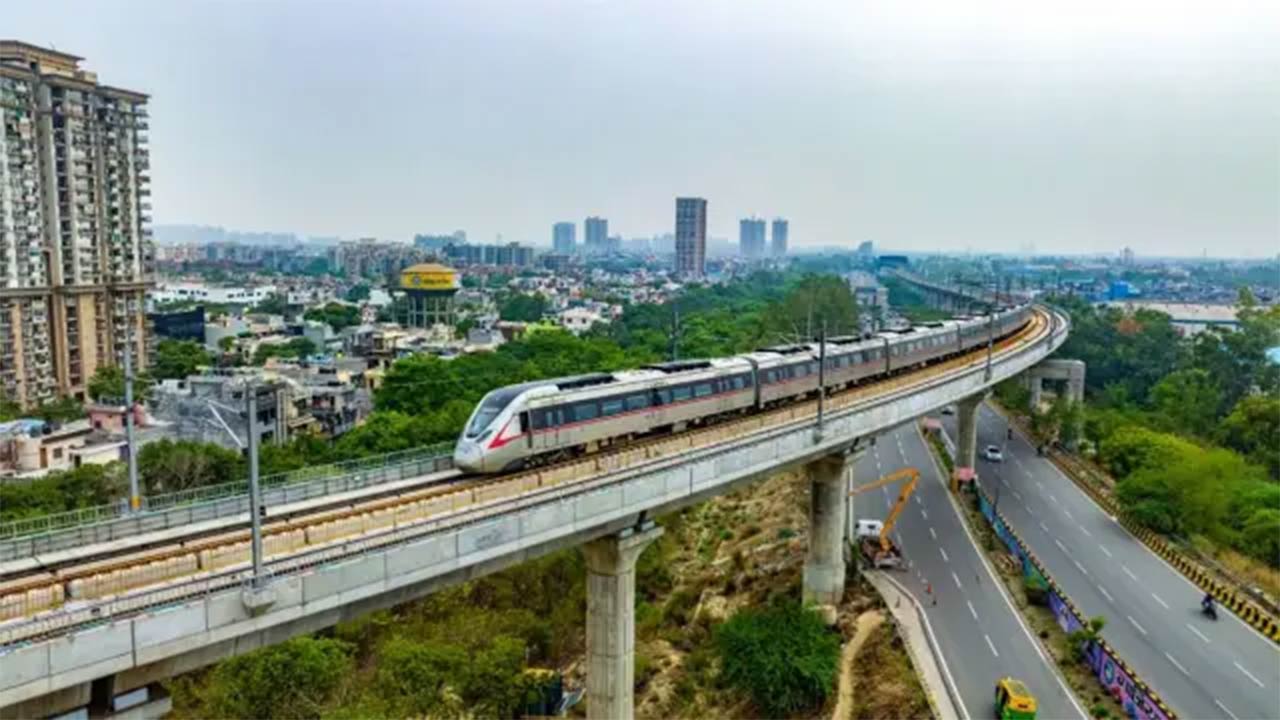
Two proposed Namo Bharat corridors linking Delhi with Karnal and Bawal are nearing Union Cabinet approval.
Meanwhile, a separate rail link in Uttarakhand is expected to cut travel time to the Char Dham region sharply. Together, the projects point to a wider expansion of faster regional rail connectivity around Delhi and into the Himalayan state.
Also Read: Rajasthan Joins Namo Bharat Network as RRTS Corridor Set to Link Alwar With New Delhi
Delhi-Karnal, Delhi-Bawal Namo Bharat Corridors Move Closer to Approval
The proposed Delhi-Panipat-Karnal Namo Bharat corridor could cut the Delhi-Karnal journey to around 90 minutes, down from nearly three hours. It will connect key locations including Education City at Kundli, Barhi Industrial Area, Panipat, the IOCL refinery and Karnal.
The Delhi-Gurugram-Bawal corridor is expected to cut the journey between Delhi and Bawal from around 180 minutes to about 67 minutes. Its route will cover major employment and industrial centres including Gurugram, Manesar, the Manesar-Bawal Investment Region and Bawal.
The National Capital Region Transport Corporation (NCRTC) has already begun preparatory work while Cabinet approval is awaited. This includes geotechnical investigations, utility mapping, shifting utilities, modifying extra-high-tension power lines and relocating or modifying water pipelines.
The projects are part of the wider regional rapid transit network. NCRTC also expects better connectivity to support urban growth, employment and development around Namo Bharat stations.
Also Read: NCR Regional Plan 2041: Four Namo Cities, 30-Minute Travel Vision Set to Reshape Delhi-NCR
Delhi-Rishikesh in 2.5 Hours, Karnaprayag in 5-6 Hours
A separate Namo Bharat extension from Meerut towards Haridwar and Rishikesh could eventually bring the Delhi-Rishikesh journey down to around 2-2.5 hours.
Further into Uttarakhand, the 127-km Rishikesh-Karnaprayag railway line is around 75% complete. About 105 km of the route will run through tunnels. The final breakthrough of the roughly 10-km Escape Tunnel-1 was completed on September 11.
The corridor is expected to become operational by 2029, with the Shivpuri-Byasi section targeted earlier, in 2028. Rishikesh-Karnaprayag travel is likely to drop from six-seven hours by road to 2-2.5 hours, bringing the combined Delhi-Karnaprayag journey to around five-six hours instead of the current 12-13 hours.
The line will serve five Garhwal districts and 12 stations. It will not take trains directly to Kedarnath or Badrinath, but will bring travellers closer to road routes towards the pilgrimage destinations.
For India’s regional mobility network, the next phase will be watching how quickly these planned links move from preparation to construction and, ultimately, passenger service.
The interesting part is no longer just the headline travel-time reduction. It is how these corridors would connect workplaces, industrial clusters, education hubs and pilgrimage routes into a much wider regional mobility network.

Samarjit Kaur is a journalist and communications professional covering technology & emerging digital trends. With a focus on clarity and context, she reports on developments shaping industries and governance. When not reporting, she chooses to plug-in and relax on her playlists and plan her next bucket-list trips!