Delhi-NCR is preparing for one of its biggest urban development drives with the proposed ‘NCR Regional Plan 2041’. The plan lays out a roadmap for faster mobility, new economic hubs and future-ready cities across the region.
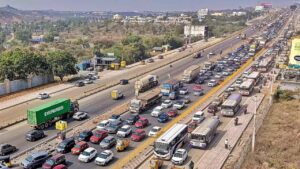
The plan, recently reviewed by the National Capital Region Planning Board (NCRPB), seeks to manage rapid population growth by moving away from a Delhi-centric model and creating multiple development centres. With the NCR population projected to rise from 5.81 crore in 2011 to nearly 11.3 crore by 2041, policymakers are betting on new infrastructure and decentralised growth to meet future demand.
Also Read: Delhi–Rishikesh in 3 Hours? Namo Bharat Rapid Rail Extension Plan Gains Momentum
Four Namo Cities at the Centre of the Plan
A central focus of the blueprint is the proposal to develop four greenfield “Namo Cities”.
These urban centres are expected to be built around high-speed transit networks and designed as self-sustaining hubs with housing, employment, commercial activity and civic infrastructure.
The Centre has proposed ₹5,000 crore in funding support for the new cities over five years. The objective is to reduce pressure on Delhi, Noida and Gurugram while spreading economic growth across the wider NCR region.
Also Read: Rajasthan Joins Namo Bharat Network as RRTS Corridor Set to Link Alwar With New Delhi
The Push for a ‘30-Minute NCR’
Another major pillar of the plan is the vision of a “30-Minute NCR”. The proposal aims to connect key residential, commercial and industrial centres through Regional Rapid Transit System (RRTS) corridors, metro networks, rail links and highways.
Officials say that improved connectivity will significantly reduce travel times between major NCR cities. It will make it easier for people to live and work across different parts of the region without relying solely on Delhi.
Also Read: Delhi Airport Air Train Project Explained: Route, Cost, Timeline and Passenger Benefits
₹20 Lakh Crore Opportunity for Infrastructure: Balancing Growth and Sustainability
The Regional Plan 2041 is likely to unlock investments worth ₹20 lakh crore across housing, transport, logistics and civic infrastructure.
The blueprint also promotes transit-oriented development along metro and RRTS corridors, higher-density development in suitable zones and the creation of new residential and business districts. Existing growth corridors such as Greater Noida, Faridabad and Dwarka, as well as emerging airport-linked regions, are expected to benefit from the next phase of expansion.
While advancing urban expansion, the plan retains existing NCR boundaries and continues environmental safeguards. This includes protection for ‘ecologically sensitive areas’ such as the Aravalis.
The broader intent is to create a more balanced regional ecosystem that can support future growth without overburdening existing cities.
As Delhi-NCR moves towards becoming one of the world’s largest urban regions, the success of the Regional Plan 2041 will depend less on vision and more on execution.
If delivered on schedule, the combination of Namo Cities, rapid transit corridors and integrated infrastructure could redefine urban mobility and regional development in northern India for decades to come. For infrastructure developers, mobility providers and urban planners, the Regional Plan 2041 represents one of India’s most significant long-term development opportunities. The coming decade will reveal whether execution can keep pace with the scale of the vision.

Samarjit Kaur is a journalist and communications professional covering technology & emerging digital trends. With a focus on clarity and context, she reports on developments shaping industries and governance. When not reporting, she chooses to plug-in and relax on her playlists and plan her next bucket-list trips!