The Indian private spacetech ecosystem has gained more than $871 million in funding across 241 investment rounds through July 2026.
This progress signals growing investor confidence in the country’s commercial space industry.
The recent data, released by startup intelligence platform Tracxn, highlights the strong momentum following policy reforms that opened the space sector to private companies and encouraged fresh investment.
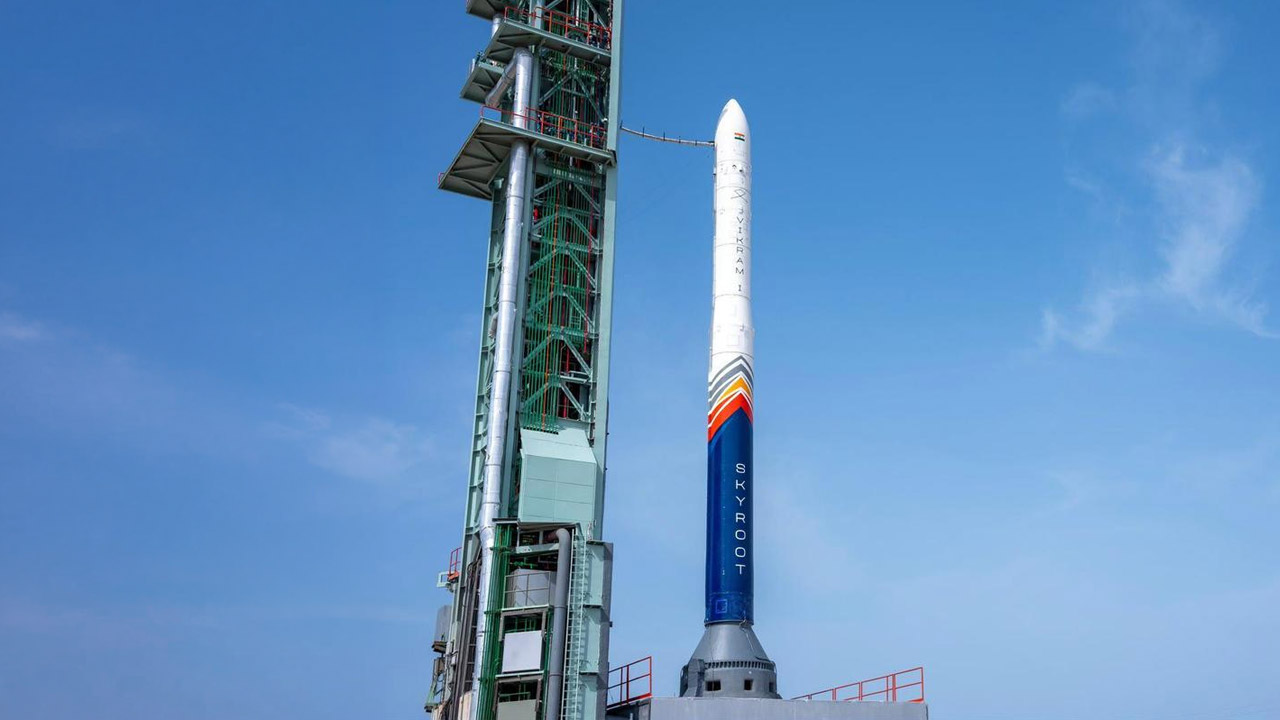
The report comes shortly after Skyroot Aerospace’s Vikram-1 mission successfully reached orbit, making India only the third nation after the United States and China to achieve a privately developed orbital launch capability.
Also Read: Skyroot Aerospace Becomes India’s First Spacetech Unicorn After $60 Million Funding Round
Funding Boosted as India’s Commercial Space Ecosystem Grows
India presently has approximately 285 spacetech startups, with 72 companies getting institutional equity funding.
These firms operate across launch vehicles, satellite manufacturing, propulsion systems, Earth observation & space analytics.
Investment activity has gone up over the past five years. Funding jumped from $43 million across 12 rounds in 2021 to a record $200 million across 53 rounds in 2025.
In the first seven months of 2026, startups secured $113 million through 24 funding rounds, indicating continued investor appetite despite a challenging global funding environment.
Also Read: Agnikul Cosmos, ICEYE Partner to Build and Launch SAR Satellites From India
Skyroot Leads Funding Race as Bengaluru Dominates the Ecosystem
Large funding rounds have driven much of the recent growth. Skyroot Aerospace, Digantara, EtherealX, Bellatrix Aerospace and AgniKul Cosmos together raised $158 million across 2025 and 2026, accounting for more than half of the capital invested during the period.
Skyroot remains India’s most-funded spacetech startup, having raised $150 million. Its $50 million Series C round in May lifted its valuation above $1.1 billion, making it the country’s first spacetech unicorn. Pixxel has raised $96 million, followed by AgniKul Cosmos ($76 million), Digantara ($67 million) and Bellatrix Aerospace ($34 million).
Bengaluru continues to lead the sector with $495 million raised across 106 funding rounds and is home to seven of India’s ten most-funded spacetech startups. Hyderabad follows with $205 million, driven largely by Skyroot Aerospace and Dhruva Space, while Chennai has attracted $80 million, led primarily by AgniKul Cosmos.
Also Read: SpaceX IPO Filing Offers Key Lessons for Indian Spacetech Startups as Sector Eyes Next Growth Phase
Early-Stage Investments Remain Strong
The Tracxn report suggests improving funding across startup stages. Seed-stage investment climbed from $7 million in 2022 to $62 million in 2025.
Late-stage funding, which was absent until last year, reached $17 million in 2025 and $53 million so far in 2026.
The increase reflects stronger participation from sovereign wealth funds, global institutional investors and domestic venture capital firms. The top ten funded startups alone account for over $548 million, representing more than 60% of the capital invested in the sector.
With private launch capabilities maturing and institutional capital continuing to flow into the sector, India’s spacetech sector is moving beyond early experimentation towards commercial scale, making it one of the country’s fastest-growing deep-tech segments.

Samarjit Kaur is a journalist and communications professional covering technology & emerging digital trends. With a focus on clarity and context, she reports on developments shaping industries and governance. When not reporting, she chooses to plug-in and relax on her playlists and plan her next bucket-list trips!