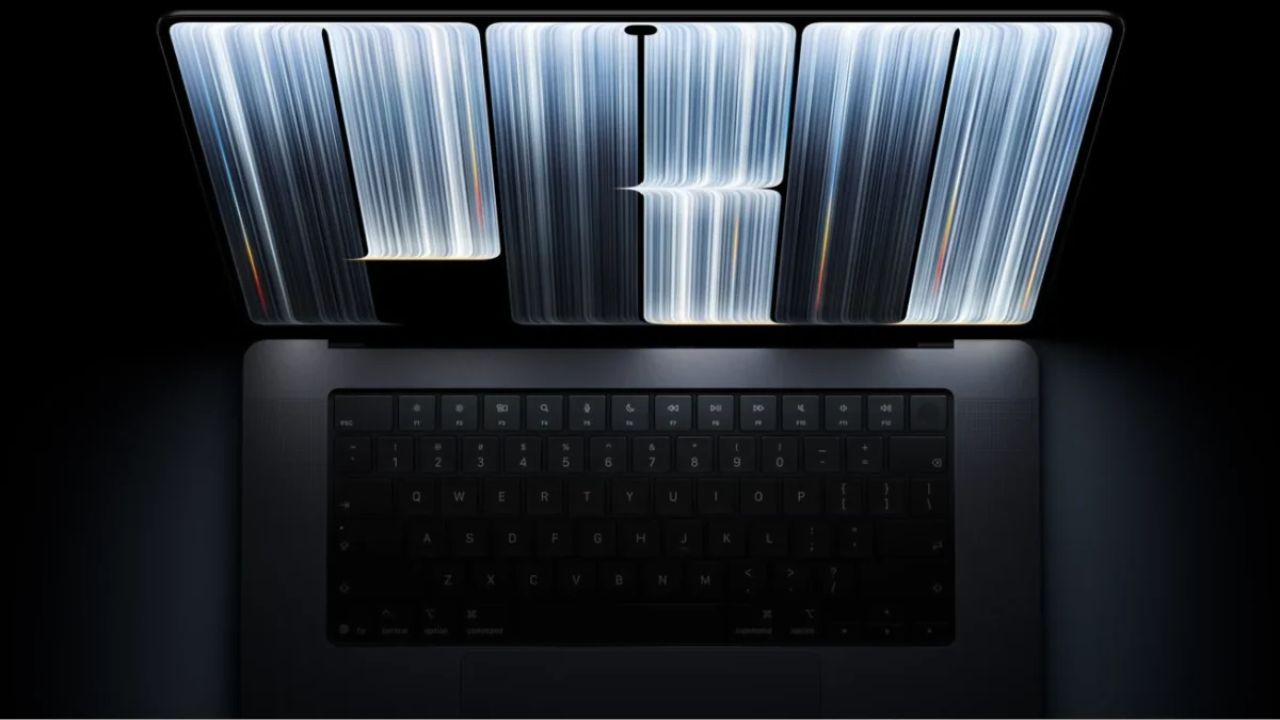
Apple is bringing touchscreen functionality to its MacBook Pro lineup for the first time, introducing a new way for professionals to interact with their laptops. The new MacBook Pro with PROLED XDR Display combines a tandem OLED screen, touch controls, Dynamic Island and Apple’s M5 Pro and M5 Max processors.
Available in 14-inch and 16-inch models, the new laptops are designed for professionals working across video production, software development, AI, 3D design, photography and music production. The touchscreen works alongside the traditional keyboard and trackpad, allowing users to switch between different ways of interacting with applications.
Apple has described the launch with the tagline “A screen come true”, highlighting the combination of its new display technology and touch-based computing experience. According to Apple’s India website, the new MacBook Pro is available for pre-order and is scheduled to reach customers from November 9, 2026.
Apple MacBook Pro with PROLED XDR: What’s New?
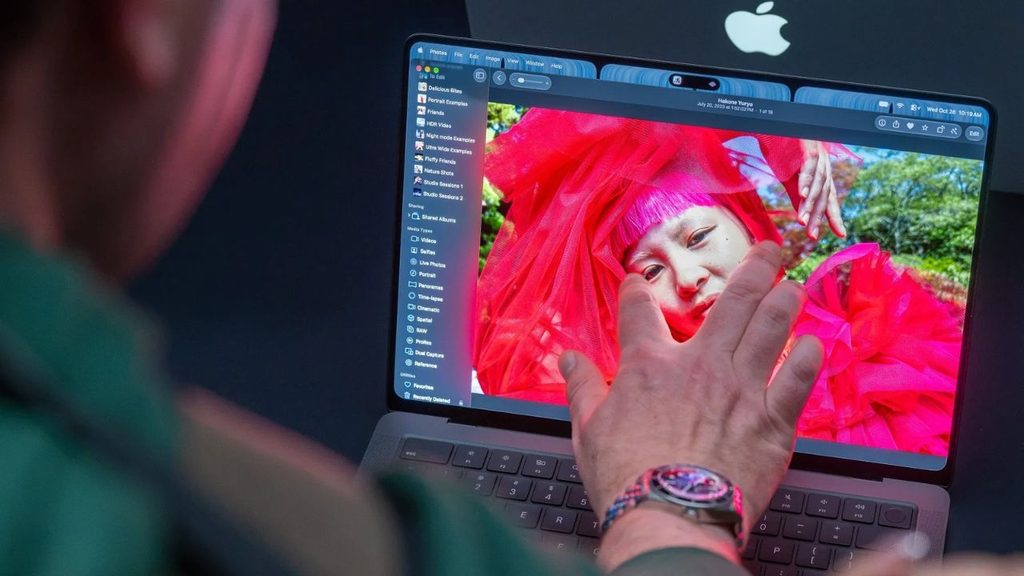
The biggest change is the introduction of touch functionality to the MacBook Pro. Users can now scroll through documents, zoom into photographs, rotate objects, draw and interact with software directly on the display.
Apple has also introduced a redesigned interface featuring Dynamic Island, which brings notifications, Spotlight search and Live Activities to the Mac. These additions are supported by a new tandem OLED display, an updated thermal system and improved audio hardware.
Read More | Apple iPhone Duo Faces ‘Crackgate’ After Users Report Broken Foldable Screens
The laptops are available in Space Black and Silver finishes. The 14-inch model weighs 1.38kg, while the 16-inch version weighs 1.82kg.
PROLED XDR Display: Apple’s New Tandem OLED Technology
The new PROLED XDR display is one of the main attractions of the MacBook Pro. It uses tandem OLED technology, which combines two self-illuminating pixel layers to improve brightness, contrast and colour accuracy.
Unlike conventional backlit displays, OLED pixels can switch on and off independently. This allows the screen to produce deeper blacks and brighter highlights without the blooming and halo effects commonly associated with backlit panels.
Apple lists the following display specifications:
- Peak brightness: Up to 2,000 nits for HDR and SDR content.
- Sustained brightness: Up to 1,000 nits across the full screen.
- Contrast ratio: 10,000,000:1.
- Refresh rate: Adaptive 10Hz to 120Hz with ProMotion.
- Colour support: P3 and Adobe RGB colour spaces.
- Display technology: Tandem OLED.
The wider colour gamut is particularly useful for photographers, filmmakers and graphic designers who need accurate colour reproduction. Support for Adobe RGB also makes the display relevant to professionals preparing images for print.
Apple is offering an optional nano-texture finish to reduce reflections and glare, making the screen easier to view in brightly lit environments.
Touchscreen MacBook Pro: How Does It Work?
Apple has introduced a feature simply called Touch, which allows users to interact directly with content on the screen. Unlike touchscreen systems that add a separate sensor layer over the display, Apple says its Touch sensor is built directly into the display panel. This approach is designed to reduce input latency and make interactions feel more immediate.
Apple describes the experience with the phrase “Magic on tap”, reflecting its focus on making touch interactions feel natural within macOS.
Some of the supported touchscreen functions include:
Scrolling and navigation: Users can move through webpages, documents and applications by sliding their fingers across the screen.
Pinch-to-zoom: Photographs, documents and other content can be enlarged or reduced using familiar multi-touch gestures.
Drawing and annotation: Users can sketch, mark up documents and make adjustments directly on the display.
3D object manipulation: Designers can rotate and interact with 3D prototypes without relying entirely on a mouse or trackpad.
Music production: Musicians can adjust audio controls, move faders and interact with virtual instruments using their fingers.
Apple is also positioning Touch as a useful feature for developers. They can test how touch-based interactions work in their iOS applications directly on the MacBook Pro through Xcode.
Importantly, the touchscreen does not replace the keyboard or trackpad. Users can continue using traditional controls and switch to touch whenever it makes a task easier.
Dynamic Island Comes to MacBook Pro
Another major addition is Dynamic Island, which Apple is bringing to the Mac for the first time.
Read More | Apple Home Collection: Its Big Move Into the Smart Home
Previously associated with the iPhone, Dynamic Island provides a central space for notifications, activities and quick controls. On the MacBook Pro, it also becomes the new home for Spotlight and Live Activities.
Users can search for files, documents, images and contacts, track activities, manage music playback and respond to certain notifications without interrupting their work.
Apple has also introduced Siri AI into this experience. The company says the assistant can handle conversational requests, help with work-related tasks and interact with supported applications. Siri AI is currently listed as available in English, with usage limits potentially applying.
M5 Pro and M5 Max Chips: Performance and AI Capabilities
The new MacBook Pro models are powered by Apple’s M5 Pro and M5 Max processors. Both chips are designed for demanding workloads, including AI development, 3D rendering, video editing and complex software projects.
Apple has incorporated Neural Accelerators into each GPU core to improve AI processing. This allows supported applications to handle more AI-related workloads directly on the device.
Read More | Apple HomeView: A New $299 Smart Display With Siri AI
The M5 Pro is aimed at developers, engineers, scientists and creative professionals. It supports up to an 18-core CPU, a 20-core GPU and 64GB of unified memory. Storage starts at 1TB.
The M5 Max is designed for more intensive computing requirements, particularly advanced AI development, visual effects and large-scale creative projects. It offers up to an 18-core CPU, a 40-core GPU and 128GB of unified memory. Storage starts at 2TB.
Apple claims the M5 Pro can deliver up to 10.9 times faster performance than the M1 Pro in certain workloads, while the M5 Max can be up to 12 times faster than the M1 Max in selected tasks.
The company also says storage speeds are up to twice as fast compared with the previous generation. The maximum configurable storage capacity is 16TB. These performance comparisons are based on Apple’s specified testing conditions and may vary depending on the application and configuration.
Battery Life, Audio and Camera Improvements
Apple claims the new MacBook Pro can deliver up to 24 hours of battery life. The company also says the laptops can charge to 50 per cent in approximately 30 minutes using a suitable power adapter.
Both models feature a redesigned six-speaker audio system, with updated woofers and tweeters. Apple claims the new system delivers 50 per cent deeper bass, alongside Spatial Audio and Dolby Atmos support.
For video calls, the laptops include a 12MP Center Stage camera with Desk View. The camera automatically keeps users in frame as they move, while Desk View can show their workspace during presentations and meetings.
Read More | Apple ‘Welcome Home’ Event Today: 3 New Products, Expected Features and Prices
The redesigned thermal architecture is intended to manage heat more effectively during demanding workloads.
Connectivity and Ports
The new MacBook Pro retains a broad selection of physical connectivity options, which should be useful for professionals working with external displays, storage devices and other equipment.
The available connections include:
- Three Thunderbolt 5 ports.
- HDMI port.
- MagSafe 3 charging port.
- SDXC card slot.
- Headphone jack.
- Wi-Fi 7.
- Bluetooth 6.
Apple’s N1 wireless chip supports Wi-Fi 7 and Bluetooth 6. The M5 Pro models can connect to up to three external displays, while M5 Max models support up to four, depending on display resolution and configuration.
Apple MacBook Pro with PROLED XDR: Price and Availability in India
Apple’s India website has opened pre-orders for the new MacBook Pro with PROLED XDR Display. The laptops are scheduled to become available from November 9, 2026.
Customers can choose between 14-inch and 16-inch models powered by the M5 Pro or M5 Max processors. Memory, storage, display finish and other configuration options will affect the final purchase price.
Read More | Apple to Launch Smart Doorbell, Lock and Thermostat Developed With LG, Says Report
Apple’s product page and pre-order listing confirm the Indian availability date, but the product specifications page does not provide a complete static price list for all configurations. Buyers should check the Apple India Store for the applicable price before ordering.
Why Apple’s Touchscreen MacBook Pro Matters
The launch represents a notable change in Apple’s approach to laptop design. For years, the company maintained a clear distinction between the touch-first iPhone and iPad experience and the keyboard-and-trackpad-based Mac.
The new MacBook Pro brings these interaction methods closer together without turning the laptop into a tablet. Instead, Apple is adding touch as another way to work with professional applications.
This could be particularly useful for designers, video editors, developers and musicians whose work involves frequent interaction with visual elements and on-screen controls.
The bigger question is how developers will adapt their Mac applications to make full use of the new functionality. The hardware provides the foundation, but the usefulness of a touchscreen MacBook will ultimately depend on how well software takes advantage of it.
For now, Apple’s latest MacBook Pro signals a new direction for its professional laptop range, combining a high-end OLED display, touch interaction and powerful on-device computing in one package.

Indrani Priyadarshini is a journalist and editorial professional specialising in technology, artificial intelligence, smart cities, green energy, and digital transformation. With over four years of experience in tech journalism and digital media, she is known for turning complex industry developments into clear, engaging, and insightful stories. Her expertise spans reporting, editorial strategy, digital publishing workflows, and in-depth coverage of emerging technologies shaping the future.