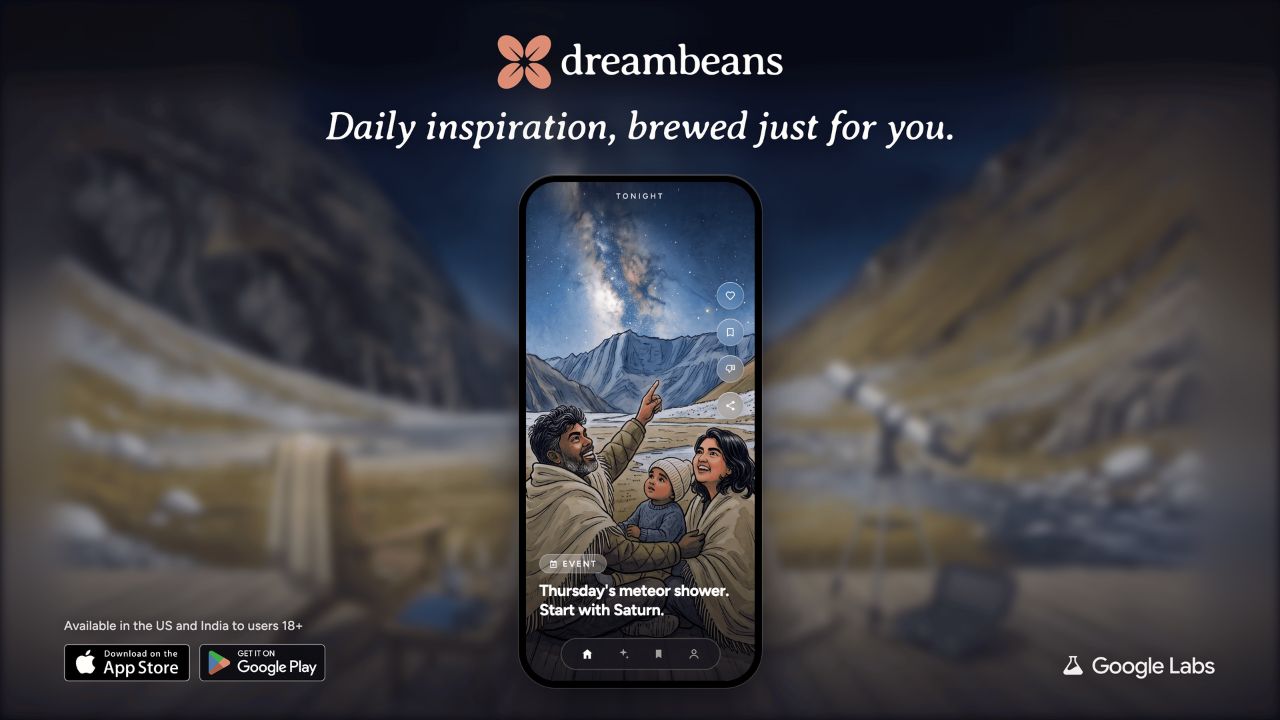
Google has launched Dreambeans, an experimental AI-powered app, in India, allowing Android and iOS users aged 18 and above to explore personalised visual stories. This app generates stories using information from users’ connected Google services.
The launch marks Dreambeans’ first expansion outside the United States. Developed by Google Labs, the app aims to make everyday information easier to discover. This is by bringing together details from different Google platforms and presenting them as customised, illustrated stories.
Instead of switching between multiple apps to keep track of interests, activities and upcoming plans, users can explore information organised around their preferences through a single platform.
What is Google Dreambeans and how does it work?
Google Dreambeans is an experimental AI application that uses AI to identify connections across information available through users’ selected Google services. The app can draw information from platforms such as Gmail, Google Photos, Google Calendar, Google Search, Gemini and YouTube to create stories based on users’ interests, preferences and everyday activities.
For example, information related to an upcoming trip, calendar reminders, creative interests or topics a user frequently explores could be brought together in the form of personalised stories. These stories are designed to help users discover relevant information without having to search for it across different applications.
Read More | Sundar Pichai Is Using AI Agents to Keep Track of Google 24/7
What can users do with Google Dreambeans?
Dreambeans generates personalised daily stories around subjects that may interest users. These include travel, arts and crafts, local events and upcoming reminders. Users can open individual stories to explore more details, save interesting content for later or share it with others. The idea is to turn information spread across connected Google services into visual content that is easier to browse and explore.
Google Dreambeans launches in India with support for 14 languages
One of the key aspects of the India launch is multilingual support. Dreambeans is available in 14 languages, including English, Hindi, Bengali, Tamil, Telugu, Marathi, Punjabi and Urdu.
Read More | OpenAI Models Are Coming to Google Cloud: What It Means for Enterprises
This expands access to the experimental AI app beyond English speaking users and allows a wider audience in India to explore personalised visual stories in their preferred languages. The app is available on both Android and iOS for eligible users aged 18 and above.
How popular is Google Dreambeans in the US?
Before its India launch, Google introduced Dreambeans in the United States in June 2026. The app was subsequently made available to all eligible users aged 18 and above in September. However, its adoption in the US has reportedly remained limited.
According to Sensor Tower estimates cited by TechCrunch, Dreambeans recorded nearly 55,000 downloads in the country since its launch. Around 63% of these downloads came in September. However, downloads fell by 84% month-on-month in October, reaching approximately 5,500. The India launch represents Google’s first opportunity to take the experimental application to a market beyond the US.
Which Google services can Dreambeans access?
Dreambeans can use information from selected connected Google services, including Gmail, Google Photos, Calendar, Search, Gemini and YouTube. This allows the app to identify relevant connections between different types of information and turn them into personalised visual stories.
Since the experience relies on connected services, the information available to Dreambeans depends on the services users choose to connect.

Indrani Priyadarshini is a journalist and editorial professional specialising in technology, artificial intelligence, smart cities, green energy, and digital transformation. With over four years of experience in tech journalism and digital media, she is known for turning complex industry developments into clear, engaging, and insightful stories. Her expertise spans reporting, editorial strategy, digital publishing workflows, and in-depth coverage of emerging technologies shaping the future.