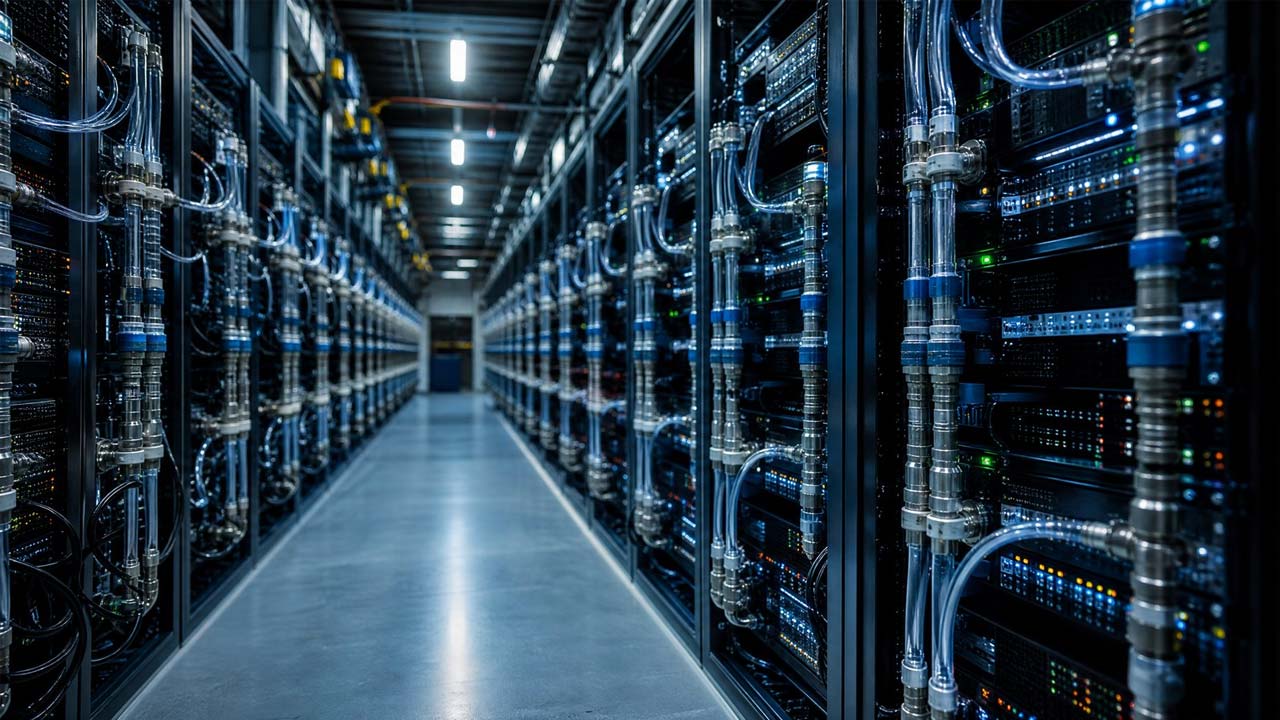
Schneider Electric and AMD have introduced a new AI-ready rack design named Helios AI, aimed at helping hyperscale data centres deploy high-performance artificial intelligence (AI) infrastructure more quickly and efficiently.
The move comes as demand for AI infrastructure continues to surge, with cloud providers and hyperscale operators racing to expand computing capacity for generative AI and large language models.
The reference design is intended to reduce the time and complexity involved in deploying large-scale AI clusters by offering a ready-to-use blueprint that integrates power, cooling and rack architecture around AMD’s next-generation AI systems.
Also Read: Meta-AMD Agree on a Multi-Year AI Chip Supply Deal
Helios Design Targets Faster AI Data Centre Deployment
Schneider Electric said the Helios reference architecture has been developed to support demanding AI workloads that require significantly higher power density than traditional server racks.
The design is built around AMD’s Instinct MI450 Series GPUs and has been engineered to support next-generation AI infrastructure at hyperscale facilities. It incorporates Schneider Electric’s expertise in power distribution, liquid cooling and rack systems, allowing operators to deploy AI clusters with greater speed while improving energy efficiency.
As AI models continue to grow in size, data centres are facing increasing pressure to deliver more computing power within limited physical space. The companies said the Helios design addresses those challenges by simplifying infrastructure planning and enabling faster rollout of AI-ready facilities.
Also Read: TCS-AMD Enter Partnership to Drive Enterprise AI Adoption
Growing Investment in AI Infrastructure
The launch signals a transitioning industry towards integrated AI infrastructure as technology firms invest more in expanding AI computing capacity.
Schneider Electric said collaboration between infrastructure providers and chipmakers is becoming increasingly important as customers seek complete solutions rather than assembling individual components themselves.
AMD said the Helios platform has been designed to help cloud service providers, hyperscalers and enterprise customers accelerate AI deployment while supporting future generations of high-performance AI processors.
The companies expect the reference architecture to support faster adoption of AI infrastructure across new and existing data centres as demand for AI services continues to rise globally.
Also Read: AMD and OpenAI Ink Billion-Dollar AI Chip Deal to Challenge Nvidia
AI Workloads Continue to Reshape Modern Data Centres
The rapid adoption of generative AI has transformed the way hyperscale data centres are designed. AI servers consume substantially more power than conventional computing systems, increasing demand for advanced cooling technologies, efficient power management and scalable rack designs.
Industry analysts expect AI infrastructure spending to remain one of the fastest-growing segments of the global data centre market over the coming years, driven by rising enterprise AI adoption, cloud expansion and sovereign AI initiatives.
The Helios AI rack design underlines a broader shift in the data centre industry. Hardware innovation is no longer centred only on faster chips. Increasingly, success will depend on how efficiently power, cooling and infrastructure are integrated to support the next wave of AI computing at scale.

Samarjit Kaur is a journalist and communications professional covering technology & emerging digital trends. With a focus on clarity and context, she reports on developments shaping industries and governance. When not reporting, she chooses to plug-in and relax on her playlists and plan her next bucket-list trips!