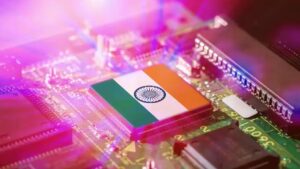
India has marked a key milestone in its push for technological self-reliance with the launch of Dhruv64, the country’s first indigenously designed 64-bit microprocessor operating at 1.0 GHz. The development reflects India’s growing capability in core semiconductor design and signals a broader effort to reduce dependence on imported chips in critical sectors.
The processor has been developed by the Centre for Development of Advanced Computing (C-DAC) under the government’s Microprocessor Development Programme, a long-running initiative aimed at building domestic chip design expertise.
Also Read | Unitree Launches World’s First Humanoid Robot App Store
What Is Dhruv64?
Dhruv64 is a dual-core, 64-bit microprocessor based on the open-standard RISC-V architecture. Unlike older 32-bit chips, a 64-bit design allows the processor to handle larger memory, run more complex applications, and support modern operating systems and workloads.
The chip has been designed to cater to a wide range of applications, including industrial electronics, embedded systems, telecommunications equipment, and secure computing platforms. While it does not compete with cutting-edge commercial processors in raw performance, Dhruv64 represents a meaningful leap in India’s indigenous chip capabilities.
Why Dhruv64 Matters for India
Microprocessors are the backbone of modern digital infrastructure, powering everything from consumer electronics and vehicles to satellites, defence systems and communication networks. Despite being one of the world’s largest consumers of chips, India has historically relied on imports for most advanced processors — a dependence that carries strategic, economic and security risks.
Dhruv64 addresses this gap by giving India a domestically controlled processor that can be deployed in sensitive and mission-critical environments. For defence, aerospace and secure communications, using indigenous chips reduces exposure to supply chain disruptions and external vulnerabilities.
Also Read | Is India About to Make AI Pay for Copyrighted Content?
Beyond strategic autonomy, the chip also plays a role in ecosystem development. A homegrown processor enables Indian startups, research institutions and system integrators to build, test and optimise products on a domestic platform, encouraging innovation across hardware and software.
A Foundation for Future Chip Development
The launch of Dhruv64 is not an endpoint but a foundation. Officials involved in the programme have indicated that future processors will build on this architecture, improving performance, efficiency and scalability. Successive designs are expected to target a broader set of applications, including high-performance computing and advanced embedded systems.
As India continues to position itself as a global electronics and semiconductor hub, indigenous processors like Dhruv64 will be critical to strengthening technological sovereignty and supporting long-term industrial growth.

Indrani Priyadarshini is a journalist and editorial professional specialising in technology, artificial intelligence, smart cities, green energy, and digital transformation. With over four years of experience in tech journalism and digital media, she is known for turning complex industry developments into clear, engaging, and insightful stories. Her expertise spans reporting, editorial strategy, digital publishing workflows, and in-depth coverage of emerging technologies shaping the future.