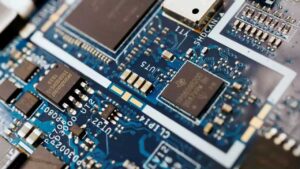
The U.S. has approved exports of Nvidia’s H200 artificial-intelligence chips to China, marking a significant shift in Washington’s semiconductor policy. The decision, announced by President Donald Trump, allows sales only to vetted Chinese customers and requires Nvidia to share 25% of its revenue from those shipments with the U.S. government.
The H200 is one of Nvidia’s more capable AI processors built on the Hopper architecture. While it doesn’t match the company’s newest Blackwell-series chips, it is far more powerful than the export-limited H20 model that China had access to earlier this year.
Read More |China Tightens Rules on Data Centres, Mandates Use of Domestic AI Chips
Trump described the move as a “middle path” one that preserves national security priorities while restoring access to a major market for U.S. chipmakers. Nvidia welcomed the change, calling it an opportunity to regain some of the business it lost after earlier restrictions cut off almost all of its high-end sales to China.
A shift from earlier restrictions
The approval is notable given how sharply U.S. policy had tightened over the past two years. Earlier controls had pushed Nvidia to the sidelines in China, forcing the company to create lower-performance chips just to maintain a foothold. The H20 was part of that effort, but its limited power dampened demand.
Allowing the H200 back into the market, even with strict supervision, signals a recalibration. The U.S. is enabling some controlled access to advanced chips while keeping an eye on where they end up and how they’re used.
Read More| How China Is Closing the Gap on Nvidia’s AI Chip Lead
Reaction: Optimism mixed with caution
For Nvidia, the decision could revive a large and strategically important revenue stream. The H200 is substantially more appealing to Chinese AI developers than prior export-compliant chips, making demand likely, as long as Chinese regulators don’t impose new barriers.
The financial terms, however, are drawing attention. The 25% revenue share is notably higher than earlier proposals and, in effect, operates like an export tax. Some industry watchers say this could complicate long-term business planning or discourage certain customers.
Security analysts remain cautious. Even though the U.S. will screen buyers, some experts argue that any relaxation in chip restrictions risks strengthening China’s AI capabilities, an area Washington has been trying to slow.

Indrani Priyadarshini is a journalist and editorial professional specialising in technology, artificial intelligence, smart cities, green energy, and digital transformation. With over four years of experience in tech journalism and digital media, she is known for turning complex industry developments into clear, engaging, and insightful stories. Her expertise spans reporting, editorial strategy, digital publishing workflows, and in-depth coverage of emerging technologies shaping the future.