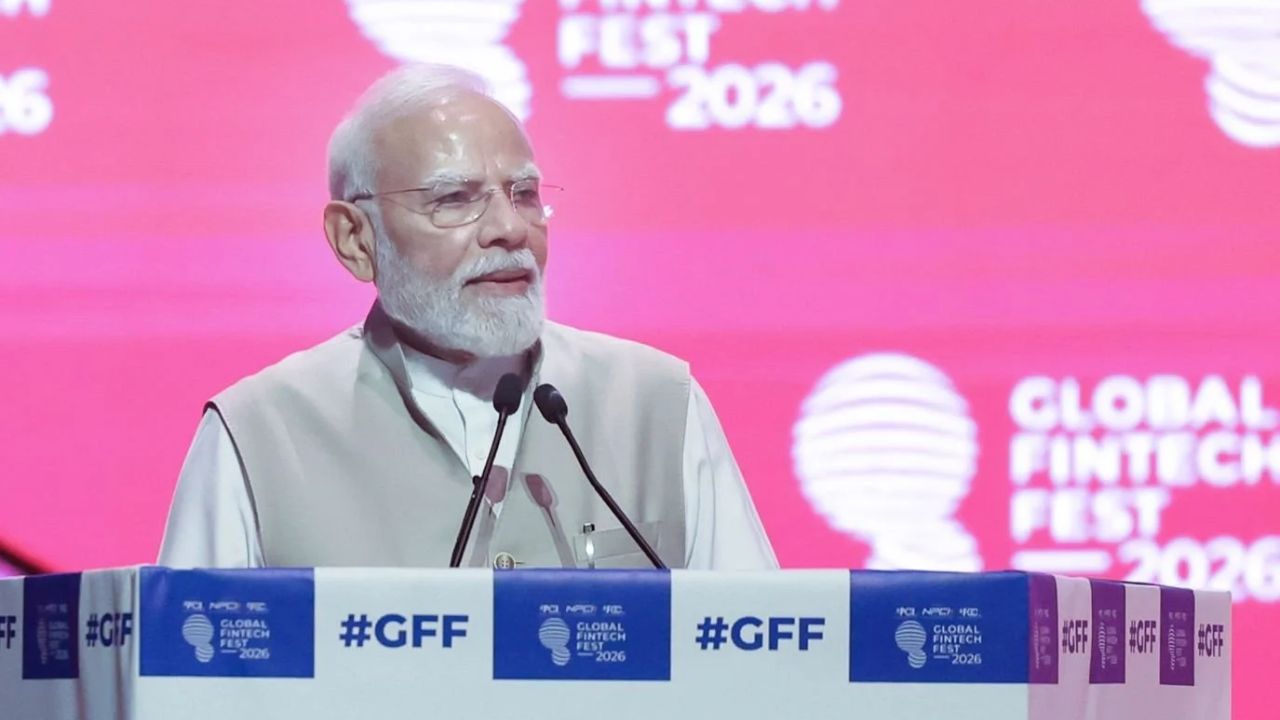
Prime Minister Narendra Modi has called for the Indian fintech sector to move beyond digital payments and focus on the next generation of financial technologies, including Agentic AI, tokenisation and quantum computing.
Speaking at the inauguration of the Global Fintech Fest (GFF) 2026 in Mumbai, Modi highlighted India’s rapid fintech growth and said the country now needs to turn emerging technologies into real-world financial solutions.
Read More | UPI Turns 10: How India’s Payment Revolution Changed Everyday Life
The Prime Minister said scale, innovation, secure systems, financial inclusion and public trust have driven India’s fintech journey. He added that the sector must now build on these foundations and focus on next-generation innovation.
Modi highlights UPI’s role in India’s fintech growth
Modi described the Unified Payments Interface (UPI) as a major driver of India’s fintech transformation. He said any discussion of India’s fintech journey would be incomplete without UPI, which has brought digital banking and payments to millions of people previously outside the formal banking system.
The Prime Minister also pointed to the scale of UPI adoption. More than 24 billion UPI transactions were recorded in August, according to the figures cited during his address. He also noted that UPI is now live in 11 countries, reflecting India’s growing digital payments footprint globally.
Read More | Haryana to Bring AI and FinTech Education to Government Schools
Modi called for further expansion of UPI by connecting it with the domestic payment systems of other countries, particularly markets where there are large Indian communities or significant trade with India. He said greater integration could help reduce transaction costs for Indians sending money home and allow funds to reach families faster.
Fintech must move beyond payments
While highlighting UPI’s success, Modi said the future of fintech cannot be limited to payments. He called on the industry to expand into credit, insurance, savings, investments and pensions. According to the Prime Minister, these financial services should become as simple and accessible as making a payment through a QR code.
He also highlighted the opportunity to use fintech to address the credit requirements of small businesses and self-employed workers. Using the example of small shop owners with a strong digital transaction history but limited access to traditional bank loans, Modi said fintech companies can use digital data to understand their financial needs and develop suitable credit products.
Read More | PhonePe’s UPI 123Pay Explained: Feature Phones Can Now Make UPI Payments Without Internet
He said technology can help identify such businesses, anticipate their requirements and provide more customised financial solutions. “I believe the next chapter of fintech will be written right here,” Modi said while discussing the opportunity to close the credit gap for small businesses.
Agentic AI, tokenisation and quantum could reshape finance
Modi also pointed to emerging technologies that could open new opportunities for the financial sector. He identified Agentic AI, tokenisation and quantum computing as technologies capable of creating new possibilities in finance.
The Prime Minister, however, said the focus should not remain on technological potential alone. The industry must find ways to convert these technologies into solutions that create measurable benefits for society. “Now the challenge before us is how to turn these possibilities into real impact,” Modi said.
The remarks come as fintech companies and financial institutions increasingly explore AI-powered financial services, tokenised assets and quantum technologies for future financial infrastructure.
Modi calls for stronger fintech safeguards
Alongside innovation, Modi stressed the need for stronger safeguards as financial services become increasingly digital. He urged fintech companies to work collectively on four key areas: top-notch cybersecurity, ethical data protection standards, a strong regulator-industry innovation ecosystem and a fintech consumer protection index.
Read More | Fintech India Innovation Awards 2026: A Look at this Year’s Standout Performers
The Prime Minister highlighted that the sector should use these areas as benchmarks for its development. Meeting these standards, he suggested, could help position India’s fintech ecosystem as a gateway to wider global opportunities.
The focus on cybersecurity and consumer protection comes as the expansion of digital financial services also increases the importance of protecting customer data, preventing fraud and maintaining trust in digital platforms.

Indrani Priyadarshini is a journalist and editorial professional specialising in technology, artificial intelligence, smart cities, green energy, and digital transformation. With over four years of experience in tech journalism and digital media, she is known for turning complex industry developments into clear, engaging, and insightful stories. Her expertise spans reporting, editorial strategy, digital publishing workflows, and in-depth coverage of emerging technologies shaping the future.