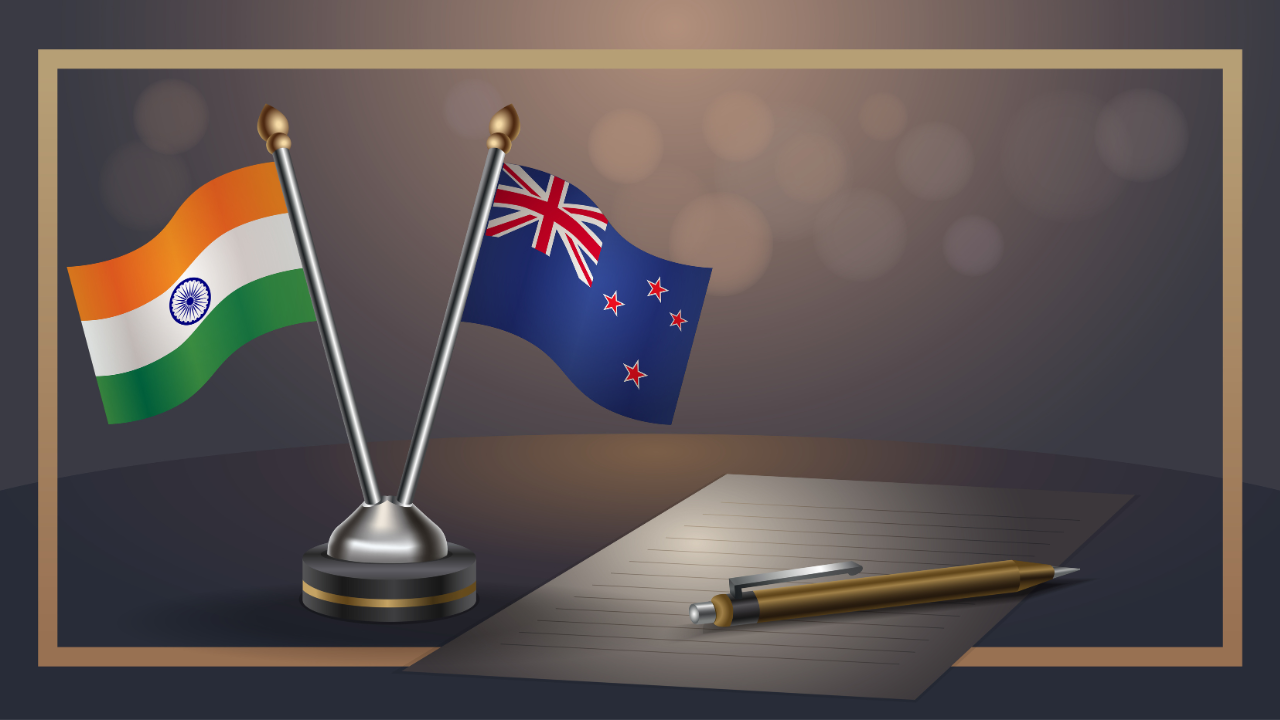
India and New Zealand signed a long-pending Free Trade Agreement (FTA), concluding over a decade of negotiations and opening new paths across trade, investment and workforce mobility.
The agreement slashes tariffs on Indian exports, expands access to services and introduces visa pathways for professionals, positioning both countries for stronger economic engagement in the Indo-Pacific.
Also Read: India-EU FTA Deal: A Strategic Turn in the Global Trade
Top Points: What India Gains from the India-New Zealand FTA?
- 100% duty-free access for exports: All Indian goods exported to New Zealand will face zero tariffs from day one, thereby improving competitiveness across sectors such as textiles, engineering goods, chemicals, and electronics.
- Boost to labour-intensive sectors: Industries such as leather, garments, handicrafts, and MSMEs are expected to gain from improved market access and lower export costs.
- Expanded services market access: The agreement opens access to over 100 service segments, enabling Indian professionals in IT, healthcare, and engineering to tap into new opportunities.
- 5,000 work visas annually: A dedicated mobility pathway will enable Indian professionals to work in New Zealand, meeting skills demand and expanding global job opportunities.
- Stronger position in global supply chains: The FTA is expected to improve India’s role in global manufacturing and supply chains by lowering trade barriers and enabling cross-border collaboration.
Also Read: US Tariffs on Chinese Electronics: Could this be a Game-Changer for India’s Manufacturing Sector?
Top Points: What does New Zealand gain from the India-New Zealand FTA?
- Tariff cuts on 95% of exports to India: New Zealand will gain phased tariff reductions, with several goods becoming duty-free, including wool, forestry products, and industrial materials.
- Access to a large consumer market: The deal opens India’s fast-growing market, creating export opportunities for agri-products, raw materials, and high-value goods.
- $20 billion investment commitment: New Zealand is expected to facilitate up to $20 billion in investments in India over the next 15 years, supporting infrastructure, manufacturing and services.
- Improved services & business access: Companies from New Zealand will benefit from eased regulations and greater access to Indian service sectors and supply networks.
- Diversified trade partnerships: The agreement helps New Zealand reduce dependence on limited markets while strengthening Indo-Pacific trade ties.
Also Read: Union Budget 2026: India’s Expectation as a Transitioning Economy
Strategic Pathways: India-New Zealand FTA
The India-New Zealand Free Trade Agreement marks a strategic step in expanding bilateral trade, investment and workforce mobility between the two economies. With both countries moving ahead to implement the FTA, it is set to play a central and defining role in shaping long-term trade flows and cross-border collaboration.
Frequently Asked Questions about India-New Zealand FTA:
1. What are the key highlights of the India-New Zealand FTA?
The FTA offers:
- 100% duty-free access for Indian exports
- Tariff reductions for New Zealand goods
- 5,000 work visas
- Expanded services trade
- $20 billion investment commitment
2. How many work visas are available for Indians under the FTA?
The agreement provides 5,000 work visas annually for Indian professionals, along with additional working holiday visa options.
3. Which sectors benefit the most from the India-New Zealand trade deal?
Key sectors include textiles, leather, engineering goods, IT services, healthcare, agriculture and advanced manufacturing.
4. How will the India-New Zealand FTA impact manufacturing and supply chains?
The FTA will strengthen manufacturing and global supply chains by reducing tariffs, improving logistics collaboration and enabling cross-border industrial partnerships.
5. Will the India-New Zealand FTA increase bilateral trade?
Yes, both countries aim to significantly increase trade volumes, with targets to expand exports, attract investments and deepen economic cooperation.

Samarjit Kaur is a journalist and communications professional covering technology & emerging digital trends. With a focus on clarity and context, she reports on developments shaping industries and governance. When not reporting, she chooses to plug-in and relax on her playlists and plan her next bucket-list trips!