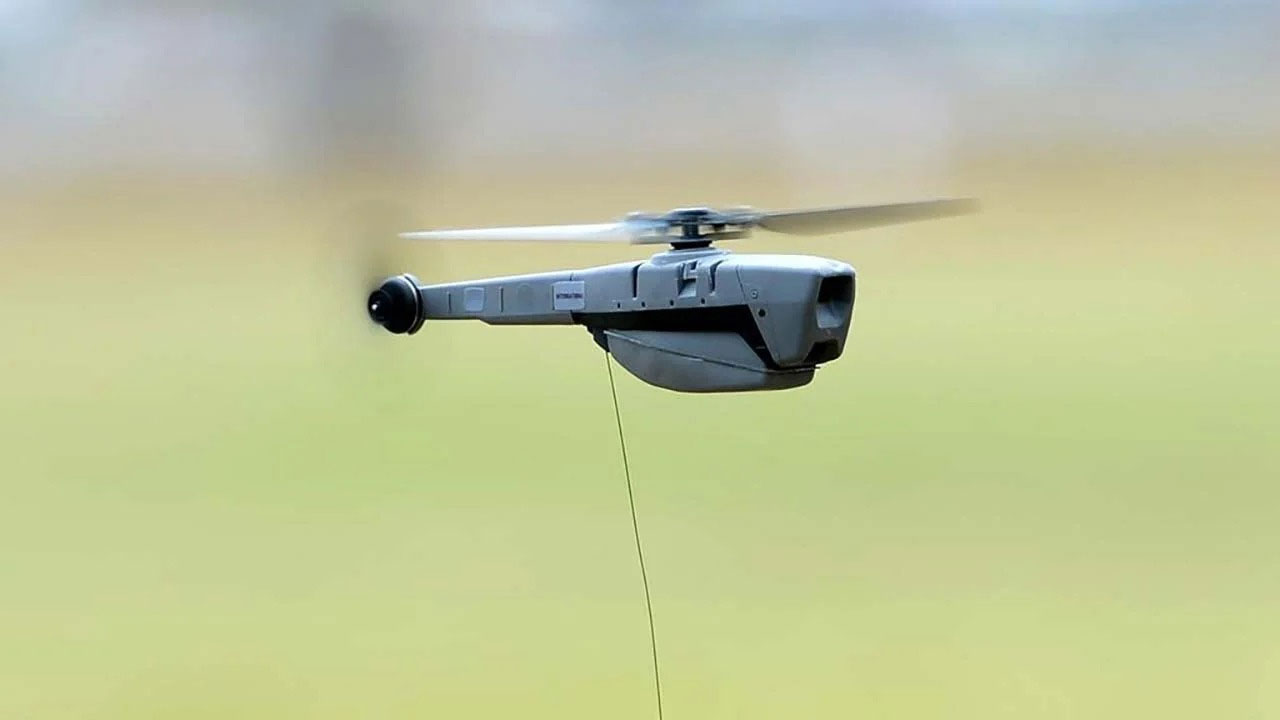
An Indian defense technology startup, Decouvertes Future Tech Private Limited, has previewed the Vision Nano, a lightweight unmanned aerial vehicle (UAV) weighing in the 250-gram class, with a 20-megapixel camera and a claimed flight time of up to 25 minutes.
The company says it designed and developed the drone in India using indigenous engineering and equipment.
The announcement offers an early look at a compact drone intended for missions where portability and aerial observation matter. However, the company has not yet disclosed a detailed launch schedule or complete technical specifications.
Vision Nano UAV: 20MP Camera and 25-Minute Endurance
According to the company, the Vision Nano combines a compact airframe with a high-resolution 20MP camera. Its advertised flight endurance of up to 25 minutes could support short-range aerial observation and other tasks requiring a small, portable drone.
Decouvertes has highlighted three features of the Vision Nano: compact size, agility and mission readiness. The company has not, however, disclosed the camera’s sensor size, lens specifications, stabilisation system or video-recording capabilities.
These details will be important in assessing the drone’s actual imaging performance and suitability for different operating conditions.
Also Read: AI and GIS Transform Defence Operations as India Moves Towards Predictive Battlefield Intelligence
Indian-Made Drone Focuses on Indigenous Engineering
Decouvertes says it designed and developed the Vision Nano in India using indigenous engineering and equipment. The announcement does not identify which components are manufactured locally or state the percentage of indigenous content.
The extent of domestic manufacturing therefore remains unclear based on the information released so far.
The drone’s 250-gram class also places weight at the center of its design. Smaller UAVs are generally easier to carry and can be launched where larger platforms are impractical. Weight can also affect the regulatory and operational requirements that apply to drones.
Also Read: New Phase in Defence Technology Modernisation for India, AI-Enabled S-400 Received
Vision Nano Launch Date, Price and Availability Remain Unknown
The combination of a 20MP camera and claimed 25-minute flight time could make the Vision Nano relevant to visual inspection, surveying, mapping, security observation and other short-range aerial tasks.
Actual performance will depend on factors including weather, operating altitude, payload configuration and flight profile. The available announcement does not establish how the drone performs in field conditions or confirm its operational deployment with special forces.
Decouvertes has described the Vision Nano as “coming soon”. It has not announced pricing, production volumes, confirmed customers, or market availability.
The next key developments will be the release of full specifications, confirmation of availability and evidence of the drone’s performance in real operating conditions. Until those details emerge, the Vision Nano remains a preview of an Indian-developed compact UAV rather than a platform whose operational capabilities have been independently established.

Samarjit Kaur is a journalist and communications professional covering technology & emerging digital trends. With a focus on clarity and context, she reports on developments shaping industries and governance. When not reporting, she chooses to plug-in and relax on her playlists and plan her next bucket-list trips!