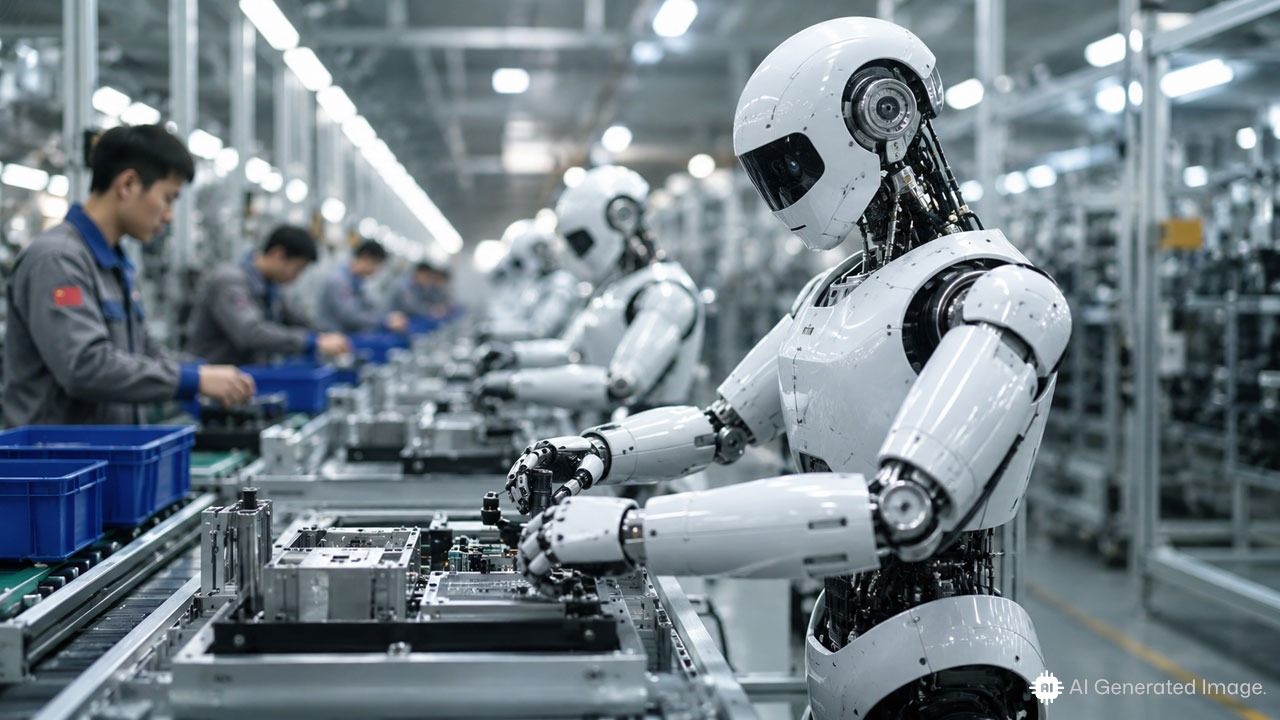
As countries across Asia struggle with ageing populations and worker shortages, humanoid robots are beginning to take on jobs once handled by people. China is emerging as a major supplier of these robots. They are now being tested and deployed in sectors such as logistics, airports, warehouses and cargo handling. The shift is being driven by a growing labour crisis. Countries like Japan and Singapore need more workers, but their ageing populations are shrinking the available workforce. As a result, businesses are turning to automation.
Read More | China is Mass-Producing Humanoids, But Where Are the Buyers?
Chinese Robots Arrive at Japanese Airports
One example that can be seen is at Tokyo’s Haneda Airport. The airport has started testing Chinese-made humanoid robots for baggage handling and cargo movement. These jobs are physically demanding and often lead to injuries and long-term health problems for workers. The robots can lift, push, and transport luggage. Airport operators hope they will reduce the workload on human staff while helping maintain smooth operations.
Labour Shortages Create New Opportunities
Japan is facing a serious labour shortage. The country welcomed a record number of tourists in recent years, increasing pressure on airport and logistics workers.
Read More | If a Humanoid Can Become a Monk, What Is Left That Only Humans Can Do?
The Government of Japan could need millions of workers by 2040 to support economic growth. At the same time, immigration remains a politically sensitive issue. This situation has opened the door for humanoid robots to take over repetitive and physically demanding tasks.
Affordable Robots Give China an Advantage
China has built a strong manufacturing ecosystem through its smartphone, electronics, and electric vehicle industries. That supply chain is now helping Chinese companies produce humanoid robots at lower costs than many international competitors.
Read More | How Close Are We Really to Living With Humanoid Robots?
Some entry-level humanoid robots are available for less than $5,000, making them attractive to businesses looking to reduce labour costs and improve efficiency.

Indrani Priyadarshini is a journalist and editorial professional specialising in technology, artificial intelligence, smart cities, green energy, and digital transformation. With over four years of experience in tech journalism and digital media, she is known for turning complex industry developments into clear, engaging, and insightful stories. Her expertise spans reporting, editorial strategy, digital publishing workflows, and in-depth coverage of emerging technologies shaping the future.