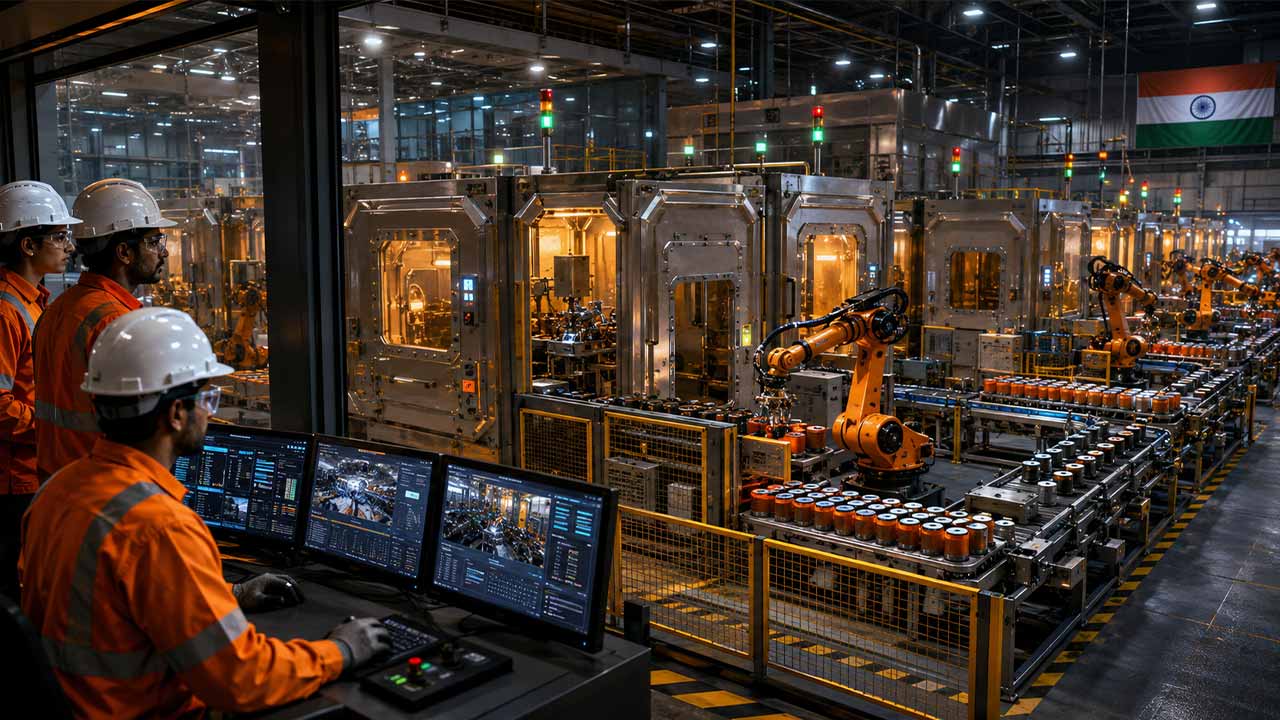
The Department for Promotion of Industry and Internal Trade (DPIIT) is examining ways to reduce human involvement in high-risk production processes.
The move comes as India looks forward to boosting automation in explosives manufacturing as part of a broader effort to improve workplace safety and modernise industrial operations.
This pertains particularly to areas where workers are exposed to hazardous materials or involved in hazardous handling procedures.
The move comes as policymakers increasingly focus on industrial safety, smart manufacturing and technology-led reforms across critical sectors.
Also Read: Startup India FoF 2.0: DPIIT Outlines Guidelines to Boost DeepTech and Early-Stage Funding
Automation Seen as Key to Reducing Workplace Risks
Officials are assessing how automation and advanced manufacturing systems can be introduced across explosives production facilities to minimise manual intervention. The objective is to reduce the risk of accidents, improve compliance standards, and create safer working environments.
Explosives manufacturing is one of the country’s most tightly regulated industrial segments due to the risks involved in handling sensitive materials.
Industry experts argue that greater use of automated systems can improve operational consistency while reducing workers’ exposure to dangerous tasks.
The initiative aligns with India’s broader strategy towards Industry 4.0 practices, in which digital technologies, robotics, and automated controls are increasingly adopted in manufacturing facilities.
Also Read: Day 2 at Convergence India Expo 2026: AI Momentum, Policy Push & Cross-Sector Innovation Take Centre Stage
Modernisation Drive Gains Momentum
The DPIIT’s focus on automation is also seen as part of a broader industrial modernisation strategy aimed at strengthening productivity and operational efficiency.
As manufacturing sectors adopt smart technologies, policymakers are seeking to balance growth with stronger safety frameworks. The proposed shift could encourage companies operating in high-risk industries to invest in modern equipment, automated handling systems and digitally monitored production processes.
Industry stakeholders are likely to work closely with regulators to analyse practical implementation models and ensure that safety standards evolve alongside technological advancements.
Also Read: DPIIT signs MoU with Primus Partners Pvt Ltd to strengthen the startup ecosystem
Safety and Technology Take Centre Stage
The latest discussions highlight industrial safety as a central theme to India’s manufacturing roadmap.
While detailed implementation measures are yet to emerge, the direction signals growing support for technology-led risk reduction in sectors where worker safety remains an important concern.
For manufacturers, the message is clear: future competitiveness will not only depend on production capacity but also on the ability to deploy safer, smarter and more resilient industrial systems.
As India accelerates its manufacturing ambitions, investments in industrial automation, robotics and workplace safety technologies will gain greater attention from both policymakers and industry players in the months ahead.

Samarjit Kaur is a journalist and communications professional covering technology & emerging digital trends. With a focus on clarity and context, she reports on developments shaping industries and governance. When not reporting, she chooses to plug-in and relax on her playlists and plan her next bucket-list trips!