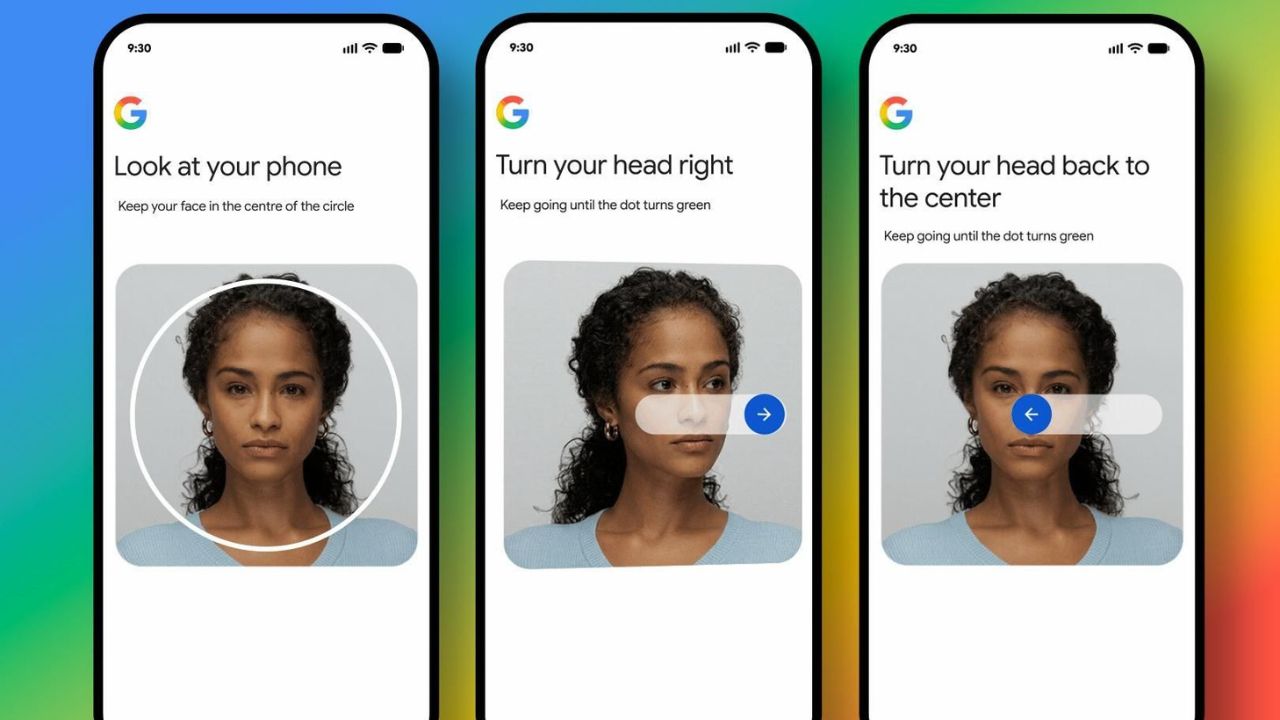
Google has introduced a new selfie video sign-in feature that allows users to verify their identity with their face and regain access to their Google Account. The feature is aimed at people who lose access to their usual phone or computer, forget their password, or find themselves trying to sign in from a different device. The move adds another layer to Google’s account recovery system and reflects a wider shift in online security towards biometric authentication and away from relying solely on passwords.
How does Google’s Selfie Video Sign-In feature work?
The Google Selfie Video Sign-In feature needs to be set up before a user actually loses access to their account. During registration, users look into their device’s camera and follow a series of guided movements, such as turning their head from side to side or nodding. This allows Google to capture the user’s face from different angles. The process is similar to facial recognition used for unlocking smartphones, but Google’s selfie video is intended primarily as a backup option for account recovery rather than a method for signing in every day.
Read More | Google’s Android 17 Makes It Easier to Switch From iPhone
Once the initial selfie video is recorded, Google keeps it on file with the user’s consent. If the person later struggles to access their account, they can record another selfie video. Google then compares the new recording with the previously enrolled video to help confirm the user’s identity and restore access. The feature is designed for situations such as losing or having a phone stolen, forgetting a password, or attempting to access an account from a borrowed or unfamiliar device.
Can you activate Selfie Video Sign-In after getting locked out?
No. This is one of the most important things users need to know about Google’s new selfie video sign-in feature. The option must be added to the account in advance. Users cannot wait until they are locked out and then enrol for selfie video verification as part of the recovery process.
Those who want to set it up can access their Google Account settings, open the Security and Sign-in section, and look for the option to add a selfie video under additional sign-in methods. Google recommends recording the video in steady, moderate lighting. Users should also remove sunglasses and hats and ensure that no other faces are visible in the frame during the recording.
How does Google protect selfie video sign-in from deepfakes?
Face-based account recovery also raises an obvious security concern: could someone use a photograph, pre-recorded video or deepfake to impersonate the account holder?
Google says it has built multiple security measures into the system to reduce the risk of such attacks. The verification process uses the saved selfie video alongside a fresh recording, while the guided head movements are intended to confirm that the person is physically present and recording the video in real time.
This type of “liveness” check is designed to make it harder for attackers to fool the system with a still image or a pre-recorded clip. Google also continues to use other fraud detection measures to identify suspicious sign-in attempts.
What happens to your selfie video and biometric data?
The convenience of face-based account recovery comes with a privacy question. Users are effectively giving Google access to a video of their face, which is sensitive biometric information. Google says the selfie video is recorded and stored only with the user’s consent. The video can also be deleted from the account, while Google says it is used for sign-in purposes unless the user chooses to share it for another purpose. The stored video is also encrypted.
Read More | Google Selects 20 AI-First Indian Enterprises for Google for Startups Accelerator Programme 2026
Even so, the growing use of facial recognition and other biometric technologies continues to attract scrutiny from privacy advocates and regulators. Unlike a password, a person’s face cannot simply be changed if biometric information is ever compromised. That makes the security and handling of such data an important part of the conversation around Google’s new feature.
Who can use Google’s Selfie Video Sign-In?
The feature is not available to every type of Google account. The rollout is currently aimed at regular Google Accounts and does not extend to Workspace accounts, children’s accounts or accounts enrolled in Google’s Advanced Protection Program, according to the Hindustan Herald report.
The feature had also been tested earlier in Brazil before a wider rollout. Google is positioning selfie video sign-in as an additional recovery method rather than a replacement for existing sign-in options. The company continues to recommend that users maintain multiple ways to recover their accounts.
Is Google replacing passwords with face verification?
Not exactly. Google’s selfie video sign-in is better understood as another layer of account recovery rather than a complete replacement for passwords or other authentication methods. Google already supports passkeys, which can use biometric authentication such as a fingerprint or facial recognition on compatible devices. However, passkeys are generally linked to the devices where they are stored. A selfie video can potentially provide an alternative when a user no longer has access to the device holding their passkey.
Read More | Google’s Andhra Power Move Could Push Hyperscalers Towards Private Energy Networks
The new feature therefore sits somewhere between traditional account recovery and biometric identity verification. It gives users another way to prove that they are the rightful account owner when their usual recovery options are unavailable. For users, the feature could be particularly useful because a Google Account may contain years of emails, photos, documents and other important information. At the same time, Google’s new system highlights the growing trade-off between convenience and privacy as more online services turn to biometric data for identity verification.
For now, users should not rely on a single recovery method. Keeping a phone number updated, adding recovery options and using passkeys where available can provide additional protection. Google’s selfie video sign-in could make account recovery easier, but it is best viewed as one more layer of security rather than the only way to regain access to an account.

Indrani Priyadarshini is a journalist and editorial professional specialising in technology, artificial intelligence, smart cities, green energy, and digital transformation. With over four years of experience in tech journalism and digital media, she is known for turning complex industry developments into clear, engaging, and insightful stories. Her expertise spans reporting, editorial strategy, digital publishing workflows, and in-depth coverage of emerging technologies shaping the future.