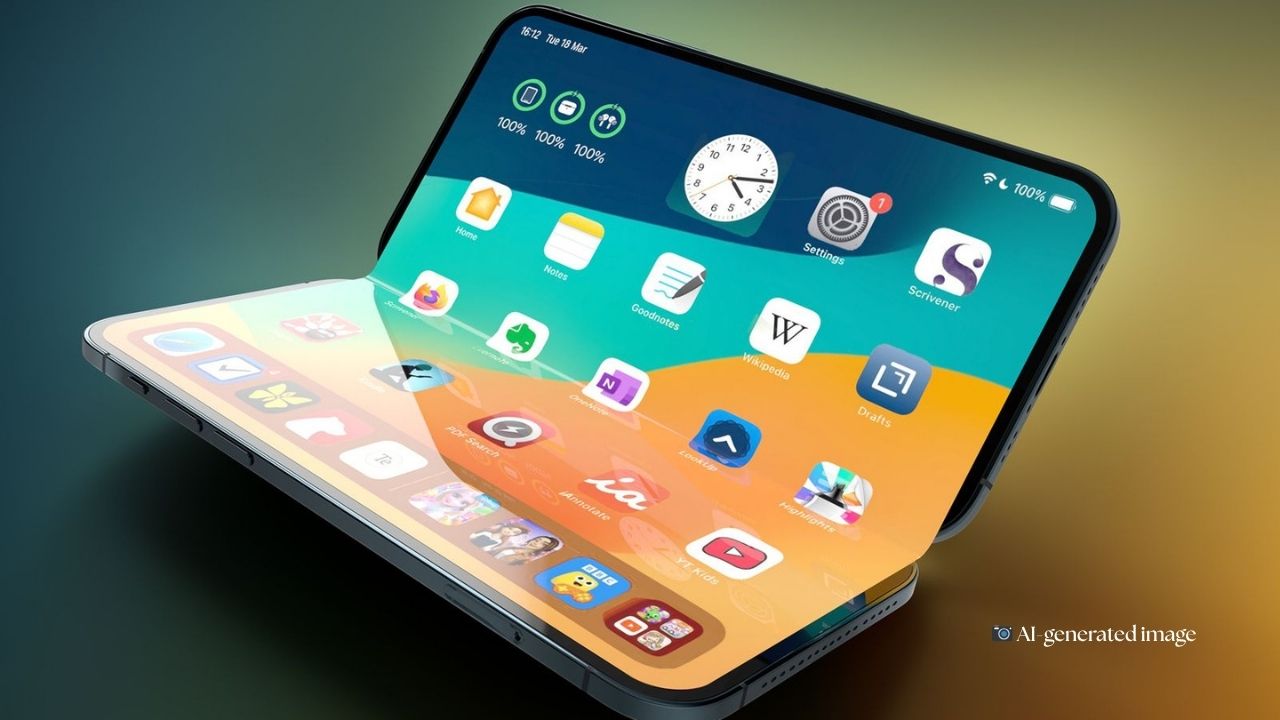
Apple’s long-rumoured foldable iPhone, often referred to as the “iPhone Fold,” is reportedly encountering more technical challenges than expected, potentially pushing back its production timeline. According to a recent report, the company is facing difficulties during the engineering verification testing (EVT) stage, a crucial phase where design flaws are identified and manufacturing processes are fine-tuned before scaling up production. These issues have emerged early in testing but are significant enough to impact the overall development schedule.
Read More | Smartphone Market Faces Historic 12% Drop in 2026 as Memory Prices Triple: Report
Sources indicate that Apple has already alerted its supply chain partners about a possible delay of several months. The setback appears to stem from engineering complexities rather than shortages of components or materials, suggesting that the challenges lie in perfecting the device’s design and functionality.
The coming weeks are expected to be decisive. The period between April and early May could determine whether Apple is able to resolve the outstanding issues in time to stay on track with its broader product roadmap. Any further delays at this stage may have a ripple effect on launch timelines. Despite these challenges, Apple is continuing to work closely with its partners under tight deadlines. However, current solutions may not fully address all concerns, adding pressure to an already demanding development cycle.
Read More | Apple Pay May Finally Launch in India in 2026
The company is reportedly planning an initial production run of around 7 to 8 million units. While that figure represents less than 10 percent of its total iPhone output for the cycle, the foldable device is still seen as an important addition to Apple’s premium lineup, with the potential to drive demand in the high-end segment.
Before reaching mass production, the device will need to clear several additional stages, including development verification testing, production verification testing, and pilot production. Each step plays a vital role in ensuring the product meets Apple’s quality standards and can be manufactured efficiently at scale. For now, the foldable iPhone remains a work in progress, with its final timeline hinging on how quickly Apple can overcome these early engineering challenges.

Indrani Priyadarshini is a journalist and editorial professional specialising in technology, artificial intelligence, smart cities, green energy, and digital transformation. With over four years of experience in tech journalism and digital media, she is known for turning complex industry developments into clear, engaging, and insightful stories. Her expertise spans reporting, editorial strategy, digital publishing workflows, and in-depth coverage of emerging technologies shaping the future.