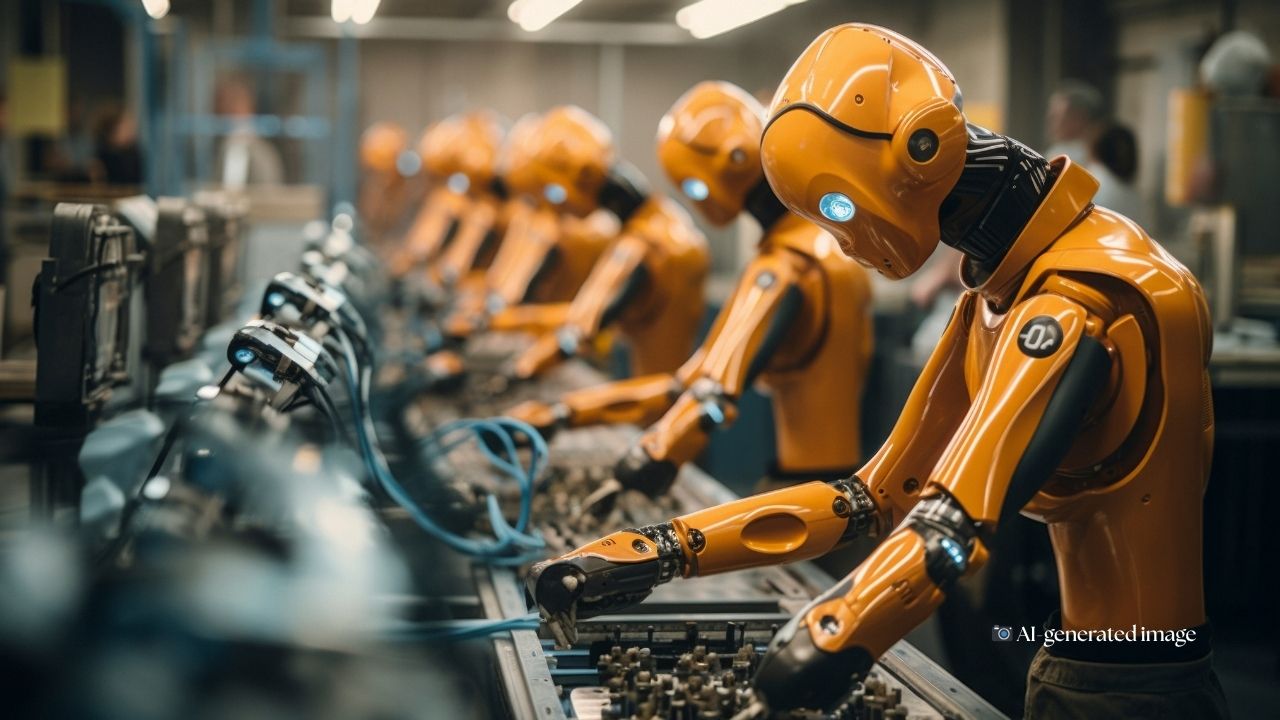
AGIBOT has moved its G2 humanoid robots out of controlled environments and into a functioning consumer electronics factory, marking a notable step in industrial robotics deployment. The robots are now operating at Longcheer Technology’s tablet manufacturing facility in China, where they have been integrated directly into active production workflows rather than isolated pilot setups. According to the company, this is the first large-scale use of its embodied AI systems within core manufacturing processes for consumer electronics.
Read More | Humanoid Robots Are Getting Faster: Unitree H1 Nears Elite Human Sprint Speed
On the factory floor, the G2 robots are assigned to Multimedia Integrated Testing (MMIT) stations along the tablet assembly line. Their responsibilities include picking up devices, placing them into testing fixtures, and sorting units based on test outcomes—tasks that demand both precision and consistency. AGIBOT says the robots are designed to work alongside human operators while adapting to mixed-model production environments. This flexibility allows manufacturers to switch between different product types without extensive reconfiguration or specialised tooling, reducing downtime during transitions.
In terms of performance, the company reports throughput of up to 310 units per hour, with cycle times averaging 19 to 20 seconds per task. The system is also said to maintain a success rate above 99.9 percent, supporting continuous, round-the-clock operations with stable output across shifts.
Read More | Meet Hope JR & Reachy Mini: Hugging Face’s Answer to Big-Tech Robots
Another key highlight is the speed of deployment. AGIBOT claims the robots were integrated into the production line within 36 hours, underscoring their potential for rapid adoption in existing manufacturing setups. Both AGIBOT and its manufacturing partner view this deployment as a step toward scaling embodied AI in industrial settings. By reducing reliance on rigid automation systems, the approach aims to bring greater flexibility to factories dealing with shorter product cycles and a growing diversity of device models.

Indrani Priyadarshini is a journalist and editorial professional specialising in technology, artificial intelligence, smart cities, green energy, and digital transformation. With over four years of experience in tech journalism and digital media, she is known for turning complex industry developments into clear, engaging, and insightful stories. Her expertise spans reporting, editorial strategy, digital publishing workflows, and in-depth coverage of emerging technologies shaping the future.