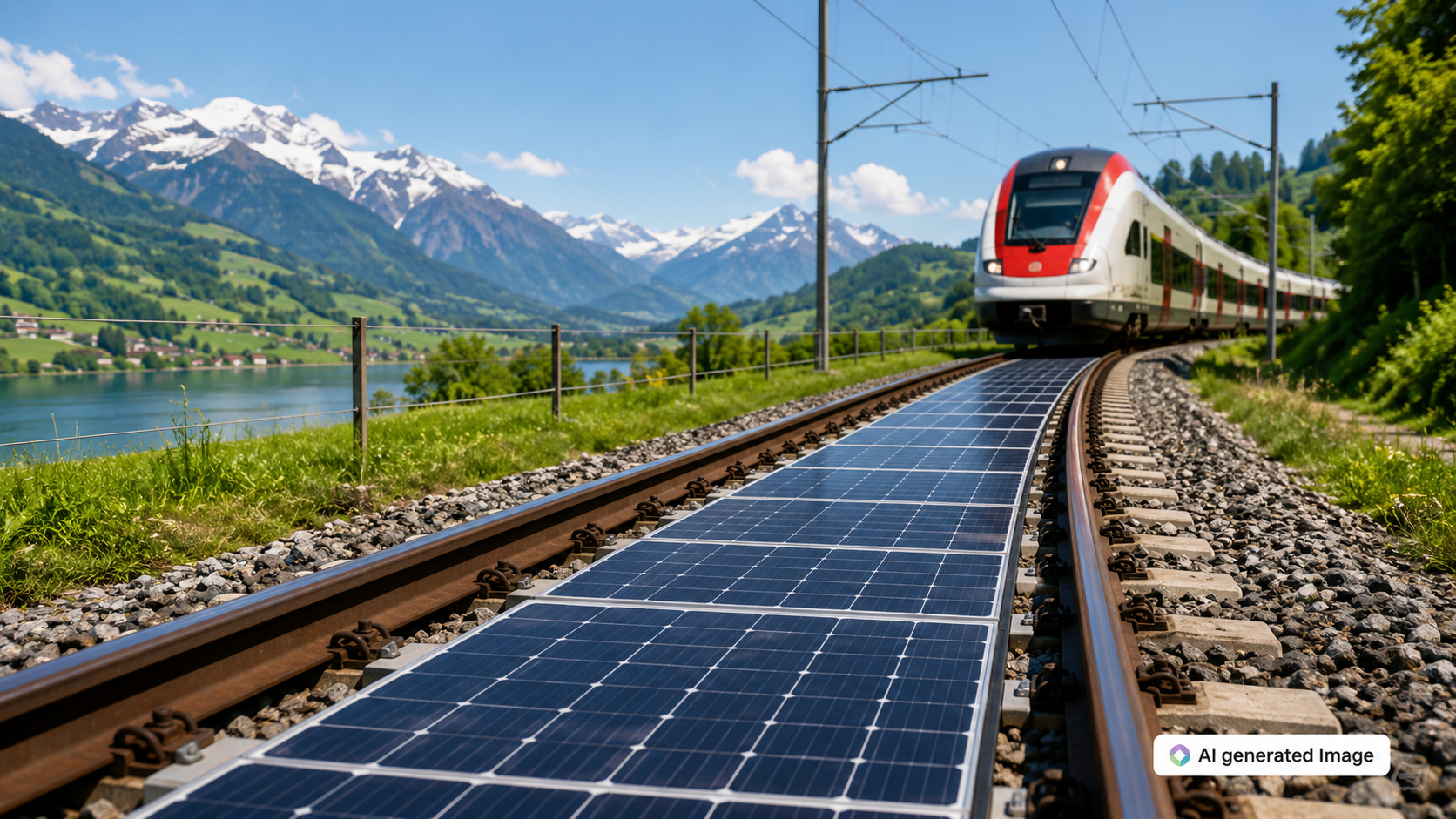
Switzerland has begun testing a new approach to solar power generation by installing solar panels directly between railway tracks, aiming to increase renewable energy output without requiring additional land. The pilot project has been launched on an active rail line and is being closely monitored for its operational and commercial viability.
The initiative comes as countries across Europe explore new ways to promote clean energy use amid rising electricity demand and climate targets.
By using existing railway infrastructure, the project aims to unlock underutilised space for renewable energy production.
Also Read: India-Norway Green Strategic Partnership: Modi, Norway PM Sign Deals on AI, Space and Clean Energy
Railway Network Could Become a New Source of Solar Power
The pilot installation has been developed by Swiss startup Sun-Ways, which designed a system that allows solar panels to be installed between railway tracks and removed for maintenance. The panels are installed using specialised equipment that can deploy them along rail corridors without major modifications to existing infrastructure.
According to project developers, the concept could be expanded across large sections of Switzerland’s rail network if the initial trials are successful.
The generated electricity would be supplied to the power grid, contributing to the country’s renewable energy mix.
Supporters of the project say railway corridors offer a practical location for solar generation because they already exist within transportation networks and do not require converting agricultural or residential land.
Also Read: China Launches Offshore Underwater AI Data Centre Near Shanghai in Push for Green Computing
Pilot Project Tests Durability and Commercial Feasibility
The trial has yet to examine how the panels perform under real-world railway conditions, such as exposure to vibrations, weather changes, dust accumulation and regular train operations.
Authorities and project partners will also evaluate maintenance requirements, energy output and long-term costs.
The project reflects a broader trend of integrating renewable energy systems into existing infrastructure. Similar concepts are being explored globally, including solar installations along highways, in parking facilities, and in industrial corridors.
If the technology proves reliable and economically viable, Switzerland plans to establish a new model for integrating transportation infrastructure with renewable energy generation.

Samarjit Kaur is a journalist and communications professional covering technology & emerging digital trends. With a focus on clarity and context, she reports on developments shaping industries and governance. When not reporting, she chooses to plug-in and relax on her playlists and plan her next bucket-list trips!