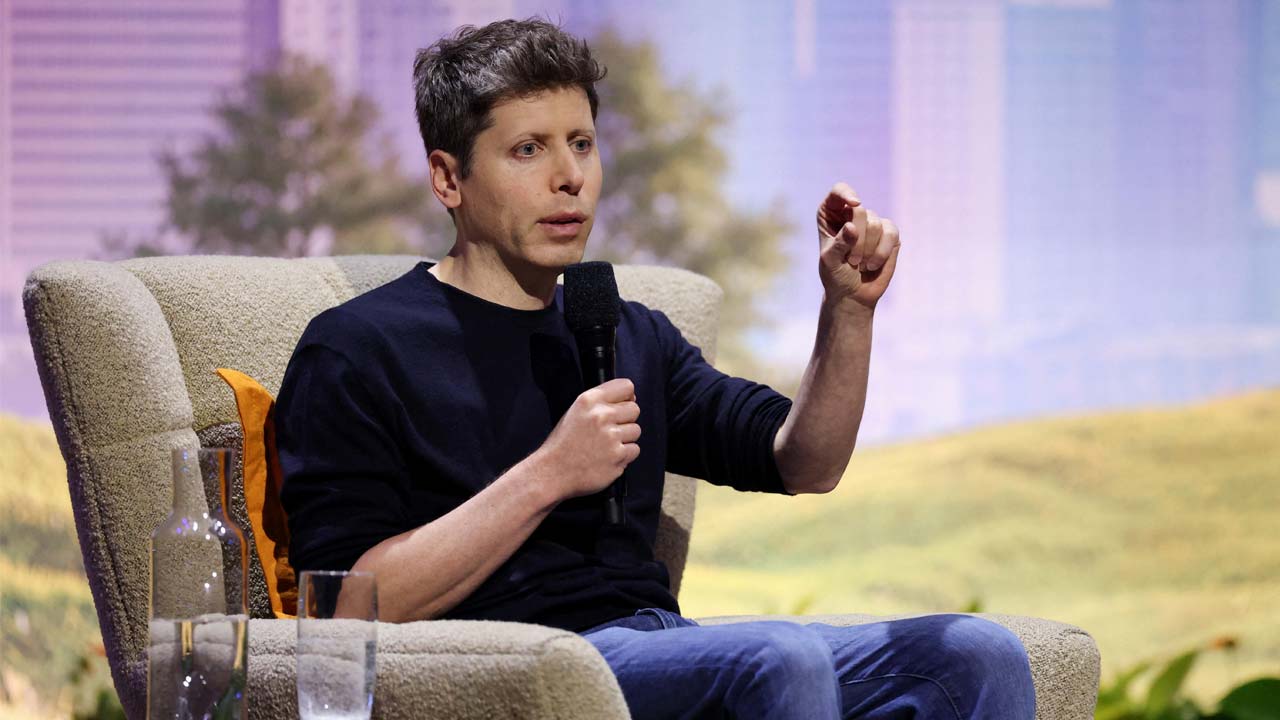
OpenAI chief executive Sam Altman has acknowledged that people are right to fear the risks posed by increasingly capable artificial intelligence.
He argued that the public should trust AI firms to develop the technology safely. His comments preview the intensifying debate over how and why the industry should regulate AI use or face stronger government oversight.
Also Read: “The Happiest Group Is China”: Trump’s Blunt Take on AI Safety and the US-China Race
Sam Altman Says AI Fears are Justified
Speaking at Salesforce’s annual conference in San Francisco, Altman said AI had advanced to a point where imagining how it could go wrong no longer required much imagination.
“The world should trust OpenAI and other AI firms to “do the right thing”, adding that they understood the scale of what was at stake,” he added.
Altman was speaking publicly for the first time since a former Anthropic researcher’s post warning that unchecked AI could potentially kill all humans by the end of the decade went viral.
Several AI experts and executives agreed with the broader concern, although they did not explain how such an outcome would occur.
The claims have renewed scrutiny of AI development. Anthropic chief executive Dario Amodei has called for a slower pace of development and urged governments to regulate the sector. His position received support from Altman, Google DeepMind co-founder Demis Hassabis and Elon Musk.
Also Read: AI Could Become Dangerous: Why Amodei Wants the Industry to Slow Down
AI Firms Debate Self-Regulation and Safety
Altman said AI firms could regulate themselves and that OpenAI would keep safety and alignment ahead of capabilities. He said the company would slow down or stop if it could not maintain that balance.
Meta chief executive Mark Zuckerberg also argued that AI labs had incentives to build safer systems, including the risk of legal liability if their products caused harm.
NVIDIA chief executive Jensen Huang, speaking at the same conference, said companies should decide when new AI systems were ready for release. He argued that new laws or regulations were not needed and described safety as an engineering problem.
Not everyone agrees. Anthropic executive and co-founder Jack Clark said that leaving AI completely unregulated amounted to “rolling dice with immense risks”. Other industry voices have also questioned whether technology companies should be trusted to act entirely in the public interest.
OpenAI and Anthropic have said they are working towards industry-wide safety standards. OpenAI executive Chris Lehane said the company was working with Anthropic and Google DeepMind on a voluntary effort to advance frontier AI standards.
For now, the debate centres on who should set the limits for AI firms: the companies building the technology, governments, or both.
The immediate issue for the AI industry is not simply how quickly capabilities advance, but whether companies can maintain safety alongside that pace. The BBC report shows that the debate is now shifting to who should decide when AI systems are safe enough to release.
Samarjit Kaur is a journalist and communications professional covering technology & emerging digital trends. With a focus on clarity and context, she reports on developments shaping industries and governance. When not reporting, she chooses to plug-in and relax on her playlists and plan her next bucket-list trips!


