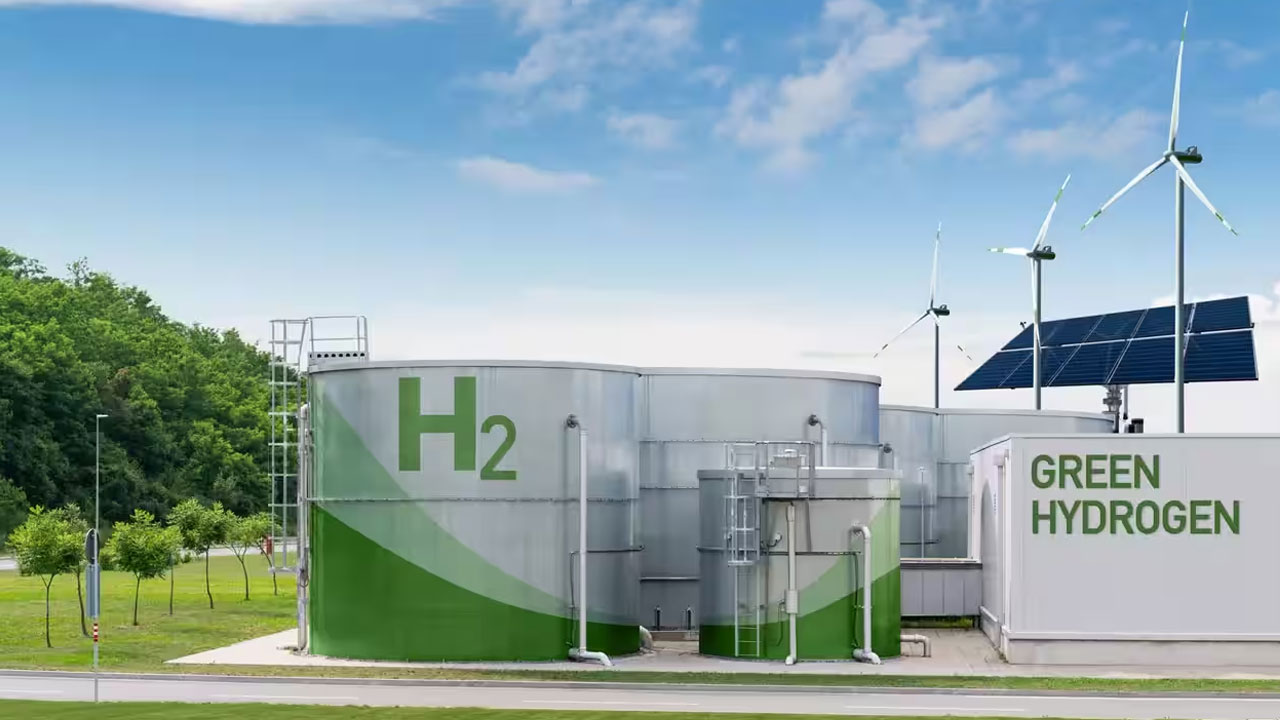
India is targeting 5 million metric tonnes (MMT) of annual green hydrogen production capacity by 2030 under the National Green Hydrogen Mission. The programme is expected to attract more than ₹8 lakh crore in investment, create over six lakh jobs and reduce dependence on imported fossil fuels.
The government also expects the initiative to help avoid nearly 50 million metric tonnes of carbon dioxide emissions annually, according to an official factsheet.
National Green Hydrogen Mission Targets Investment and Emissions Cuts
The mission aims to strengthen India’s energy security while building its position in the global clean energy market. Green hydrogen is produced by splitting water into hydrogen and oxygen using renewable electricity. It could help reduce emissions in industrial sectors where switching away from fossil fuels is difficult.
The programme is expected to reduce cumulative fossil fuel imports by approximately ₹1 lakh crore by 2030. Projected investment and employment gains span manufacturing, infrastructure, research, and project development.
Also Read: Cabinet Clears ₹1.86 Lakh Crore Green Energy Corridor-III Plan to Move 135 GW of Renewable Power
Six States Notify Green Hydrogen Policies
States are developing policies to support domestic green hydrogen production and infrastructure. Gujarat, Andhra Pradesh, Maharashtra, Uttar Pradesh, Rajasthan and West Bengal have notified dedicated policies for the sector.
Haryana, Punjab, Bihar and Kerala are finalising draft policies, while Himachal Pradesh, Madhya Pradesh, Odisha, Telangana and Chhattisgarh have incorporated hydrogen into existing industrial or renewable energy policy frameworks.
These measures aim to encourage investment and expand India’s domestic production capacity.
India Expands Global Partnerships and Certification
India is also building international cooperation to support its green hydrogen ambitions. The Ministry of New and Renewable Energy (MNRE), either directly or through the National Institute of Solar Energy, has signed memoranda of understanding, letters of intent or joint declarations with Australia, Finland, France, Germany, Saudi Arabia, the United Arab Emirates and Uzbekistan.
An India-US Hydrogen Task Force operates under the Strategic Clean Energy Partnership. The India-US New and Emerging Renewable Energy Technology Action Platform also covers green hydrogen.
In April 2025, MNRE launched India’s Green Hydrogen Certification Scheme. The Bureau of Energy Efficiency is accrediting agencies to oversee monitoring, verification and certification. A dedicated portal became operational in June 2026 to support transparency and compliance.
India’s 5 MMT target sets out the scale of its clean energy ambition, but investment, state-level policy support, credible certification and international partnerships will be important to its progress. The mission also supports India’s longer-term net-zero emissions target for 2070.
For the market, the key measure will be how effectively these policy commitments translate into production capacity, industrial adoption, and reduced fossil-fuel dependence by 2030.

Samarjit Kaur is a journalist and communications professional covering technology & emerging digital trends. With a focus on clarity and context, she reports on developments shaping industries and governance. When not reporting, she chooses to plug-in and relax on her playlists and plan her next bucket-list trips!