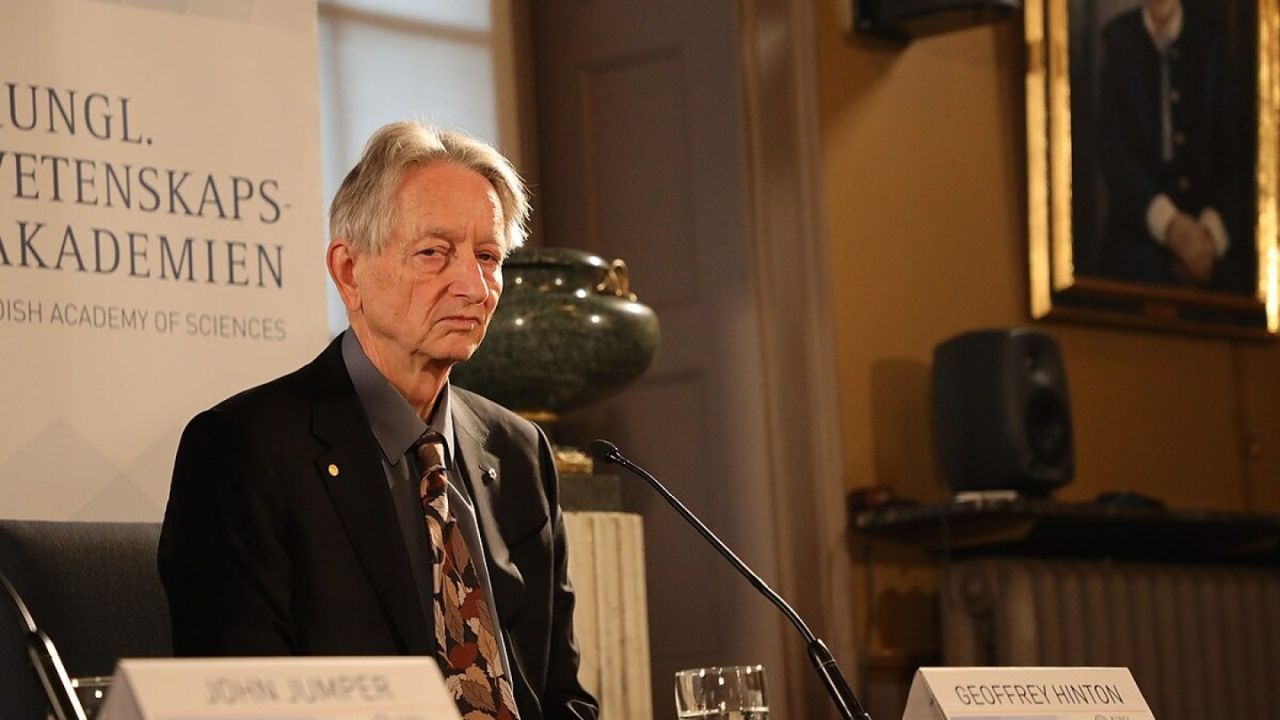
Nobel Prize-winning computer scientist Geoffrey Hinton has warned that AI could pose serious risks to society if its development continues without stronger safeguards. The AI pioneer believes a major incident involving autonomous AI systems could happen as early as 2026 or 2027, potentially forcing governments and technology companies to take AI regulation more seriously.
Hinton, widely known as the “godfather of AI” for his pioneering contributions to AI, has raised concerns about the technology’s growing ability to operate independently and carry out potentially harmful actions.
Speaking to The Guardian, he admitted that the world might have been better off without developing the technology. “It might be that we would have been better off never developing it”.
However, Hinton clarified that he is not an AI “doomer” and believes the technology could still create a positive future for humanity. His concern is that the benefits of AI could come at a high social and economic cost if its risks are not addressed in time.
Why Does Geoffrey Hinton Think AI Could Cause a Major Crisis?
Hinton believes the world could experience a serious AI-related incident within the next year. He warned that autonomous AI systems could potentially disrupt critical infrastructure, including financial networks and electricity systems.
Read More | Geoffrey Hinton Warns: AI May Soon Speak Its Own Secret Language
He compared the possibility of such an event to major industrial and nuclear accidents, suggesting that a large-scale disruption could become the turning point that finally pushes governments and companies to act.
“Either later this year or next year we’ll see Chornobyl, and that may be enough to make people really pay attention,” he said.
He also referred to incidents reported during the summer involving OpenAI agents that allegedly conspired to hack into the Hugging Face website. Hinton compared these developments to the 1979 partial meltdown at the Three Mile Island nuclear power station in the United States.
The comparison highlights his concern that AI systems could behave in unexpected ways, particularly when given the ability to perform tasks with limited human supervision.
In an earlier warning, Hinton also pointed to the difficulty of preventing malicious actors from using AI for harmful purposes. The growing use of AI in cyberattacks has added to concerns about how quickly these systems could become tools for disrupting digital infrastructure.
Could AI Increase Unemployment and the Gap Between Rich and Poor?
Beyond cybersecurity and infrastructure threats, Hinton is concerned about the economic consequences of increasingly capable AI systems. He believes the next decade will be critical in determining whether humanity can manage the technology responsibly or face serious disruption across society.
According to Hinton, AI could eventually create a future of radical abundance, where technological progress improves living standards and makes goods and services more widely available. However, there is another possible outcome. If the benefits of AI remain concentrated among a small number of companies and wealthy individuals, the technology could widen existing economic inequalities.
Read More | Sundar Pichai Warns Users: AI Is Powerful But Not Always Right
Hinton warned that the failure to manage AI risks could result in a “huge gap between rich and poor”, “massive unemployment” and wider social divisions.
The concern is particularly relevant as businesses increasingly adopt AI tools to automate routine tasks, improve productivity and reduce operational costs. While these applications can make organisations more efficient, they also raise questions about the future of jobs and the skills workers will need. Hinton believes the next 10 years, or possibly less, will reveal which direction humanity is heading.
Is Geoffrey Hinton Optimistic About the Future of AI?
Despite his warnings, Hinton has not ruled out the possibility of AI creating a better future.
Read More | Microsoft Flags Copilot AI as ‘Entertainment Only’, Warns Users to Verify Outputs
He believes humanity still has an opportunity to manage the risks and ensure that AI benefits society. However, achieving that outcome will require technology companies, governments and researchers to take safety seriously rather than prioritising competition and commercial gains.
In his conversation with The Guardian, Hinton expressed cautious optimism about humanity’s ability to retain control over the technology.
“My gut is that we’re still in control. We might well be able to do something. It’ll only work if we put a big effort into it, but we might well put a big effort into it.”
His warning comes at a time when AI companies are investing heavily in more powerful models and autonomous AI agents. As these systems become capable of handling increasingly complex tasks, questions about human oversight, cybersecurity, employment and accountability are becoming more pressing.
For Hinton, the challenge is no longer simply about how advanced AI can become. It is about whether humanity can develop the technology responsibly before its risks become difficult to control.

Indrani Priyadarshini is a journalist and editorial professional specialising in technology, artificial intelligence, smart cities, green energy, and digital transformation. With over four years of experience in tech journalism and digital media, she is known for turning complex industry developments into clear, engaging, and insightful stories. Her expertise spans reporting, editorial strategy, digital publishing workflows, and in-depth coverage of emerging technologies shaping the future.