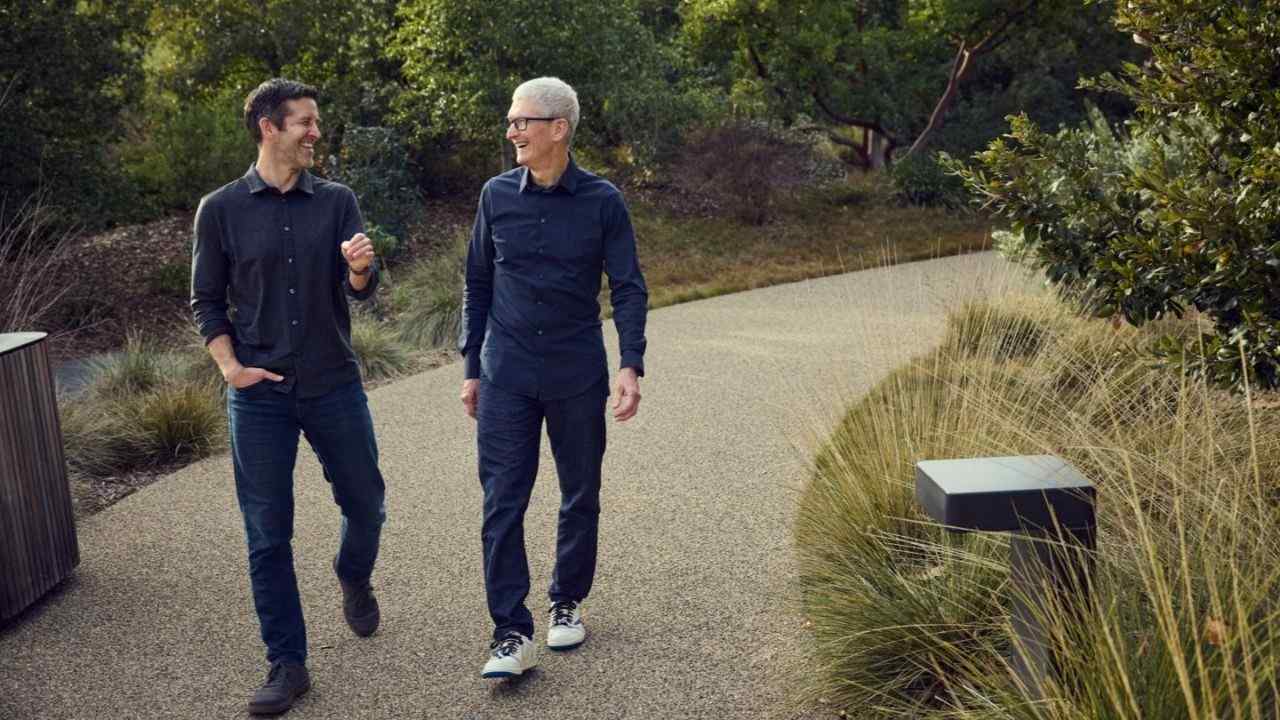
John Ternus will become Apple’s new CEO on September 1, replacing Tim Cook after 15 years. His first major test will come just eight days later, when Apple is expected to unveil its next iPhone generation and potentially its first foldable iPhone.
On September 1, John Ternus will officially take over as chief executive, bringing an end to Tim Cook’s 15-year tenure at the top of the company. Cook will move into the role of executive chairman, while Ternus will join Apple’s board.
The leadership change comes at a crucial time for Apple. The company is facing growing competition in artificial intelligence, questions over its dependence on China for manufacturing and pressure to create its next major product category.
Who is John Ternus?
John Ternus is an engineer who has spent most of his career at Apple. He joined the company in 2001 and rose through its hardware organisation. He has worked on major Apple products, including the iPhone, iPad, Mac and Apple Watch. In 2021, he became Apple’s senior vice president of Hardware Engineering.
Before joining Apple, Ternus worked as a mechanical engineer at Virtual Research Systems. He studied mechanical engineering at the University of Pennsylvania. His appointment also marks a change in the type of leadership at Apple. Cook was closely associated with Apple’s operations, supply chain, manufacturing and global business. Ternus comes from the product and engineering side of the company. Apple’s board has described Ternus as a leader with deep technical knowledge and a strong focus on product development.
Why is Tim Cook stepping down?
Cook is not leaving Apple completely. From September 1, he will become executive chairman and is expected to remain involved in selected areas of the business, including engagement with policymakers.
Read More | Apple Pay India Launch Tipped for September-October 2026
Apple said the CEO transition was part of a long-term succession plan and was unanimously approved by its board. Cook became Apple CEO in 2011, following the final months of Steve Jobs’ leadership. During his tenure, Apple expanded its product portfolio and services business while becoming increasingly reliant on a complex global supply chain. Ternus now inherits that entire operation, but with a different set of challenges.
What challenges will Ternus face as Apple CEO?
1. Apple’s AI strategy
Artificial intelligence is likely to be one of Ternus’ biggest challenges. Apple introduced Siri in 2011, but the rise of generative AI has changed the technology landscape. Companies such as Google, OpenAI and Microsoft have moved quickly with AI assistants, agents and large language models.
Apple, meanwhile, has faced delays in delivering some of its more ambitious Siri upgrades. The challenge for Ternus is not simply to add more AI features to Apple products. He needs to decide how much of Apple’s AI technology should be developed internally and how much should rely on outside partners. That matters because Apple’s traditional strength has been the close integration of its hardware, software and services.
Read More | Apple iRing Rumours Surface: Could Apple’s Next Wearable Challenge Samsung and Oura?
If key AI capabilities increasingly come from external companies, Apple could lose some of that control. The bigger question is: Can Apple build an AI ecosystem that is as influential as the iPhone?
2. Reducing dependence on China
Apple also faces a difficult supply-chain challenge. China remains an important part of Apple’s manufacturing network, with a large ecosystem of suppliers, component makers, skilled workers and production facilities.
At the same time, tensions between the US and China, tariffs, export restrictions and Beijing’s push for domestic technology have created additional risks. Apple has been expanding production in countries such as India and Vietnam, but moving its entire manufacturing ecosystem away from China is not a simple task. Ternus will have to reduce Apple’s exposure to geopolitical risks without pushing up costs or affecting the availability of its products.
Read More | Apple Pay India Launch Delayed Over Fee Dispute With Banks
3. Finding Apple’s next big product
The iPhone remains central to Apple’s business, but the company needs to find products that can create new growth. Apple has expanded into services, wearables and mixed-reality hardware, including the Vision Pro. However, none has yet matched the commercial impact of the iPhone. That puts greater attention on what comes next.
Reports have pointed to a broader product pipeline that could eventually include smart home devices, a tabletop robot, camera-equipped AirPods, smart glasses and other new products. For Ternus, the task will be to turn some of these projects into products that can create entirely new markets rather than simply add another device to Apple’s existing portfolio.
Why is the foldable iPhone important for John Ternus?
The foldable iPhone could become one of Ternus’ earliest tests as CEO. Apple is widely expected to enter the foldable smartphone market with a premium model. Current reports suggest a device that could have a display of around 5.5 inches when folded and roughly 7.8 inches when opened.
These specifications remain based on reports and leaks rather than Apple’s official announcement. If Apple does launch the device, it will enter a category where Samsung and other manufacturers have already spent years developing foldable phones.
Apple’s challenge will therefore be bigger than simply producing a foldable handset. It will need to convince consumers that its approach offers enough value to make the technology mainstream. The launch could also show whether Ternus intends to push Apple towards more ambitious hardware products.
What will Apple launch on September 9?
Apple has confirmed a major product event for September 9. The event will be the first major Apple launch under Ternus, who will have been CEO for just over a week. The company is expected to introduce the iPhone 18 Pro and iPhone 18 Pro Max. A foldable iPhone is also widely expected, although Apple has not officially confirmed the product.
Other reports have pointed to new Apple Watch models and smart home products, while software updates including iOS 27 are also expected around the same period. The September event could therefore provide an early indication of what Apple’s product strategy will look like under its new CEO.
Can John Ternus make Apple exciting again?
That may ultimately be Ternus’ biggest challenge. Apple has become extremely good at improving existing products, but some of the company’s most important moments came when it introduced something consumers had not seen before.
The Mac, iPod, iPhone, iPad, AirPods and Apple Watch all helped create or reshape major product categories. The foldable iPhone, if launched as expected, could give Ternus an opportunity to demonstrate that Apple can still enter a new category and influence the market.
But hardware alone will not determine his success. He will also need to address Apple’s AI strategy, manage its global supply chain, retain engineering talent and decide where the company should invest for its next decade.

Indrani Priyadarshini is a journalist and editorial professional specialising in technology, artificial intelligence, smart cities, green energy, and digital transformation. With over four years of experience in tech journalism and digital media, she is known for turning complex industry developments into clear, engaging, and insightful stories. Her expertise spans reporting, editorial strategy, digital publishing workflows, and in-depth coverage of emerging technologies shaping the future.