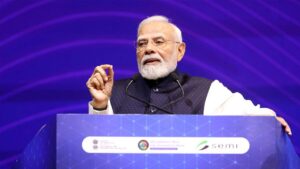
India and Malaysia have agreed to expand cooperation in semiconductors, trade and defence following high-level talks in Kuala Lumpur.
Indian Prime Minister Narendra Modi and Malaysian Prime Minister Anwar Ibrahim signed 11 agreements covering strategic sectors. The engagement is part of efforts to strengthen the Comprehensive Strategic Partnership elevated in 2024 and deepen economic and security cooperation.
Also Read: Bihar Bets Big on Chips: New Semiconductor Policy Aims to Transform State’s Industrial Landscape
India-Malaysia Strategic Partnership, Trade and Investment
During the two-day visit, the premiers emphasised economic cooperation and trade expansion. They reaffirmed plans to promote local-currency trade settlement using the Indian rupee and Malaysian ringgit to reduce reliance on third-party currencies.
Anwar highlighted ongoing collaboration across trade, investment, food security, healthcare and tourism, while noting a common goal of exceeding last year’s bilateral trade of about $18.6 billion.
The leaders also welcomed cooperation between India’s NPCI International Ltd and Malaysia’s PayNet on cross-border digital payments. They noted the ongoing review of key trade agreements, including the ASEAN-India Trade in Goods Agreement.
Also Read: India Targets 2nm & 3nm Chip Manufacturing by Early 2030s Under Semicon 2.0: Ashwini Vaishnaw
Semiconductors and Security Cooperation
A key outcome of the talks was a pledge to deepen ties in the semiconductor industry. Both governments underscored the sector’s strategic importance to supply chain resilience and technology value chains. Agreements aim to support workforce development, innovation and supply chain stability.
Defence cooperation also featured prominently, with both sides noting regular military engagements and joint exercises. Counter-terrorism, maritime security and intelligence sharing were reaffirmed as shared priorities, with Modi stressing a firm stance against terrorism without double standards.
Samarjit Kaur is a journalist and communications professional covering technology & emerging digital trends. With a focus on clarity and context, she reports on developments shaping industries and governance. When not reporting, she chooses to plug-in and relax on her playlists and plan her next bucket-list trips!