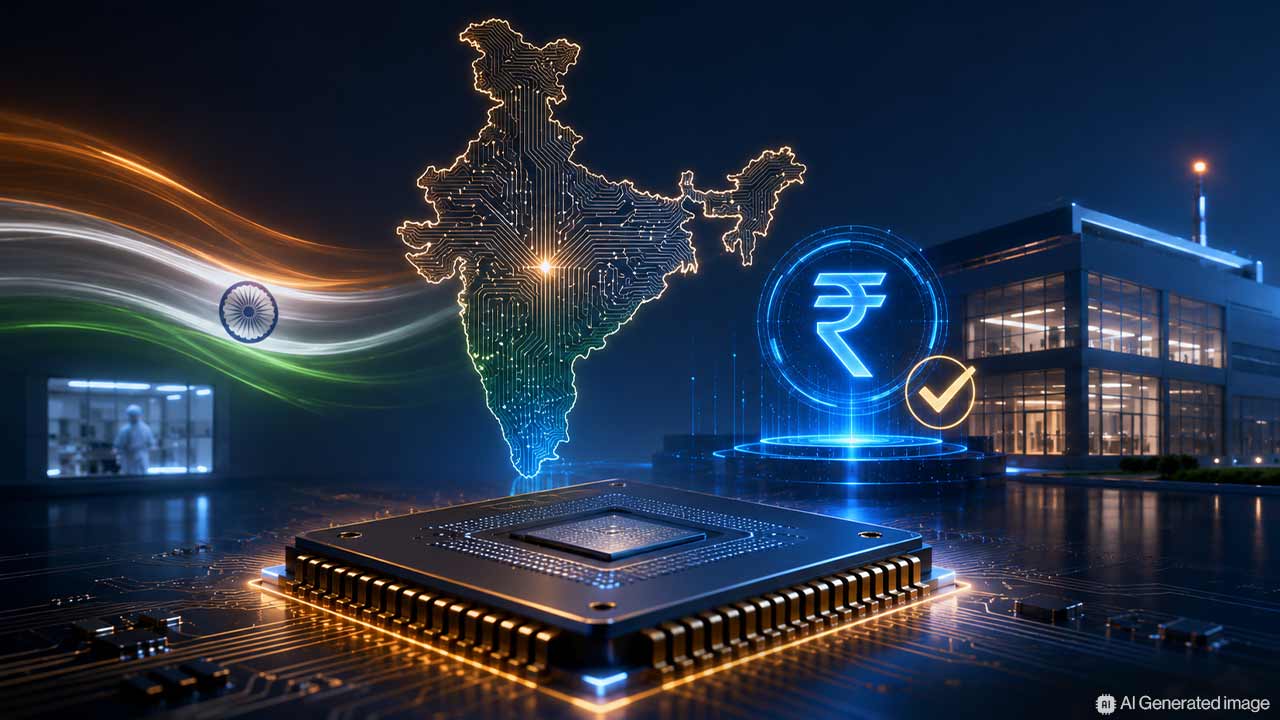
India’s Finance Ministry’s Expenditure Finance Committee (EFC) has approved a proposed outlay of ₹1.25 lakh crore for the India Semiconductor Mission (ISM) 2.0.
The proposal will now be moved to the Union Cabinet for final approval. The proposed investment exceeds ₹76,000 crore, a reserve from the first phase of the mission.
The fresh move highlights the Centre’s growing focus on strengthening India’s semiconductor ecosystem and reducing reliance on imported chips.
Also Read: ISM 2.0: India Advances Semiconductor Ambitions with Qualcomm 2nm Chip Unveil
A Bigger Push for India’s Chip Ecosystem
India Semiconductor Mission 2.0 is expected to broaden government support beyond chip manufacturing. The new phase will focus on the complete semiconductor value chain, including chip design, fabrication, packaging, semiconductor equipment, specialised materials and domestic intellectual property (IP).
It also aims to strengthen local supply chains and encourage greater participation from ancillary industries and micro, small and medium enterprises (MSMEs).
The proposal follows the government’s announcement in the Union Budget earlier this year to launch the next phase of the semiconductor mission, as India seeks to build long-term capabilities in one of the world’s most strategic technology sectors.
Also Read: India Semiconductor Mission 2.0 May Get 12-Year Run as Centre Expands Chip Ecosystem Push
ISM 2.0: Building on the First Phase
The increased funds reflect the government’s intent to scale up efforts after the progress made under ISM 1.0.
The first phase, backed by ₹76,000 crore, has already led to approvals for semiconductor projects spanning chip fabrication, assembly, packaging and design facilities across multiple states.
Officials expect the expanded programme to help India develop a more resilient domestic semiconductor industry while attracting fresh investments from global and local companies.
Industry observers also see the move as an important step towards supporting electronics manufacturing, artificial intelligence (AI), electric vehicles (EVs), telecommunications and other sectors that depend heavily on semiconductor supply.
Also Read: India Plans ₹7,100 Crore Semiconductor Incentives in FY27 to Accelerate Chip Manufacturing Growth
The Final Step: Cabinet Approval Awaited
With the present clearance now in place, the proposal awaits approval from the Union Cabinet before the next phase of the mission is formally rolled out.
Once on paper, ISM 2.0 is expected to become one of India’s largest technology manufacturing initiatives, reinforcing the country’s ambition to become a trusted destination in the global semiconductor supply chain.
As global powers race to secure semiconductor supply chains, India’s move will be closely watched by chipmakers, investors and electronics manufacturers.

Samarjit Kaur is a journalist and communications professional covering technology & emerging digital trends. With a focus on clarity and context, she reports on developments shaping industries and governance. When not reporting, she chooses to plug-in and relax on her playlists and plan her next bucket-list trips!