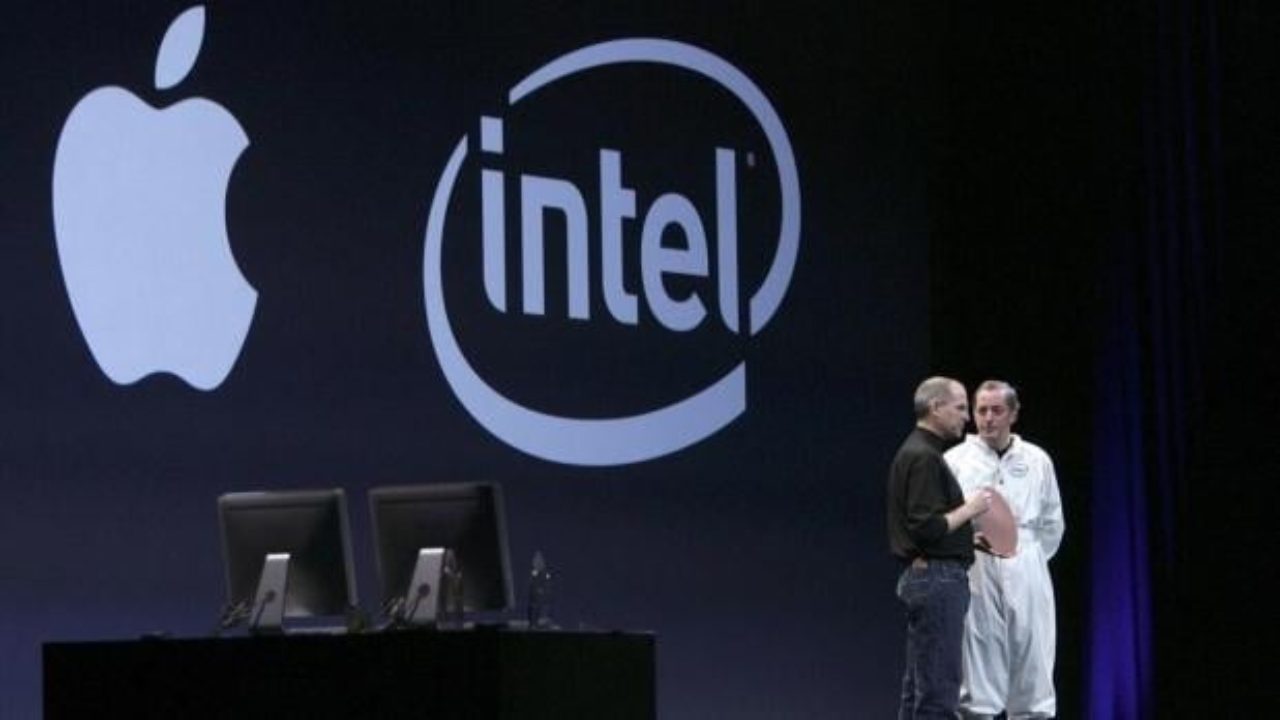
Apple is ready to explore a new chip manufacturing arrangement with Intel. The move could reshape supply chain dynamics in the global semiconductor industry and reduce Apple’s dependence on its current manufacturing partners.
With the United States pushing to strengthen domestic chip production, the focus is on reducing dependence on Asian manufacturing hubs.
The development has sparked fresh debate over Intel’s foundry ambitions, Apple’s long-term hardware strategy and broader competition in the artificial intelligence (AI) and semiconductor sectors.
Also Read: NVIDIA to Invest Up to $2.1 Billion in iRex to Expand AI Data Centre Capacity
Apple Tapping Scope for Future Chip Production
According to the reports, Apple is analysing Intel’s foundry business to produce semiconductor components. The move is part of Apple’s broader strategy to diversify its supply chain while supporting US-based chip manufacturing efforts.
Intel has been actively expanding its contract chip manufacturing business in recent years to compete with major global foundries such as Taiwan Semiconductor Manufacturing Company (TSMC).
Securing Apple as a manufacturing customer will be a major milestone for Intel’s turnaround plans and strengthen its position in the advanced semiconductor market.
The discussions are further aligned with Washington’s push to boost domestic chip production under the US Chips and Science Act. Industry analysts suggest that a potential collaboration could help both companies address geopolitical risks related to semiconductor supply chains.
While the companies have not officially confirmed product-level details, reports suggest the partnership could initially focus on a limited set of chip categories before expanding.
Also Read: HCL-Foxconn Picks CTCI as EPC Partner for Uttar Pradesh Semiconductor Plant
Which Apple Devices Could See Intel-Made Chips?
The arrangement does not indicate a return to Intel processors in Apple’s Mac lineup. Earlier, Apple had shifted away from Intel CPUs in 2020 with the launch of its in-house Apple Silicon chips, including the M-series processors now used across MacBook, iMac and iPad devices.
Instead, Intel’s role is expected to remain limited to manufacturing support through its foundry operations. This means future Apple devices could contain chips fabricated at Intel facilities while still being designed by Apple.
Industry observers believe chips used in artificial intelligence processing, connectivity modules, or supporting hardware components could emerge as possible areas of collaboration. Some analysts also point to future iPhone, MacBook and data centre hardware requirements as potential opportunities for Intel’s manufacturing business.
The development comes as global semiconductor companies race to secure capacity for AI infrastructure, advanced computing and next-generation consumer electronics. Demand for advanced chips has surged amid rapid growth in generative AI, cloud computing and edge devices.
If finalised, the Apple-Intel arrangement could become one of the most closely watched semiconductor partnerships in the technology sector this year.

Samarjit Kaur is a journalist and communications professional covering technology & emerging digital trends. With a focus on clarity and context, she reports on developments shaping industries and governance. When not reporting, she chooses to plug-in and relax on her playlists and plan her next bucket-list trips!