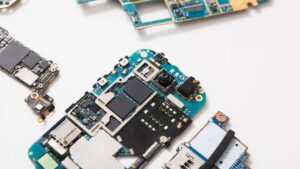
The global semiconductor industry, which powers everything from smartphones and electric vehicles to defence systems and AI infrastructure, is dominated by a handful of players. The United States leads in chip design, Taiwan controls advanced manufacturing, and China is rapidly scaling production and packaging capacity. India, long dependent on imports, is now trying to reposition itself in this high-stakes technology race.
Why Semiconductors Matter
Semiconductors are no longer just commercial products; they are strategic assets. Control over chips influences national security, supply-chain resilience, and economic competitiveness. As geopolitical tensions reshape global trade, countries are racing to localise chip ecosystems. For India, which consumes large volumes of semiconductors, building domestic capability has become a strategic necessity rather than an option.
Read More | How China Is Closing the Gap on Nvidia’s AI Chip Lead
India’s Starting Point
The country hosts a large talent pool of semiconductor engineers and design centres for global firms. However, manufacturing has remained a weak link. Most chips used in India are imported, even as domestic demand is expected to double to around $100 billion by the end of the decade. To address this gap, the government rolled out a multi-billion-dollar semiconductor incentive programme aimed at attracting fabrication plants and allied infrastructure. A key project underway is a commercial semiconductor foundry in Gujarat, developed with international technology partners. The facility will focus on mature technology nodes, which are essential for automobiles, consumer electronics, telecom equipment, and industrial systems.
Alongside fabrication, India is also pushing into chip assembly, testing, and packaging, a segment that requires lower capital investment and can be scaled faster. Several global firms have announced plans to set up or expand such operations in the country.
Read More | AI Data Centres Are Consuming the World’s Power — Can India Cope?
Dhruv64 and the Design Shift
On the design front, India recently crossed an important milestone with the launch of Dhruv64, its first fully indigenous 64-bit microprocessor. Built on the open-source RISC-V architecture, the chip represents a move away from proprietary technologies and costly licensing models. Rather than chasing high-performance consumer markets, Dhruv64 is designed for strategic and industrial use cases such as defence, telecom, embedded systems, and critical infrastructure. Its significance lies not in raw computing power but in technological sovereignty, offering Indian developers and institutions greater control over hardware design and security.
Read More | What Happens if China’s Humanoid Robotics Boom Becomes Its Next Big Crisis?
The Road Ahead
With visible progress, India trails global leaders in advanced fabrication, ecosystem maturity, and scale. Although catching up with the US, Taiwan or China will require long-term policy consistency, deeper global partnerships, massive capital investment, and patience. As India lays the groundwork through targeted manufacturing, open-architecture design, and strategic partnerships, a bigger question emerges: Will India eventually match the world’s semiconductor giants — or will it redefine success by building strength in critical, self-reliant niches of the chip ecosystem?

Indrani Priyadarshini is a journalist and editorial professional specialising in technology, artificial intelligence, smart cities, green energy, and digital transformation. With over four years of experience in tech journalism and digital media, she is known for turning complex industry developments into clear, engaging, and insightful stories. Her expertise spans reporting, editorial strategy, digital publishing workflows, and in-depth coverage of emerging technologies shaping the future. She has also conducted high-profile interviews and podcasts with industry leaders, bringing sharp analysis and accessible storytelling to a wide audience.