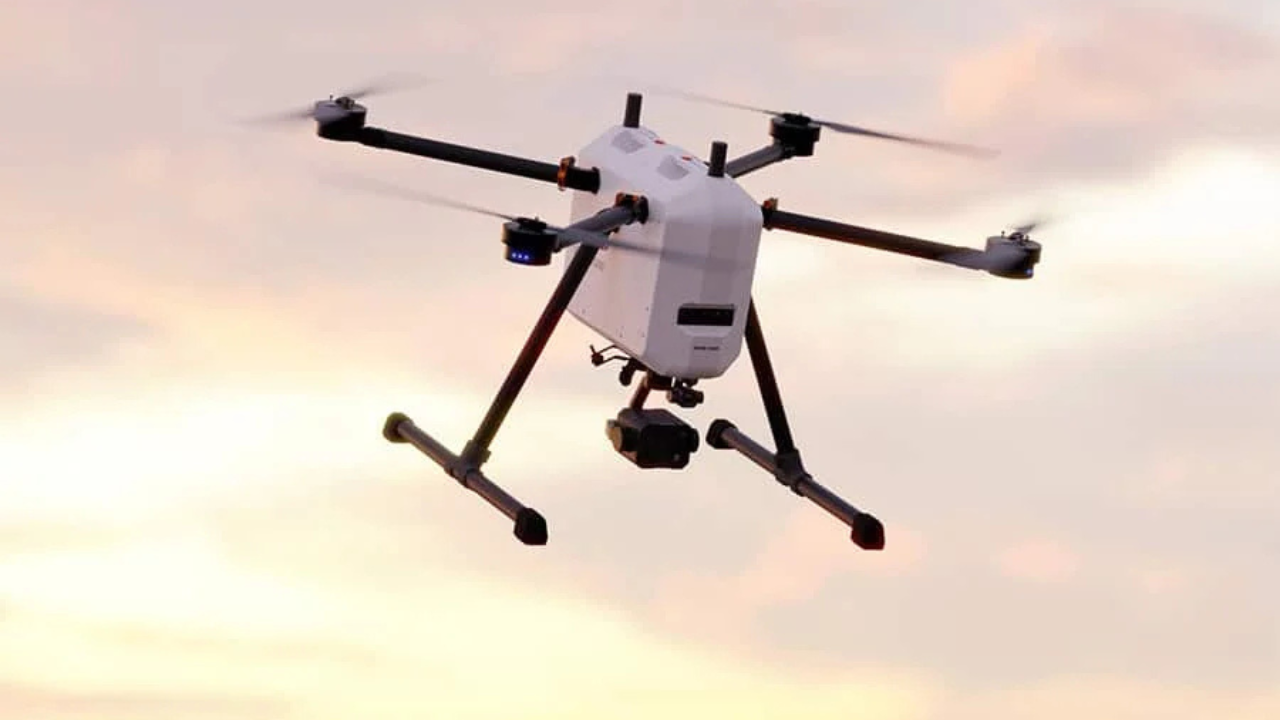
India is supporting advanced drone technology, with the Technology Development Board (TDB) providing financial backing to Casey Aviation to develop hybrid propulsion systems.
The move signals a growing policy & funding focus on indigenous unmanned aerial vehicle (UAV) innovation, particularly on energy-efficient, long-endurance drone solutions.
Also Read: 10-Minute EV Charging? New Breakthrough Could Change Everything
Government Push for Indigenous Drone Technology
The Technology Development Board, under the Department of Science and Technology, has partnered with Casey Aviation to accelerate the development and production of hybrid-propulsion technology for drones. The funding will support the design, testing and commercialisation of systems that combine fuel-based & electric power.
Hybrid propulsion is an important enabler to extend drone flight time. It further reduces operational limitations related to ‘battery-only’ systems. The initiative aligns with India’s self-reliance mission in deep tech and with efforts to reduce dependence on imports in the UAV segment.
“Such collaborations are expected to strengthen domestic manufacturing capabilities and encourage startups to scale advanced aviation solutions domestically.”
-said officials
Also Read: Delhi EV Policy 2.0: ₹175 Crore Scrappage Push Boosts the ‘Electric Shift’
Focus on Long-Endurance and Commercial Use Cases
Casey Aviation’s technology will improve drone endurance, payload capacity and operational regulation. These features are important for sectors such as logistics, surveillance, agriculture and infrastructure monitoring.
Industry observers said that hybrid drones can play a major role in enabling beyond-visual-line-of-sight (BVLOS) operations. This is important for large-scale commercial deployment. The development also comes at a time when India is witnessing increased demand for drone applications across both government and private sectors.
The project will contribute to India’s growing drone ecosystem, supported by policy measures such as production-linked incentives (PLI) and relaxed drone regulations, thereby further boosting innovation & adoption.

Samarjit Kaur is a journalist and communications professional covering technology & emerging digital trends. With a focus on clarity and context, she reports on developments shaping industries and governance. When not reporting, she chooses to plug-in and relax on her playlists and plan her next bucket-list trips!