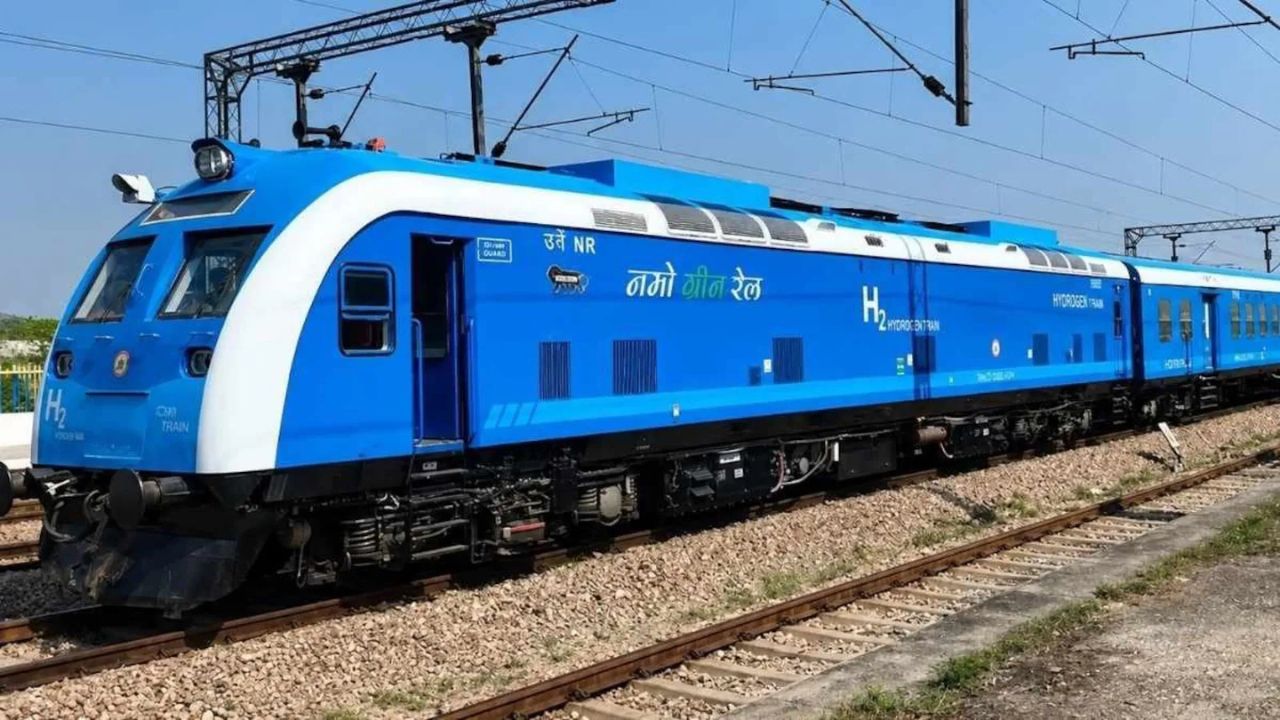
India has stepped into the hydrogen rail era with a 2,400-kW (3,200 HP) hydrogen-powered passenger train that has already covered around 6,000 km within days of entering service. Operating between Jind and Sonipat in Haryana, the 10-coach train can carry up to 2,600 passengers. It currently runs at a maximum operational speed of 75 kmph, although the train has been designed to reach speeds of up to 110 kmph.
What is India’s hydrogen train?
India’s hydrogen train is a zero-emission passenger train powered by hydrogen fuel cells. Instead of burning diesel, its fuel cells generate electricity by combining stored hydrogen with oxygen. The process produces water vapour and heat as its only direct by-products.
Read More | India Unveils World’s First Nuclear Hydrogen Facility: Why the Cu-Cl Cycle Is a Breakthrough
Indian Railways estimates that the train has already avoided around 36,444 kg, or nearly 36 tonnes, of CO₂ emissions compared with a conventional diesel-electric multiple unit (DEMU). A conventional DEMU is estimated to produce about 6.074 kg of CO₂ equivalent per kilometre.
The scale of the Indian train also sets it apart internationally. While several hydrogen trains operating elsewhere use two or three coaches, India’s 10-coach train is currently among the longest and most powerful hydrogen-powered passenger trains in operation.
How does the hydrogen train work?
The train stores hydrogen onboard and feeds it into fuel cells, where it reacts with oxygen from the air. This electrochemical process produces electricity, which powers the train’s traction motors. Unlike a conventional diesel train, there is no combustion involved. That means the train does not produce exhaust emissions such as those associated with diesel engines during operation. The Jind service is supported by an indigenous hydrogen storage and refuelling facility at Jind, giving Indian Railways the infrastructure needed to operate the train on a regular passenger route.
Who developed India’s hydrogen train?
The hydrogen train project has been developed largely through Indian engineering and manufacturing capabilities. The Research Designs & Standards Organisation (RDSO), Integral Coach Factory (ICF) and Medha worked on the train’s design, engineering and integration. The supporting hydrogen storage and refuelling infrastructure at Jind is also part of the indigenous development effort.
Read More | Delhi Metro Starts Hydrogen-Powered Shuttle Bus Service in Central Vista
The project is therefore not simply an imported hydrogen train being operated in India. It represents an attempt to build domestic expertise across hydrogen storage, fuel-cell propulsion, train integration and supporting infrastructure.

Indrani Priyadarshini is a journalist and editorial professional specialising in technology, artificial intelligence, smart cities, green energy, and digital transformation. With over four years of experience in tech journalism and digital media, she is known for turning complex industry developments into clear, engaging, and insightful stories. Her expertise spans reporting, editorial strategy, digital publishing workflows, and in-depth coverage of emerging technologies shaping the future.