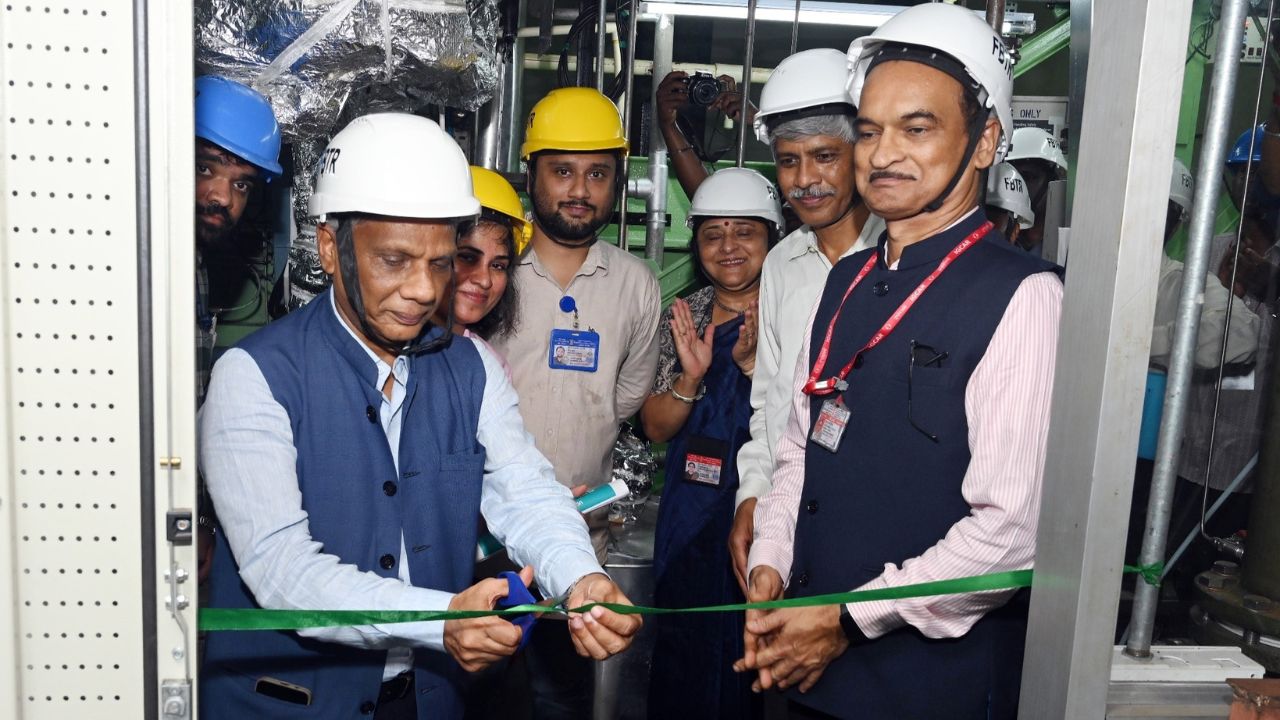
India’s new facility at Kalpakkam is much more than another hydrogen plant. It is the first demonstration anywhere in the world of producing hydrogen using nuclear reactor heat through the Copper–Chlorine (Cu–Cl) thermochemical cycle, rather than relying primarily on electricity. The facility was inaugurated at the Indira Gandhi Centre for Atomic Research in Kalpakkam, Tamil Nadu, using heat from the Fast Breeder Test Reactor (FBTR).
What is this technology?
Most ‘green hydrogen’ today is produced by electrolysis, where electricity splits water into hydrogen and oxygen.
Read More | Gautam Adani Unveils Nuclear Power Plans, Targets 10 GW Capacity by 2035
The Cu–Cl process takes a different route. Instead of using large amounts of electricity, it uses a series of chemical reactions involving copper and chlorine compounds. These reactions occur at different temperatures and when combined, they split water into hydrogen and oxygen while recycling the copper and chlorine intermediates. The net inputs are water and heat; the net outputs are hydrogen and oxygen.
In simple terms:
- Nuclear reactors generate high-temperature heat.
- Heat drives a chain of copper-chlorine reactions.
- Water molecules are broken apart.
- Hydrogen is collected as fuel.
- Chemicals are recycled and reused in the next cycle.
Why make hydrogen from heat instead of electricity?
The main reason is efficiency. Traditional electrolysis converts electricity into chemical energy. But producing electricity from heat and then using that electricity to split water creates conversion losses.
With a thermochemical process, reactor heat is used directly and less electricity is required. The overall energy efficiency can be higher where Hydrogen production costs can potentially fall at scale.
Think of it this way:
Electrolysis route
Nuclear Heat → Electricity → Hydrogen
Cu–Cl route
Nuclear Heat → Hydrogen
By eliminating the intermediate electricity-generation step for much of the process, energy losses are reduced. This is why researchers worldwide view thermochemical hydrogen production as a promising long-term pathway.
Why is the Copper–Chlorine cycle so suited to a reactor?
Many thermochemical water-splitting cycles require extremely high temperatures, often above 800–1,000°C. The Cu–Cl cycle is best suited because it operates at moderate temperatures, roughly around 500°C or lower, depending on the process stage. These temperatures are achievable using advanced nuclear reactors and fast breeder reactors without requiring the ultra-high temperatures needed by some competing hydrogen cycles. The advantages include a lower temperature requirement than many rival cycles, better compatibility with nuclear reactors, reduced materials stress and corrosion challenges and potentially higher overall efficiency than electrolysis-only systems.
Read More | US Launches $17.5B Nuclear Expansion to Fuel Data Centers
This makes the Cu–Cl process one of the most practical candidates for coupling directly with nuclear energy.
Why is this a world first?
The Department of Atomic Energy describes the Kalpakkam project as the world’s first hydrogen production facility using the Cu–Cl thermochemical cycle powered by nuclear process heat. The key distinction is the combination of Nuclear reactor heat, Copper–Chlorine thermochemical water splitting and an operational demonstration facility.
Hydrogen has been produced from nuclear energy before through electrolysis studies and pilot projects. What makes Kalpakkam unique is the direct use of nuclear process heat in a Cu–Cl thermochemical cycle, a combination not previously demonstrated at this level. It is currently a technology demonstrator, meaning its purpose is to prove the engineering and validate the process before commercial-scale deployment.
Why does nuclear hydrogen matter?
Hydrogen is expected to play a major role in sectors that are difficult to electrify, such as steel, fertilisers , chemicals and refineries. Heavy industries such as these need large quantities of hydrogen to reduce emissions.
24/7 clean hydrogen production
Solar and wind are variable. Nuclear reactors operate continuously, allowing hydrogen production day and night. This can provide a stable supply for industry.
Expanding the role of nuclear energy
Traditionally, reactors generate electricity. Nuclear hydrogen allows reactors to become producers of electricity, industrial heat and clean fuels.
Supporting India’s energy transition
India aims to become a major producer of green hydrogen. If thermochemical nuclear hydrogen scales successfully, it could complement renewable-powered electrolysis and help meet future demand for clean fuel.
Read More | Delhi Metro Starts Hydrogen-Powered Shuttle Bus Service in Central Vista
The bigger picture
The Kalpakkam project is not yet a commercial hydrogen mega-plant. It is a proof-of-concept that demonstrates something many countries have pursued for decades: using reactor heat directly to manufacture hydrogen efficiently.
If the technology scales, future advanced reactors could become dual-purpose facilities—producing both electricity and large volumes of low-carbon hydrogen for industry, transport, and energy storage. That is why scientists and energy planners see this small plant as a potentially significant milestone in the evolution of both nuclear power and the hydrogen economy.

Indrani Priyadarshini is a journalist and editorial professional specialising in technology, artificial intelligence, smart cities, green energy, and digital transformation. With over four years of experience in tech journalism and digital media, she is known for turning complex industry developments into clear, engaging, and insightful stories. Her expertise spans reporting, editorial strategy, digital publishing workflows, and in-depth coverage of emerging technologies shaping the future.