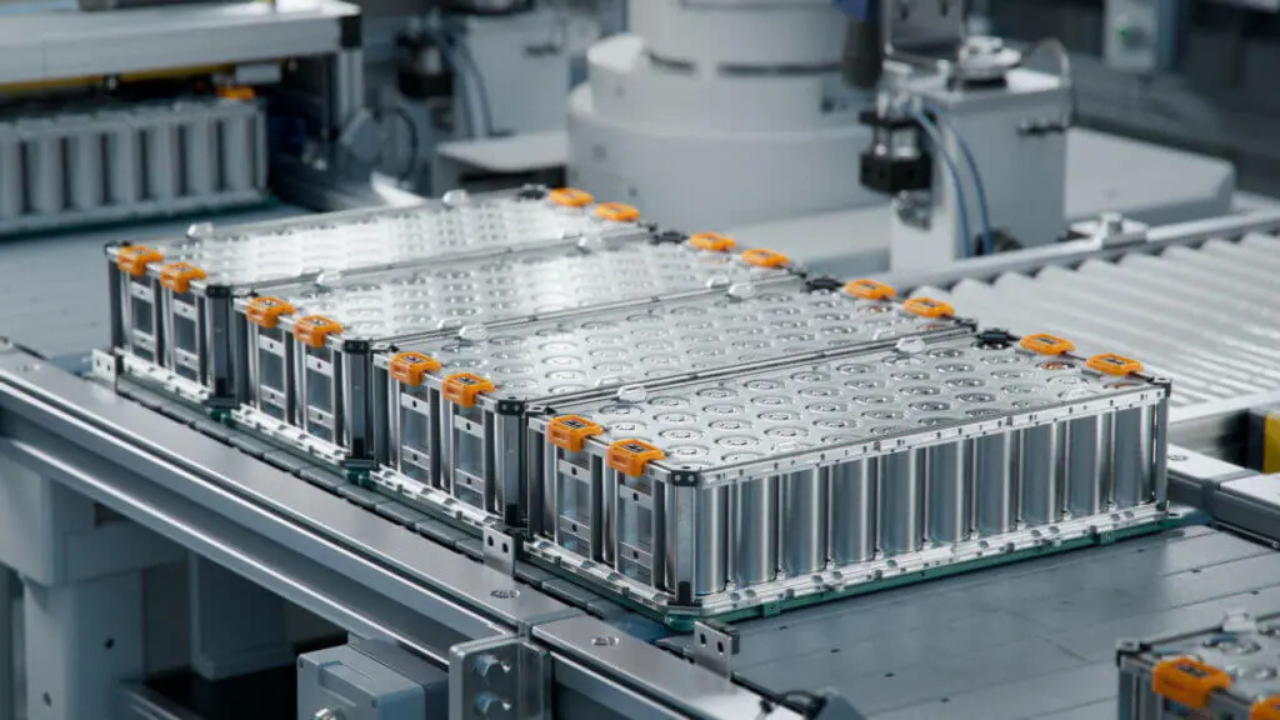
A Pune-based firm has successfully developed a ‘sodium-ion battery’ made entirely from locally sourced raw materials. The move marks a step ahead in India’s push for safer, self-reliant energy storage options.
The startup claims that the battery is non-flammable and eliminates safety risks associated with traditional lithium-ion systems. The development comes as India moves forward in reducing import dependence and strengthening the clean energy ecosystem.
Also Read: India’s ‘Voice AI’ Startups Gain Ground as Regional Language Demand Rises
Towards Safer & Locally Sourced Technology
The newly invented sodium-ion battery replaces lithium with sodium. It is an abundant and widely available material in India. This reduces reliance on imported critical minerals and helps lower production costs.
According to the firm, the battery is built to be stable at high temperatures. It does not pose a fire hazard, a key concern with lithium-ion batteries used in electric vehicles (EVs) and energy storage systems. The use of domestic raw materials also aligns with government efforts to build a local supply chain for advanced energy technologies.
Industry experts say that ‘sodium-ion batteries’ are becoming popular worldwide as an alternative for stationary storage and low-cost mobility solutions. The energy density remains lower than that of lithium-based systems, but improvements in safety and cost efficiency are driving interest.
Also Read: Karnataka Bets on Deep Tech Funding, Prepares for Next Startup Growth Phase
What does it mean for EVs, Energy Storage and India’s Clean Tech?
The development could support India’s growing demand for energy storage across sectors such as electric mobility, renewable energy integration and grid stability. Safer battery systems are seen as important for scaling EV adoption, particularly in two-wheelers and public transport.
The startup plans to focus on applications where cost, safety and durability are prioritised over high energy density. This includes backup power systems, solar storage and entry-level EV segments.
The move also reflects a broader shift within India’s clean tech sector towards innovation based on locally available resources. With policy support and rising demand, sodium-ion technology could emerge as a complementary solution alongside lithium-ion batteries in the coming years.

Samarjit Kaur is a journalist and communications professional covering technology & emerging digital trends. With a focus on clarity and context, she reports on developments shaping industries and governance. When not reporting, she chooses to plug-in and relax on her playlists and plan her next bucket-list trips!