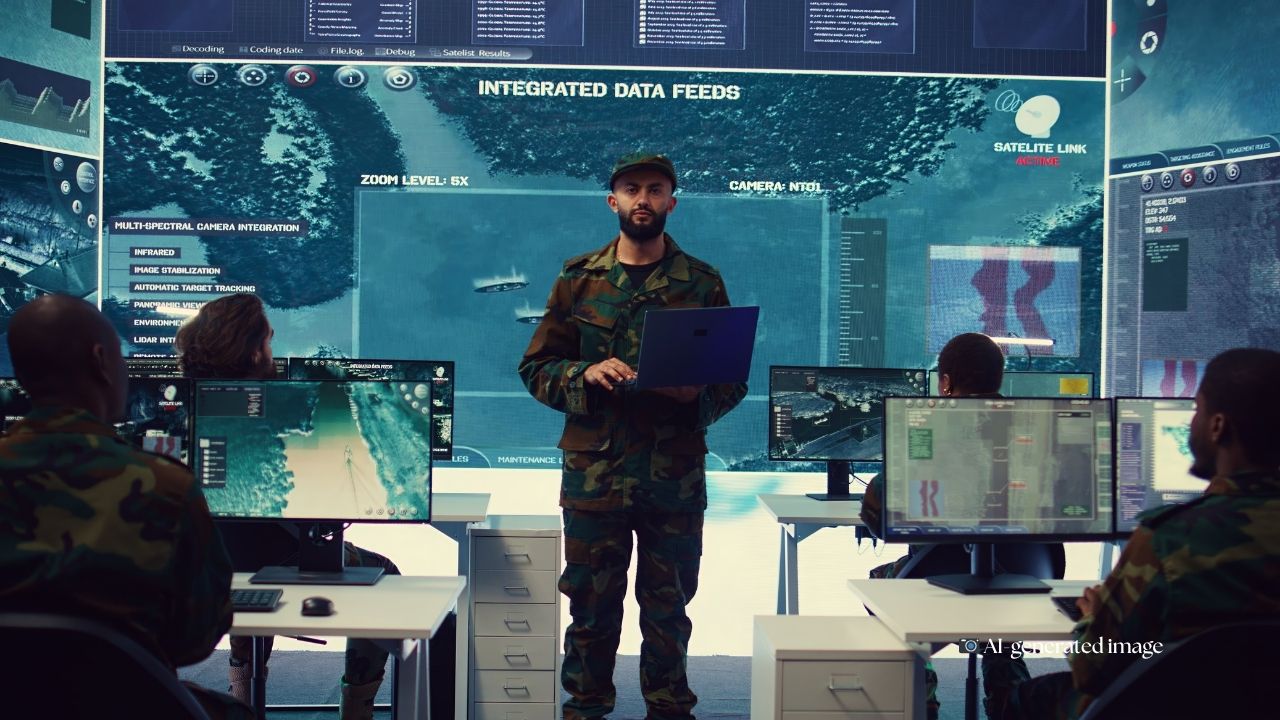
India is closely studying the evolving nature of modern warfare in West Asia and Eastern Europe. With the current ongoing situation, the country’s defence establishment is increasingly leaning towards domestically developed artificial intelligence systems for future military operations. Senior government officials said the Defence Ministry is currently holding discussions with Indian AI firms such as Sarvam AI and BharatGen. Both indigenously built AI models can be helpful to integrate into India’s existing defence infrastructure. The move comes amid a broader strategic push to reduce dependence on foreign technology in sensitive sectors.
Read More | India Eyes ₹300 Crore Defence AI Hub as Startups Hold Talks with Defence Ministry
“The idea is to have an Indian version of Palantir as soon as possible,” one senior official said, referring to the US-based defence technology company Palantir Technologies, known for its AI-powered battlefield intelligence and military analytics platforms.
Another official involved in the ongoing deliberations said the strategic urgency around developing India’s own foundational AI model is growing rapidly. “Investing in a foundational model of our own is becoming a strategic imperative, even if we are still behind the curve,” the official noted.
Recent conflicts in regions such as Iran and Ukraine have reinforced the military value of AI-driven systems. Defence forces in these theatres are believed to have used AI tools for operational planning, surveillance, intelligence assessment and real-time decision-making.
Read More | DRDO Hands Over AI-Powered ‘Prajna’ System, Boosting Internal Security of India
For New Delhi, these developments underline how AI is no longer limited to defensive applications. Officials now view the technology as a potential offensive capability as well, particularly in areas such as cyber warfare, autonomous operations and battlefield coordination.
In the United States, AI systems developed by companies like Palantir Technologies were reportedly used in military operations linked to strikes on Iran. AI-enabled systems have also increasingly been deployed in cyber attacks targeting critical digital infrastructure, highlighting the expanding role of artificial intelligence in modern conflict.
Within India’s strategic circles, there is now growing recognition that future military preparedness will depend not only on conventional weapons and manpower, but also on control over sovereign AI infrastructure and data systems.

Indrani Priyadarshini is a journalist and editorial professional specialising in technology, artificial intelligence, smart cities, green energy, and digital transformation. With over four years of experience in tech journalism and digital media, she is known for turning complex industry developments into clear, engaging, and insightful stories. Her expertise spans reporting, editorial strategy, digital publishing workflows, and in-depth coverage of emerging technologies shaping the future.