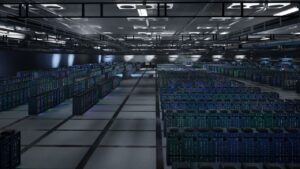
NASA has unveiled Athena, its latest and most advanced supercomputer, marking a significant upgrade in the agency’s computing infrastructure. Housed at the Modular Supercomputing Facility at NASA’s Ames Research Center in Silicon Valley, Athena is designed to support a new generation of missions and scientific investigations.
Athena delivers more computational power than any NASA system before it, surpassing both Aitken and the now-retired Pleiades systems in performance and energy efficiency. With more than 20 petaflops of peak computing capacity—a measure of the number of calculations it can perform per second—the system offers researchers the resources needed to model complex phenomena while keeping operational costs under control.
Read More | Convergence India 2026: Where India’s Next Techade Takes Shape
“Exploration has always driven NASA to the edge of what’s computationally possible,” said Kevin Murphy, NASA’s chief science data officer and head of the High-End Computing Capability portfolio. With Athena in place, NASA can better support evolving mission requirements across space, aeronautics, and scientific research.
Supercomputers are essential to NASA’s work. They allow engineers to simulate rocket launches before liftoff, help design tomorrow’s aircraft, and power the development of large-scale artificial intelligence models that can analyse vast datasets for new scientific insights. Athena is now available to NASA researchers and external partners who support NASA programs, subject to application and approval for computing time.
Read More | No Lights, No Workers: Xiaomi’s Robot Factory Redefines Manufacturing
The name Athena was chosen through an internal contest in March 2025. Staff involved with the High-End Computing Capability project selected it in honour of the Greek goddess of wisdom and warfare and her mythological connection to Artemis, NASA’s lunar exploration initiative.
Managed by NASA’s Office of the Chief Science Data Officer, the agency’s High-End Computing Capability portfolio now follows a hybrid approach. This integrates supercomputing power with access to commercial cloud platforms, giving teams the flexibility to select the optimal environment for their work—whether it’s running intensive simulations, developing AI tools, or processing large-scale datasets.

Indrani Priyadarshini is a journalist and editorial professional specialising in technology, artificial intelligence, smart cities, green energy, and digital transformation. With over four years of experience in tech journalism and digital media, she is known for turning complex industry developments into clear, engaging, and insightful stories. Her expertise spans reporting, editorial strategy, digital publishing workflows, and in-depth coverage of emerging technologies shaping the future.