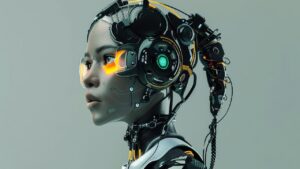
Researchers at the National Institute of Technology (NIT) Rourkela have introduced a social robot designed to interact with people in a manner that feels natural and intuitive. Priced in the range of ₹80,000 to ₹90,000, the prototype brings together AI, large language models, speech tools, gesture tracking, and facial-expression analysis to support real-time dialogue. The team notes that the robot is capable of understanding everyday speech, following spoken directions, and answering questions with ease. Unlike conventional machines that rely on rigid pre-set scripts, this system can engage in spontaneous conversation, making it well suited for homes, classrooms, hospitals, and community environments.
Research Published in International Journal
Details of the project have been published in the Computers and Electrical Engineering journal by Elsevier. The work was co-authored by Dr. Arup Nandy from the Department of Computer Science and Engineering, Dr. Asim Kumar Naskar from Electrical Engineering, and researchers Sougatamoy Biswas and Rahul Saw.
Read More | China’s ‘Humanoid Robot Army’ Video Sparks Global Alarm Over the Future of Automation
Emotion and Gesture Recognition Features
One of the robot’s standout abilities is its capacity to identify emotional cues such as happiness, neutrality, and sadness through facial-expression recognition. This helps it respond in a more understanding and empathetic manner. It can also recognise simple hand gestures, like a wave, allowing it to interact comfortably with children and elderly users.
AI-Driven Speech and Response System
The communication module uses a Raspberry Pi to process spoken input. A large language model interprets what the user says and generates an appropriate reply. For voice output, the robot relies on Google’s Text-to-Speech system, giving it a clear and natural-sounding voice.
Read More | XPENG Unveils Humanoid Robot “IRON”— and Then Proves It’s Not Human
Built for Indoor Mobility and Safety
Mounted on a wheeled base, the robot includes distance-sensing technology that helps it avoid obstacles. This makes it practical for crowded indoor areas such as school corridors, hospital wards, and office spaces. Dr. Nandy highlighted that the project contributes to the broader vision of Make in India and Atmanirbhar Bharat by strengthening India’s capabilities in home-grown robotics and AI development.

Indrani Priyadarshini is a journalist and editorial professional specialising in technology, artificial intelligence, smart cities, green energy, and digital transformation. With over four years of experience in tech journalism and digital media, she is known for turning complex industry developments into clear, engaging, and insightful stories. Her expertise spans reporting, editorial strategy, digital publishing workflows, and in-depth coverage of emerging technologies shaping the future. She has also conducted high-profile interviews and podcasts with industry leaders, bringing sharp analysis and accessible storytelling to a wide audience.