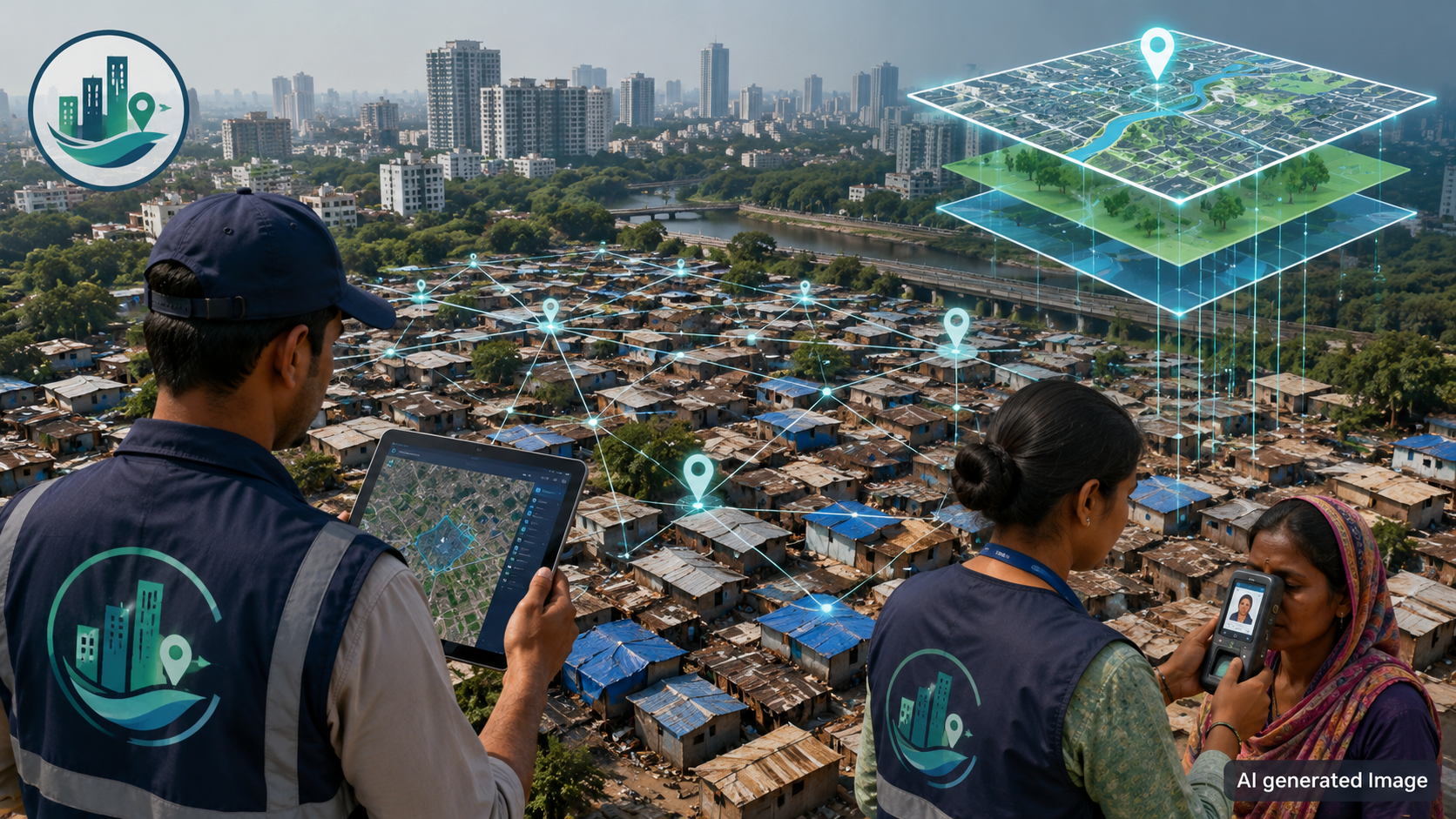
Pune and Pimpri-Chinchwad are undergoing a massive Geographic Information System (GIS) mapping and biometric survey of the slum settlements.
The authorities say the initiative is a part of an urban redevelopment and housing planning exercise. The aim is to create a verified database of slum households, improve land records and support future rehabilitation and civic infrastructure projects across the twin cities.
The survey is being carried out under the supervision of local civic bodies and urban planning agencies.
“The exercise will help identify eligible beneficiaries for housing schemes, reduce record duplication and strengthen planning for water supply, drainage, sanitation and road infrastructure in densely populated settlements.”
-said officials.
Also Read: Bandipora Pushes GIS-Based Master Plan 2026-2046 for Urban Expansion & Infrastructure Growth
GIS Mapping to Create a Verified Slum Database
The project plans to map slum clusters digitally using GIS and to collect biometric data from residents. The purpose is to establish an updated, tamper-proof database.
Officials further added that the exercise is expected to cover thousands of structures spread across notified and non-notified slum pockets in both cities.
The mapping process includes details such as the location of structures, occupancy status, access to civic amenities and demographic information. Authorities say the data will help streamline redevelopment proposals and reduce disputes over ownership and beneficiary eligibility during rehabilitation drives.
Urban development officials said the digital mapping initiative is also expected to improve coordination among civic departments responsible for sanitation, drainage networks, water distribution and waste management. The survey data may later be integrated into broader smart-city and urban infrastructure planning systems.
Also Read: Gujarat Revenue Department Turns to AI, Blockchain and GIS to Strengthen Land Governance
Focus on Rehabilitation & Urban Infrastructure Planning
Officials associated with the exercise said the biometric survey is intended to increase transparency in slum rehabilitation projects and prevent fraudulent claims during the allocation of housing benefits.
The verified records are expected to assist civic authorities in future redevelopment projects, especially in rapidly urbanising zones across Pune and Pimpri-Chinchwad.
The move comes as several Indian cities increasingly adopt GIS-based urban governance tools to improve land management, infrastructure planning and delivery of public services. Civic authorities have also indicated that the survey findings could inform future policy decisions on affordable housing and urban renewal.
The twin-city region has witnessed rapid population growth over the last decade, leading to rising pressure on civic infrastructure and informal housing clusters. Officials said accurate spatial and demographic data will be important for long-term planning and execution of redevelopment projects.

Samarjit Kaur is a journalist and communications professional covering technology & emerging digital trends. With a focus on clarity and context, she reports on developments shaping industries and governance. When not reporting, she chooses to plug-in and relax on her playlists and plan her next bucket-list trips!