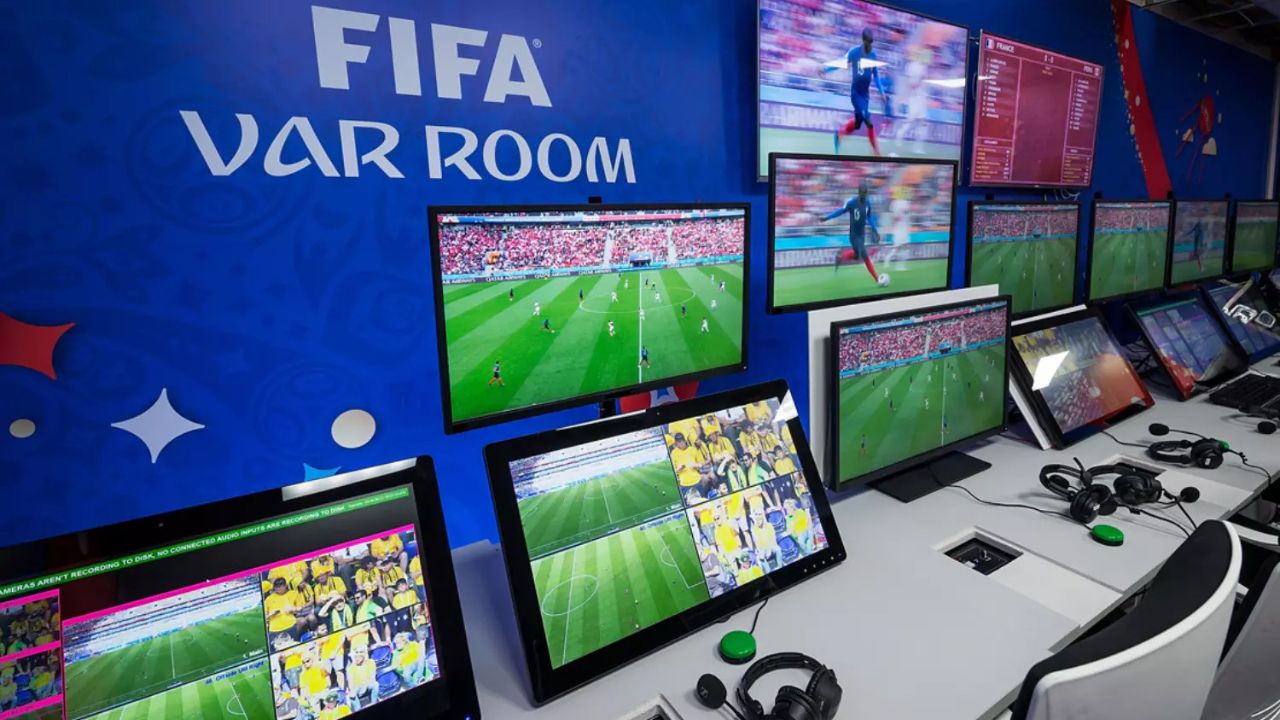
The debate around Video Assistant Referee (VAR) has once again taken centre stage after the controversial Argentina vs Egypt FIFA World Cup match. A series of reviews and delayed decisions left players, coaches and fans questioning whether technology is helping football or making it more complicated. While some argued that VAR ensured the correct decisions were made, others felt the lengthy reviews disrupted the flow of the game and took away the emotion of celebrating crucial moments.
The incident has reignited a familiar debate that has followed football since VAR was introduced. Is the technology making the sport fairer, or has it created a new source of controversy? As football increasingly relies on cameras, sensors and artificial intelligence to support referees, understanding how VAR works has become as important as understanding the rules of the game itself.
Why was VAR introduced?
Football has always been a fast-paced game where referees are expected to make split-second decisions. Before VAR, controversial incidents involving goals, penalties, offside calls or red cards often shaped the outcome of major tournaments, with no opportunity to correct obvious mistakes. To reduce clear and obvious officiating errors, FIFA and the International Football Association Board (IFAB) introduced VAR at the highest level of football. The technology was first used at the FIFA World Cup in 2018 after extensive trials in domestic leagues across Europe and other competitions.
Read More | FIFA World Cup 2026: AI, Smart Ball and 3D Technology Set to Transform the Most Awaited Game
The objective was never to replace referees but to provide them with additional video evidence during match-changing incidents.
How does VAR work?
VAR is operated by a team of match officials located in a dedicated Video Operation Room (VOR). The team includes the Video Assistant Referee, Assistant VAR officials and replay operators who monitor the match using multiple broadcast camera angles.
Read More | FIFA World Cup 2026 Streaming Chaos: Why Indian Fans Are Angry With ZEE5?
During the game, the VAR team constantly checks every significant incident without stopping play. If they identify what they believe is a ‘clear and obvious error’ or a serious missed incident, they immediately communicate with the referee through a headset.
What incidents can VAR review?
VAR is deliberately limited to four categories of match-changing decisions. It can review goals, including whether an offside offence, foul or handball occurred during the attacking phase. It can review penalty decisions, including whether a penalty should have been awarded or cancelled. It also reviews direct red card incidents involving serious foul play or violent conduct but does not intervene for second yellow cards. Finally, VAR can correct cases of mistaken identity, such as when the wrong player receives a card. Routine fouls, throw-ins, corners and free-kicks generally cannot be reviewed unless they directly lead to one of these four situations.
When does VAR stay out?
Many supporters assume VAR checks every referee decision, but that is not the case. Subjective decisions where there is no clear evidence of an error usually remain with the referee. Slight physical contact, ordinary fouls in midfield and many yellow card decisions fall outside VAR’s scope. This limited intervention is intended to preserve the referee’s authority while correcting only significant mistakes.
What is Semi-Automated Offside Technology (SAOT)?
One of football’s newest innovations is Semi-Automated Offside Technology (SAOT), which works alongside VAR to speed up offside decisions. The system combines multiple tracking cameras installed around the stadium with a sensor inside the official match ball. These technologies continuously monitor the exact positions of players and the precise moment the ball is played.
Using artificial intelligence and real-time tracking data, SAOT automatically alerts the VAR team when an attacking player is in an offside position. The VAR officials then verify the data before informing the referee, who applies the Laws of the Game and confirms the final decision. The technology significantly reduces the time needed for complex offside reviews while improving accuracy compared with traditional manual line drawing.
Who makes the final decision?
Despite common misconceptions, VAR never overrules the referee. The referee remains the only official authorised to make the final decision on the field. VAR simply provides additional evidence and recommends a review when necessary. In factual decisions, such as offside determined through SAOT, the referee generally follows the verified technology. In subjective incidents involving fouls, handballs or penalties, the referee often reviews the footage personally before announcing the final verdict.
Why is VAR so divisive?
Few technologies have transformed football as dramatically as VAR. Supporters argue that it has corrected countless mistakes that previously decided league titles, knockout matches and international tournaments. Clear offside goals are disallowed, legitimate penalties are identified and dangerous tackles are punished more consistently than before.
Critics, however, believe the system has changed the rhythm of football. Long delays can interrupt momentum, celebrations are often cut short while decisions are reviewed and many judgments still depend on subjective interpretation. Even after multiple replays, debates frequently continue long after the final whistle. The Argentina vs Egypt controversy is the latest example of this divide. While technology provided officials with more information than ever before, it also became the centre of discussion, overshadowing much of the football itself.
Has VAR improved football?
From an officiating perspective, VAR has reduced clear errors in some of the game’s biggest moments and has brought greater consistency to major competitions. FIFA continues to refine the system by introducing innovations such as Semi-Automated Offside Technology and improving communication between match officials. At the same time, football remains a sport driven by emotion, spontaneity and human judgment. Every controversial review renews the debate over whether technology should have such a prominent role in deciding matches.
Read More | Netflix, Disney and YouTube Eye FIFA World Cup US Rights in Deal That Could Top $2 Billion
As football evolves, VAR is likely to remain an essential part of the modern game. The challenge for FIFA is not simply making decisions more accurate but ensuring that technology supports the sport without taking away the excitement that makes football the world’s most popular game.

Indrani Priyadarshini is a journalist and editorial professional specialising in technology, artificial intelligence, smart cities, green energy, and digital transformation. With over four years of experience in tech journalism and digital media, she is known for turning complex industry developments into clear, engaging, and insightful stories. Her expertise spans reporting, editorial strategy, digital publishing workflows, and in-depth coverage of emerging technologies shaping the future.