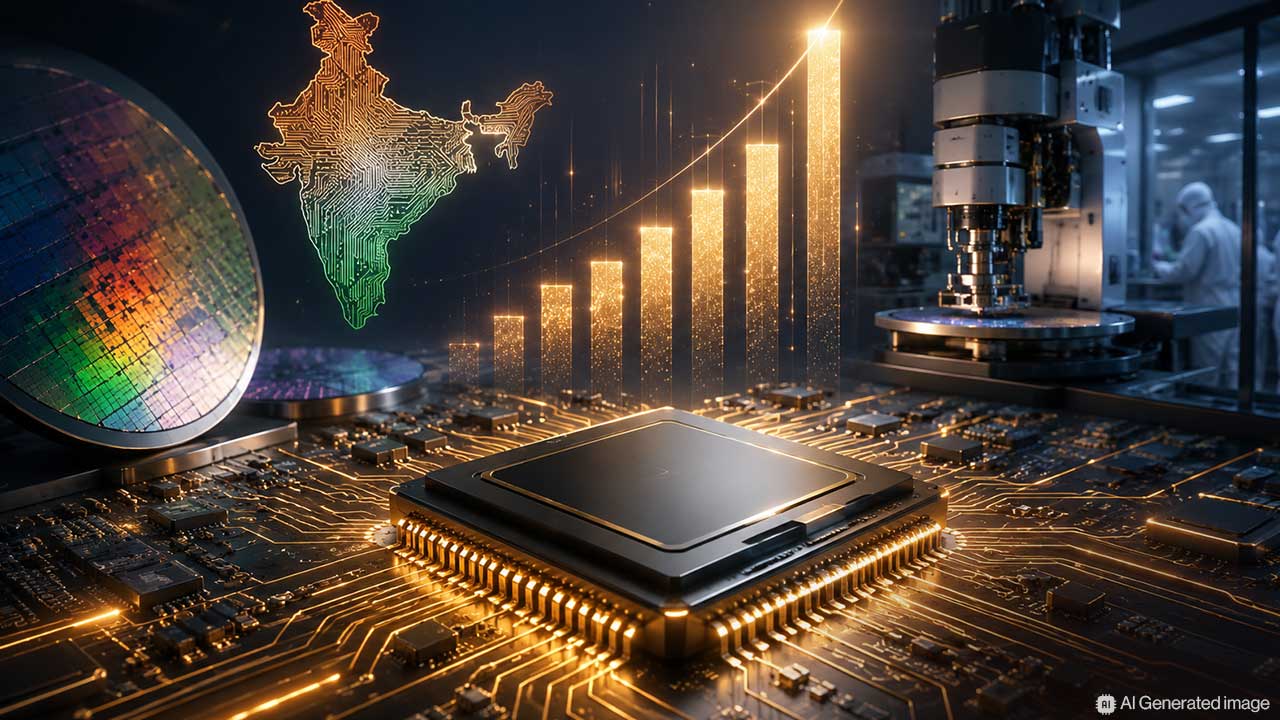
India is preparing to broaden its semiconductor push under Semicon 2.0, with the government planning to extend financial support well beyond chip fabrication plants.
The next phase of the India Semiconductor Mission (ISM) is expected to cover more parts of the semiconductor value chain, including chip equipment, materials, design, research and supply networks, as New Delhi seeks to build a more complete domestic industry.
The move follows strong investor interest in India’s semiconductor programme and comes as countries worldwide compete to secure chip production and reduce dependence on overseas supply chains.
Also Read: India Plans ₹7,100 Crore Semiconductor Incentives in FY27 to Accelerate Chip Manufacturing Growth
Incentives Likely to Cover the Entire Semiconductor Value Chain
Unlike the first phase, that was focused on attracting fabrication and packaging facilities, Semicon 2.0 is expected to expand incentives for companies involved in manufacturing semiconductor equipment, speciality materials and other critical inputs required to support chip production.
Officials are also looking to strengthen support for chip design, intellectual property development, and research capabilities.
Industry executives have long argued that India needs a complete semiconductor ecosystem rather than isolated fabrication plants. Supporting upstream suppliers could help reduce dependence on imports while making future investments more competitive.
Also Read: ISM 2.0: India Advances Semiconductor Ambitions with Qualcomm 2nm Chip Unveil
Higher Budget = Bigger Ambitions
The extended programme is expected to carry an investment of ₹1.25 lakh crore (approximately), significantly higher than the ₹76,000 crore allocated under the first phase of the India Semiconductor Mission.
The proposal has already received clearance from the Expenditure Finance Committee (EFC) and is awaiting approval from the Union Cabinet before formal rollout.
The increased funding reflects the government’s intention to accelerate semiconductor manufacturing as demand for chips continues to grow across artificial intelligence (AI), electric vehicles (EVs), consumer electronics, telecom equipment, automotive systems and defence technologies.
India Aims to Strengthen Its Position in Global Chip Manufacturing
The broader policy is also expected to encourage domestic innovation, attract fresh investments and help Indian firms move beyond assembly into higher-value semiconductor activities. By backing design, manufacturing inputs and supply chains alongside fabrication, policymakers hope to make India a more resilient destination for global semiconductor companies.
As competition for semiconductor investments intensifies worldwide, Semicon 2.0 is likely to become one of India’s most significant industrial policy initiatives to strengthen long-term technology manufacturing.
Semicon 2.0 signals that India’s chip strategy is shifting from building individual factories to developing an integrated semiconductor ecosystem. The pace of Cabinet approval and the final incentive structure will be closely watched by global investors, equipment makers and chip designers looking at India as their next manufacturing base.

Samarjit Kaur is a journalist and communications professional covering technology & emerging digital trends. With a focus on clarity and context, she reports on developments shaping industries and governance. When not reporting, she chooses to plug-in and relax on her playlists and plan her next bucket-list trips!