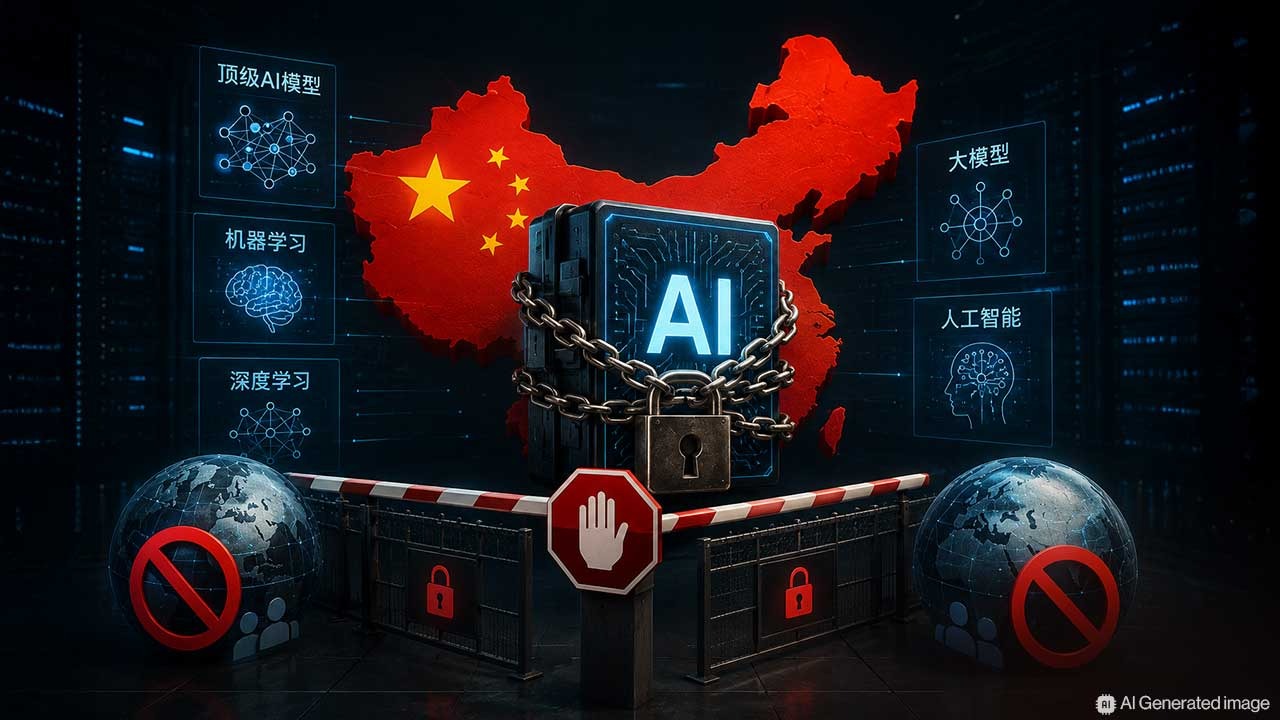
Chinese authorities are reportedly considering restrictions on overseas access to the country’s most advanced AI models. The discussions involve some of China’s biggest AI players, including Alibaba, ByteDance and AI startup Z.ai, according to people familiar with the matter. If implemented, the move would mark a significant shift in China’s AI strategy and could reshape the global AI landscape.
China Considers Tighter Controls on Frontier AI
Over the past month, officials from China’s Ministry of Commerce have met with executives from leading AI companies to discuss possible safeguards around advanced AI technologies. The talks also included representatives from the National Development and Reform Commission (NDRC).
Read More | China Cuts Thousands of University Courses as AI Reshapes Education Priorities
No final decision has been made, and neither the government agencies nor the companies involved have publicly commented on the discussions. However, officials are reportedly evaluating several options, including restricting public release of the most advanced AI models, allowing certain frontier models to be used only within China and applying the rules primarily to future AI models rather than existing ones.
A Major Shift From China’s Open AI Strategy
Chinese AI companies have gained international attention by releasing many of their models as open- source systems. Unlike fully closed AI models, open-weight models allow developers to download the model weights and run or fine-tune the systems on their own hardware.
This approach helped Chinese AI firms expand rapidly across global markets. Lower costs and increasingly capable models have made offerings such as Alibaba’s Qwen, ByteDance’s Doubao and Z. ai’s GLM series attractive alternatives to Western AI systems. Restricting access to future frontier models would represent a sharp departure from that strategy.
National Security Appears to Be Driving the Discussions
The reported talks suggest that Beijing is increasingly viewing advanced AI as a strategic national asset rather than just a commercial technology. Officials also discussed strengthening penalties for AI technology leaks and theft, including the possibility of treating such cases as offences under China’s national security laws. Additional measures could include tighter scrutiny of foreign investment in domestic AI startups.
Read More | China Puts 100 Humanoid Robots in Real Homes: Can They Finally Handle Household Chores?
The discussions mirror a broader global trend in which governments are placing greater controls on cutting-edge AI technologies because of their military, economic and strategic importance.
What Could It Mean for the Global AI Industry?
China’s open AI ecosystem has played an important role in accelerating worldwide AI adoption. Businesses, developers and researchers across the world have benefited from affordable, high-performance Chinese models.
If overseas access to future models is restricted:
- Companies outside China could lose access to some of the country’s most advanced AI systems.
- AI development costs may increase for businesses that rely on low-cost Chinese models.
- The global AI market could become more fragmented as countries tighten control over strategic technologies.
At the same time, limiting access could reduce one of the competitive advantages that helped Chinese AI companies gain international recognition. For now, the discussions remain at an early stage, and it is still unclear whether any restrictions will be introduced or how they would be enforced.

Indrani Priyadarshini is a journalist and editorial professional specialising in technology, artificial intelligence, smart cities, green energy, and digital transformation. With over four years of experience in tech journalism and digital media, she is known for turning complex industry developments into clear, engaging, and insightful stories. Her expertise spans reporting, editorial strategy, digital publishing workflows, and in-depth coverage of emerging technologies shaping the future. She has also conducted high-profile interviews and podcasts with industry leaders, bringing sharp analysis and accessible storytelling to a wide audience.