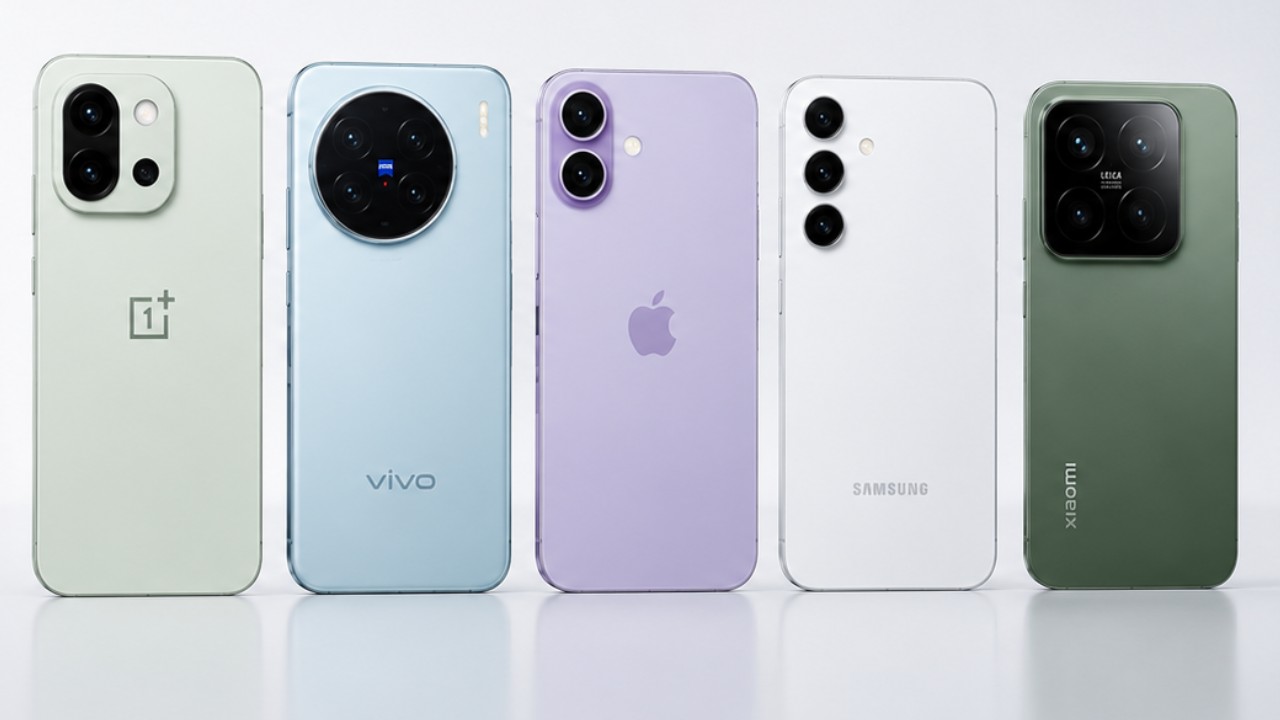
Compact flagship smartphones have spent the better part of a decade playing second fiddle to their larger siblings.
The reasoning was simple: a smaller chassis left no room for a battery big enough to last a full day, so buyers who wanted genuine flagship performance were pushed towards 6.7-inch handsets almost by default.
That equation has now changed.
A new generation of silicon-carbon battery cells has enabled manufacturers to pack significantly more energy into the same physical space, and five phones launched through 2026 show how far the compact segment has come while also revealing where the trade-offs still lie.
Also Read: OpenAI’s AI Phone Can Wait—Meet the World’s First Agentic Smartphone StepX Neo
Silicon-Carbon Batteries Have Changed the Rules
The core breakthrough behind this year’s compact flagships is battery chemistry, not battery size.
Silicon-carbon cells pack more energy density into a smaller footprint than older lithium-ion designs, which is how the Xiaomi 17 manages to fit a 6,330 mAh battery into a 6.3-inch body and how the Vivo X300 FE carries a 6,500 mAh cell while weighing under 192 grams.
That is a meaningful jump from what compact phones offered even two years ago.
The catch is thermal management. A smaller chassis leaves less room for cooling hardware, thinner vapour chambers, and tighter thermal headroom overall. That means even with larger batteries, some of these phones still struggle to maintain peak performance during long gaming sessions. This pattern becomes clear when you look at each phone individually.
Also Read: What’s Really Inside Your Smartphone? The Technology Behind Today’s Most Powerful Device
OnePlus 13s (Rs 54,999): The Value and Stability Pick

The OnePlus 13s is the most affordable phone in this group by a wide margin, and it backs that up with the strongest thermal stability on test.
Under sustained load, it retains 86 per cent of its peak performance. This is the best result among all five phones and runs BGMI at a steady 120 FPS throughout the session, with the minimum frame rate never dropping below 105 FPS and temperatures remaining around 37°C.
Battery life is equally strong: a PCMark drain test recorded roughly 22 hours of use, ahead of the Galaxy S26, and 80W wired charging takes the phone from empty to full in under an hour.
Display testing using a SpectraCal C6 colourimeter returned an average deltaE of 1.3 with 99.3 per cent sRGB coverage, indicating accurate colour reproduction, though a slight blue tint appears at higher brightness levels. The main compromise is the camera setup: there’s no ultrawide lens, just a 50MP main sensor paired with a 50MP 2x telephoto, which will disappoint anyone who regularly shoots wide landscapes or group photos.
Vivo X300 FE (Rs 86,999): Best Battery & Display

The X300 FE is a harder sell on price, but among the easiest to recommend once you use it.
It is the one delivering the best battery life of any phone listed here: 23 hours and 54 minutes in PCMark testing, thanks to its 6,500 mAh cell, the largest in this comparison. That endurance does come with a thermal cost.
Under sustained load, CPU throttling testing showed it retained only 61 per cent of peak performance and the aluminium frame warmed up noticeably during long gaming sessions.
Where it clearly leads is colour accuracy. Testing recorded an average deltaE of 0.9, comfortably below the 1.0 threshold at which colour deviation becomes visible to the human eye, with a white point close to the industry-standard D65.
The camera system: a 50MP main sensor and a 50MP periscope telephoto produce reliably good stills, though anything beyond 3x optical zoom shows aggressive processing and softened detail.
The 8MP ultrawide is the weakest of the three lenses.
Apple iPhone 17 (Rs 82,900): The Ecosystem Choice

Apple’s compact flagship brings a 120Hz LTPO display, an upgraded 48MP ultrawide with autofocus, and IP68 water resistance, at a price roughly Rs 3,000 higher than its predecessor, offset by a jump to 256GB of base storage.
Without a vapour chamber, the back does warm up under extended gaming, though day-to-day performance stays smooth.
Despite having the smallest battery on this list at 3,692 mAh, the iPhone 17 returned around 22 hours in video drain testing, matching the OnePlus 13s. It can be a result attributed to Apple’s chip-level efficiency rather than raw capacity.
Display testing showed a deltaE of 1.0 and 99 per cent sRGB coverage. There’s no telephoto lens here; the 48MP main and ultrawide cameras are strong, and the 18MP selfie camera with autofocus is the best front-facing setup in this comparison, but 2x zoom is computational rather than optical.
Samsung Galaxy S26 (Rs 87,999): Lightest, But Not for Gamers

At 167 grams & 7.2mm thick, the Galaxy S26 is the lightest and slimmest phone here.
Its AnTuTu score of 3,100,000 is the highest recorded in this group. But that performance doesn’t hold up under sustained pressure; throttle stability sits at just 57 per cent; battery life is the weakest on test at 16 hours 30 minutes and display accuracy trails the rest with a deltaE of 2.2. In gaming, performance drops noticeably after roughly 30 minutes as thermal throttling kicks in.
Wired charging at 25W is also the slowest of the group, taking over an hour for a full charge. The S26 suits buyers prioritising Samsung’s software support and slim design over sustained performance.
Xiaomi 17 (Rs 89,999): Best Cameras, Fastest Charging

The priciest phone on this list makes a strong case with its Leica-tuned triple camera system, producing some of the best stills in this comparison with wide dynamic range and natural skin tones.
Its 2.6x optical telephoto handles macro shots well. Charging is a highlight, too- 100W wired power took the phone from 1 to 100 per cent in 48 minutes during testing.
Final Analysis:

India’s compact flagship smartphone segment is no longer a niche. With silicon-carbon batteries closing the endurance gap, the real differentiator going forward will be thermal engineering and how well the brands manage heat in smaller frames without sacrificing performance.
Expect this to be the next big battleground as more manufacturers chase the “flagship power, pocket-friendly size” formula through the rest of 2026.

Samarjit Kaur is a journalist and communications professional covering technology & emerging digital trends. With a focus on clarity and context, she reports on developments shaping industries and governance. When not reporting, she chooses to plug-in and relax on her playlists and plan her next bucket-list trips!