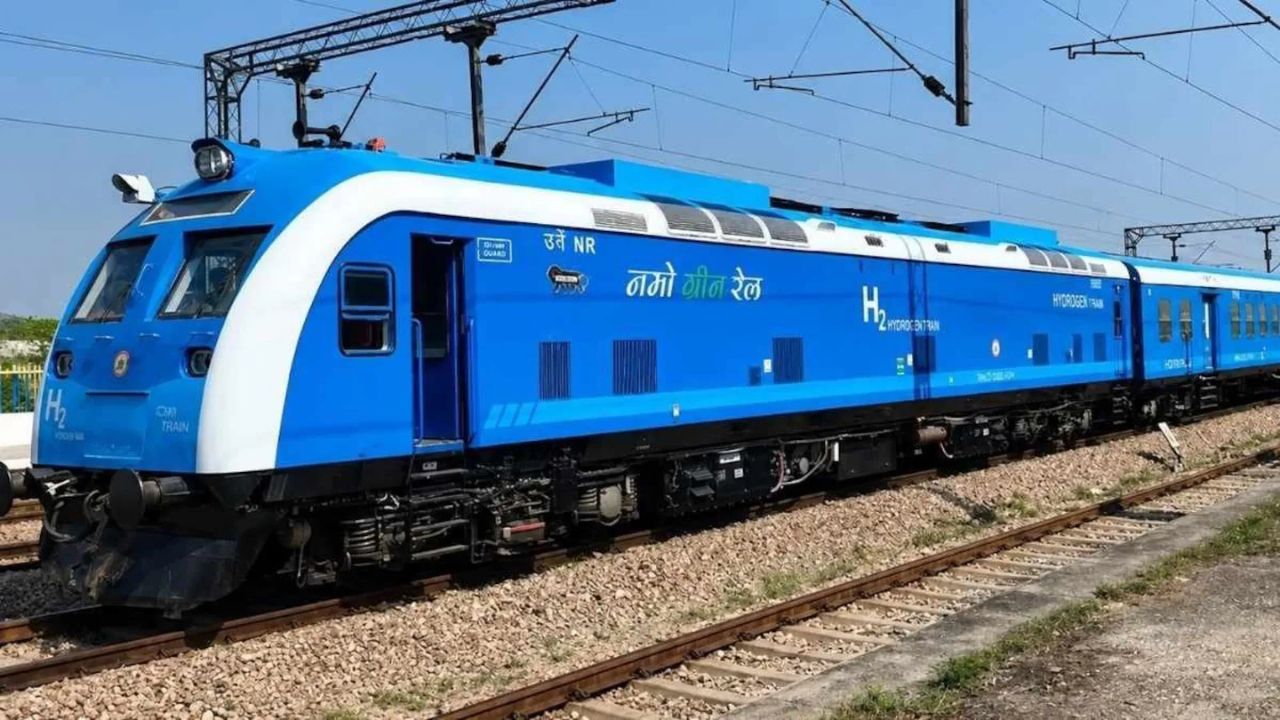
India is preparing to launch its first hydrogen-powered train, marking a major milestone in the country’s transition towards cleaner and more sustainable rail transport. Developed by the Integral Coach Factory (ICF) in Chennai, the indigenous train is expected to begin operations on the Jind–Sonipat route in Haryana after completing multiple safety and performance trials approved by the Railway Board.
Unlike conventional diesel-powered trains, the new hydrogen train uses fuel cell technology to generate electricity, producing only water vapour and heat as direct emissions. The project is part of Indian Railways’ broader plan to reduce diesel consumption on non-electrified routes while supporting India’s clean energy ambitions.
Read More | India Unveils World’s First Nuclear Hydrogen Facility: Why the Cu-Cl Cycle Is a Breakthrough
Here are five important things you should know about India’s first hydrogen-powered train:
- It will run on the Jind–Sonipat route in Haryana
The country’s first hydrogen train will operate on the 89-km Jind–Sonipat section under Northern Railway. The service will stop at 12 stations along the route, connecting passengers across Haryana while serving as the pilot project for hydrogen-powered rail operations in India. If successful, similar trains could be introduced on other non-electrified routes across the country. - Hydrogen fuel cells replace the diesel engine
The biggest technological change lies beneath the train. Instead of a diesel engine, the train uses a 1,200 kW hydrogen fuel cell propulsion system in each of its two driving power cars, generating a combined output of 2,400 kW. The fuel cells convert hydrogen into electricity, while a battery bank supports peak power requirements. The only direct by-product of this process is water vapour, making it significantly cleaner than diesel-powered locomotives. - Passengers will travel in a 10-coach train with modern performance
The hydrogen train comprises two driving power cars and eight passenger coaches. It has been designed to provide a travel experience similar to conventional passenger services while introducing cleaner propulsion technology. During testing, the train demonstrated reliable performance and is designed to operate at a maximum speed of 75 kmph on the Jind–Sonipat section. It is also being described as one of the world’s longest and most powerful hydrogen trainsets built on the broad gauge platform. - Ticket prices are expected to remain affordable
Although the train uses advanced hydrogen fuel cell technology, passengers are unlikely to pay premium fares. Indian Railways is expected to keep ticket prices broadly in line with existing passenger services on the route, ensuring that cleaner transportation remains accessible to everyday commuters. - It represents India’s push towards greener railways
The hydrogen train is more than just a new locomotive; it signals the beginning of a cleaner future for Indian Railways. Hydrogen-powered trains are especially useful on routes where full electrification is not yet feasible. With this launch, India joins a select group of countries, including Germany, Japan, China and the United States, that are exploring hydrogen-powered rail technology to reduce emissions and dependence on fossil fuels.
The launch of India’s first hydrogen-powered train is an important step in modernising the country’s railway network while reducing its environmental impact. If the pilot project performs as expected, hydrogen-powered trains could become a practical alternative to diesel locomotives on non-electrified routes, helping Indian Railways move closer to its long-term sustainability goals.

Indrani Priyadarshini is a journalist and editorial professional specialising in technology, artificial intelligence, smart cities, green energy, and digital transformation. With over four years of experience in tech journalism and digital media, she is known for turning complex industry developments into clear, engaging, and insightful stories. Her expertise spans reporting, editorial strategy, digital publishing workflows, and in-depth coverage of emerging technologies shaping the future.