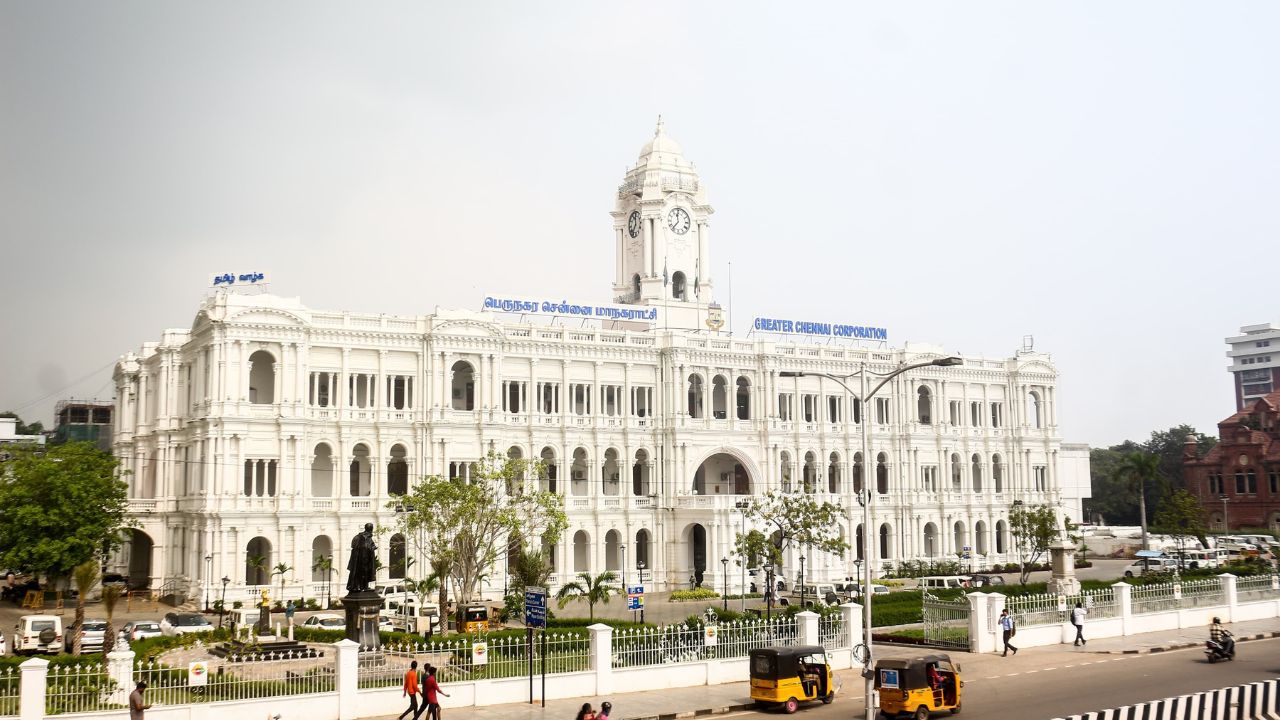
Chennai is set to receive World Bank support for a new round of urban infrastructure projects as the Greater Chennai Corporation (GCC) grapples with a mounting debt burden of around ₹3,500 crore, limiting its ability to independently finance large-scale civic developments.
A delegation from the World Bank recently met GCC Commissioner G. S. Sameeran and agreed to support several projects aimed at improving the city’s resilience, sustainability and public infrastructure. The proposed initiatives include integrated flood and emergency rescue management systems, cool roof solutions to tackle rising urban temperatures, electric vehicle (EV) charging stations at strategic locations, and rooftop solar power installations across GCC administrative offices and corporation schools.
Read More | Chennai Prepares to Unveil Fintech Tower, A Major Step in Building a Global Fintech Hub
The visiting delegation included the World Bank’s Principal Industry Specialist Ommid Saberi, Global Operations Lead Nguyen Nhan and Green Building Expert Autif Mohammed Sayed. Alongside infrastructure funding, the team also discussed ways to strengthen the corporation’s finances by helping GCC generate more revenue from its existing assets. The proposal involves optimising the use of corporation-owned land and public facilities to unlock additional civic income.
According to A. Gnanaselvam, a World Bank consultant coordinating special projects with GCC, the bank has also proposed developing more pedestrian plazas across Chennai to encourage safer and more walkable public spaces. The Tamil Nadu government continues to prioritise scheme-based urban projects backed by international funding agencies, despite the longer planning and execution timelines such projects typically require.
Read More | Why Airtel’s Landing of the SEA-ME-WE-6 Cable in Chennai is Key to Boosting India’s Global Connectivity?
Separately, the GCC Commissioner chaired a review meeting to accelerate the preparation of projects under the Urban Challenge Fund. Officials discussed a wide range of proposals, including the restoration and rejuvenation of lakes, ponds and other water bodies, along with blue-green infrastructure projects focused on expanding parks and increasing the city’s green cover. The plans also include neighbourhood redevelopment in Tondiarpet-Washermenpet-Royapuram, Adyar-Besant Nagar, T. Nagar-Teynampet and Royapettah-Triplicane. Other proposals cover pedestrian-friendly infrastructure such as improved footpaths and roads, measures to ease traffic congestion, and beachfront development along Besant Nagar, Thiruvanmiyur and Palavakkam. The Commissioner has directed officials to prepare Detailed Project Reports (DPRs) for these projects, marking the next step towards securing funding and moving the proposed developments into the

Indrani Priyadarshini is a journalist and editorial professional specialising in technology, artificial intelligence, smart cities, green energy, and digital transformation. With over four years of experience in tech journalism and digital media, she is known for turning complex industry developments into clear, engaging, and insightful stories. Her expertise spans reporting, editorial strategy, digital publishing workflows, and in-depth coverage of emerging technologies shaping the future.