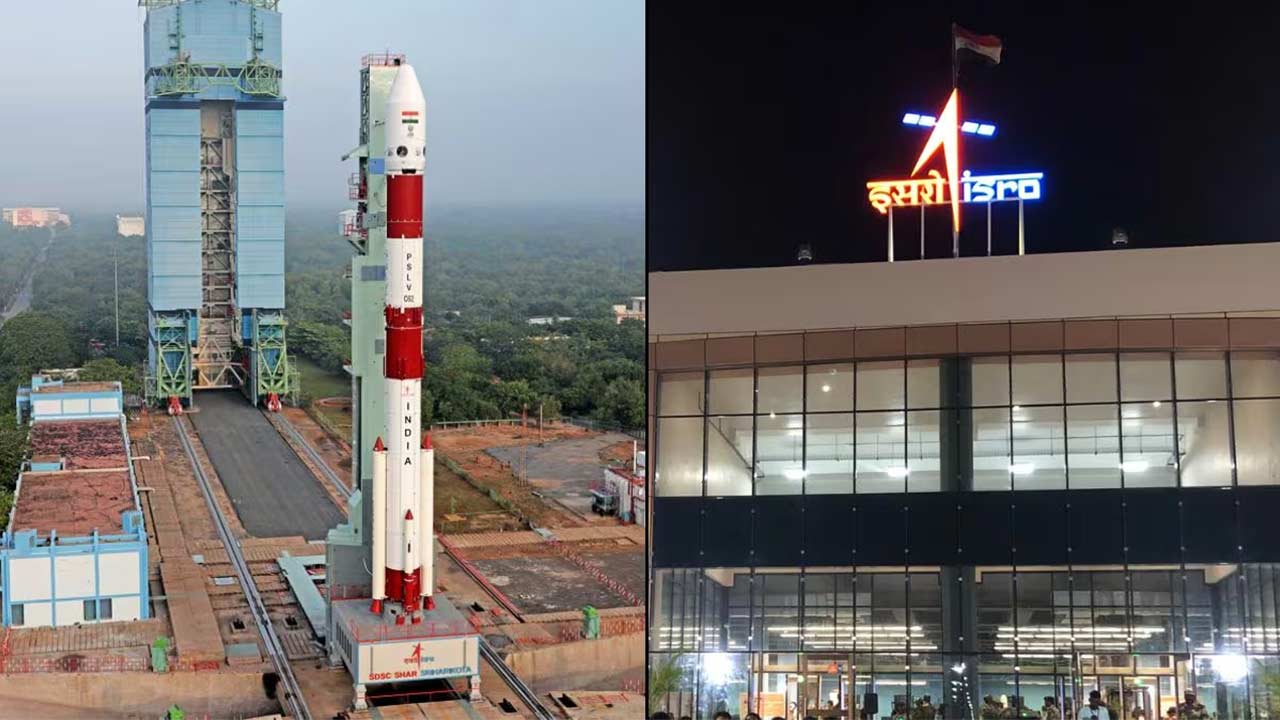
India’s space programme is heading for a major shift, with the Indian Space Research Organisation (ISRO) preparing to step away from routine rocket manufacturing gradually.
The organisation plans to hand a larger share of production to private companies and public sector undertakings (PSUs), according to a report by India Today.
The change will allow ISRO to focus more heavily on research and development, advanced space technologies, scientific missions and infrastructure, as India seeks to expand its space economy from around $8 billion currently to $44 billion by 2033.
Also Read: Indian Spacetech Funding Hits Record $871 Million as Investor Confidence Gains Momentum
PSLV and LVM3 Production May Move to Private Industry
“ISRO would eventually stop manufacturing launch vehicles, with production shifting to industry. The first major step has already been taken with the Small Satellite Launch Vehicle (SSLV). Its technology and production rights were transferred to Hindustan Aeronautics Limited (HAL) after a bidding process.”
-said Pawan Goenka, chairman of the Indian National Space Promotion and Authorisation Centre (IN-SPACe)
The production of the Polar Satellite Launch Vehicle (PSLV) and Launch Vehicle Mark-3 (LVM3) is also expected to be transferred to private industry.
Unlike the SSLV process, PSUs will not be allowed to participate in the upcoming selection process, Goenka added.
ISRO has already transferred 120 technologies to private companies, highlighting the broader push to build domestic manufacturing capabilities beyond the space agency.
Also Read: Skyroot Aerospace Becomes India’s First Spacetech Unicorn After $60 Million Funding Round
Private Companies Set for a Bigger Role in India’s Space Economy
The government is also preparing to hand over the operation of a new launch centre to private industry. An operator is expected to be selected within the next four to five months.
Government demand, wider use of space technology across industries and expansion into international markets are expected to drive growth in India’s space economy.
The Department of Defence has already ordered 31 satellites from private companies, while ISRO is expected to manufacture another 21 satellites under the programme.
India is also moving towards an ownership-based commercial space model. Under this approach, private companies can own satellites and generate revenue from the data and services they provide.
Also Read: India’s Space Startup Ecosystem Reaches 440 as Private Sector Push Gathers Pace
What the ISRO Shift Means for India?
The transition marks a clearer division of roles: private industry takes on routine manufacturing and commercial operations, while ISRO concentrates on technologies and missions that require its research capabilities.
The real test will now be whether Indian space companies can build launch vehicles at scale, on schedule and at competitive costs. If the transition works, ISRO’s shift from manufacturer to technology and mission leader could become one of the defining changes in India’s space economy this decade.

Samarjit Kaur is a journalist and communications professional covering technology & emerging digital trends. With a focus on clarity and context, she reports on developments shaping industries and governance. When not reporting, she chooses to plug-in and relax on her playlists and plan her next bucket-list trips!