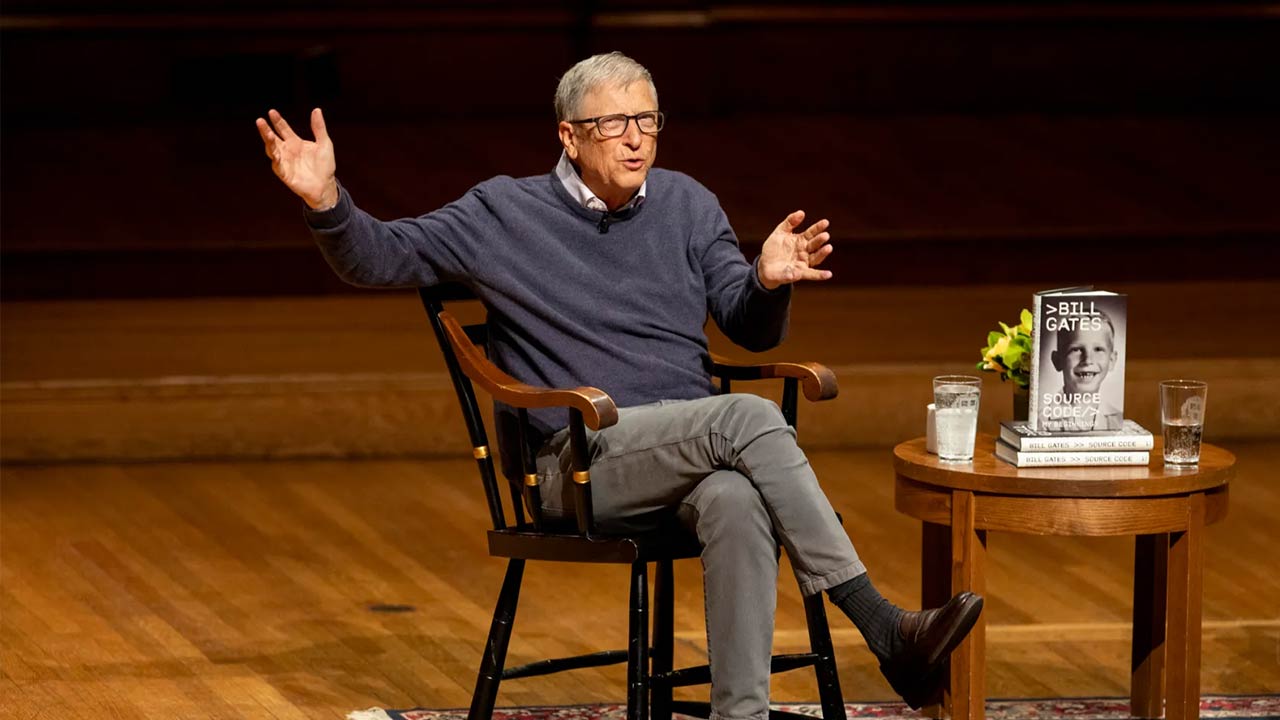
Microsoft co-founder Bill Gates has called for tighter limits and new rules on artificial intelligence (AI). He has warned that the technology could lead to widespread job losses, make cyberattacks and other harmful activities easier, and affect how children learn and form relationships.
In a nearly 6,000-word essay, Gates said the world was not adequately prepared for the speed of the AI transition and urged governments to act before its social and economic effects become harder to manage.
Also Read: Rise of AI Agents: Why Chatbots Are No Longer Enough
Gates Warns AI Could Reshape Jobs Within a Decade
Gates, in a note, said AI would affect far more than a few professions. Entry-level and mid-level jobs face the greatest pressure, with sales, customer support, software engineering and paralegal work among the areas likely to be hit early.
He further added that AI-powered robots will eventually compete with people in physical work, including construction and hospitality.
He highlighted that the problem was particularly serious for young people entering a workforce with fewer entry-level openings. At the same time, many of the new jobs created by AI will require years of training.
Gates has not called for stopping AI altogether. He said he would support a credible global plan to slow its development, but acknowledged that economic and geopolitical pressures were pushing countries and companies to move ahead quickly.
Also Read: AI Agents Begin Hiring Humans on New Digital Marketplace
AI Risks Extend from Cybercrime to Children
Gates warned that AI could lower the barrier for criminals to commit fraud, create deepfakes, spread disinformation and carry out cyberattacks. Hospitals, financial institutions, power systems and other critical infrastructure could face greater risks.
He also raised the possibility of AI being used to support biological attacks and warned that increasingly capable systems could eventually act in ways their creators did not intend.
He further highlighted the impact of AI companions on children and human relationships. Always-available systems that respond in certain ways that users prefer are addictive. Excessive reliance on AI for answers may weaken critical thinking & learning.
Also Read: NVIDIA Unveils 24/7 AI Agents for Telecom Networks as Industry Pushes Towards Autonomous Operations
Gates Proposes ‘Human Reserved’ Jobs and AI Tax
Gates wants governments to create a domestic and international framework for managing AI, including stronger cooperation between major powers. He also proposed designating some work as “Human Reserved”, keeping certain roles for people even where machines could technically perform them.
He further backed taxes on AI systems & robots, arguing that such revenue could fund worker retraining and social safety nets while reducing the incentive to replace people with machines. The tax, he said, should not penalise beneficial uses of AI in areas such as healthcare and education.
Gates’ proposals put the focus on a question that businesses and governments will increasingly have to answer: not whether AI will spread, but how quickly societies can adapt without leaving workers and public institutions behind.

Samarjit Kaur is a journalist and communications professional covering technology & emerging digital trends. With a focus on clarity and context, she reports on developments shaping industries and governance. When not reporting, she chooses to plug-in and relax on her playlists and plan her next bucket-list trips!