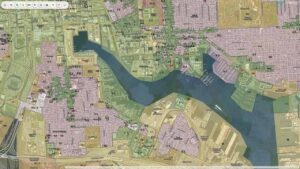
Nagpur is ready to receive a GIS-based infrastructure mapping system. The government plans to address the long-standing issue of repeated road digging across the city.
The initiative, led by local authorities, aims to streamline coordination among civic agencies and utility providers, thus reducing disruptions and ensuring smoother urban planning.
“The move will help create a unified digital record of underground utilities, enabling more effective public works and road maintenance.”
-said officials
Also Read: Kochi Corporation Improves GIS Mapping to Boost Property Tax Revenue & Urban Governance
GIS Mapping to Integrate Civic and Utility Data
The proposed system will use Geographic Information System (GIS) technology to map underground infrastructure, including water pipelines, sewage lines, power cables and telecom networks.
At present, multiple agencies operate in silos, often leading to newly constructed roads being dug up repeatedly for different projects.
By creating a centralised digital platform, authorities plan to ensure that all departments have access to updated data before undertaking any excavation work. This is expected to reduce duplication, minimise damage to existing infrastructure and bring accountability to project execution.
“The system will support long-term urban planning, providing clarity on existing assets and future requirements. Inclusion of data will further support faster approvals and facilitate coordination between departments.”
-quoted officials
Also Read: Pune Civic Body to Explore GIS Mapping to Target Revenue Growth
Focus on Reducing Urban Disruptions and Costs
Repeated road digging has become a challenge in Nagpur, leading to traffic congestion, public inconvenience and increased maintenance costs. The GIS-based approach is likely to address these concerns by enabling planned interventions rather than reactive digging.
Authorities view the initiative as helping monitor ongoing projects and track compliance by contractors and service providers. With real-time data access, departments can avoid overlaps and ensure infrastructure upgrades are carried out in a phased, coordinated manner.
The primary objective of the authorities is to align with broader smart city goals. To improve service delivery and infrastructure management, Nagpur’s data-driven governance is undergoing a transition.
If implemented effectively, the system would serve as a model for other cities that face similar challenges.

Samarjit Kaur is a journalist and communications professional covering technology & emerging digital trends. With a focus on clarity and context, she reports on developments shaping industries and governance. When not reporting, she chooses to plug-in and relax on her playlists and plan her next bucket-list trips!