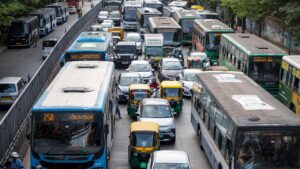
India’s urban mobility push is facing serious governance and coordination challenges, according to the Comptroller and Auditor General (CAG), which said weak institutional mechanisms and fragmented planning continue to slow transport reforms across cities. The observation comes at a time when the government is pushing investments in metro rail, public transport integration, smart mobility and sustainable urban infrastructure.
The audit body noted that poor coordination among civic agencies, transport departments and urban local bodies has affected the execution, monitoring and long-term planning of mobility projects.
It also pointed to delays in decision-making, a lack of accountability, and gaps in data-driven governance as key concerns for commuter-centric transport systems.
Also Read: No FASTag on Windscreen? NHAI May Blacklist Your Vehicle — Here’s Why
Barrier to Modern Transport Planning: Governance Gaps
“Urban mobility systems in many Indian cities run without a uniform governance structure. This leads to duplication of responsibilities & weak implementation of transport policies.”
-said the CAG
The report highlighted that agencies managing roads, buses, metro systems and traffic often work independently, reducing efficiency and slowing infrastructure delivery.
The audit review also raised concerns about inadequate integration across modes of transport, which affects last-mile connectivity and increases commuters’ dependence on private vehicles. It said several cities still lack comprehensive mobility plans aligned with future population growth and traffic demand.
The findings come amid rising focus on sustainable mobility, electric vehicles, transit-oriented development and digital transport systems under India’s urban development programmes.
Also Read: Vehicle-Based Wireless Communication: TRAI Begins Review of Spectrum Pricing in India
Push for Better Coordination and Accountability
The CAG stressed the need for stronger institutional frameworks, better inter-agency coordination and clearer accountability mechanisms to improve urban mobility governance. It recommended integrated planning models and improved use of technology and transport data for policy execution and traffic management.
The report also underlined the importance of financial planning and timely project execution to avoid cost overruns and delays in public transport expansion projects.
Urban mobility has become a critical policy area as Indian cities face increasing congestion, pollution and pressure on public infrastructure. The government has been investing in metro rail expansion, electric buses, smart city projects and multimodal transport systems to improve urban commuting and reduce traffic bottlenecks.
With India’s urban population expected to grow steadily over the coming years, experts say governance reforms and integrated transport planning will remain central to achieving efficient, sustainable city mobility.

Samarjit Kaur is a journalist and communications professional covering technology & emerging digital trends. With a focus on clarity and context, she reports on developments shaping industries and governance. When not reporting, she chooses to plug-in and relax on her playlists and plan her next bucket-list trips!