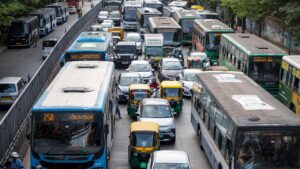
Urban air taxis could soon be part of India’s transport ecosystem, with industry body the Confederation of Indian Industry (CII) pitching the rooftops of buildings as potential take-off and landing sites.
The initiative aims to cut travel times in congested metros and integrate next-generation electric vertical take-off and landing (eVTOL) vehicles into urban transport networks.
Also Read: Skyportz to Partner with Vertiports India to Redefine Air Mobility Infrastructure
CII Strategy: Rooftop Vertiports and Phased Rollout
In a report presented by Civil Aviation Minister Ram Mohan Naidu Kinjarapu, CII outlined a phased Advanced Air Mobility (AAM) plan to introduce air taxis in India. The proposal includes using the rooftops of commercial buildings, hospitals and tech parks as vertiports for short-range flights. The plan is to start with non-passenger missions such as medical logistics and organ transport.
Strategic placement aims to connect key transport hubs and reduce reliance on ground infrastructure. CII noted that acquiring land for traditional ground-based vertiports is costly and slow.
Rooftops offer a scalable alternative, especially in megacities like Delhi, Mumbai and Bengaluru. However, current aviation regulations do not permit routine commercial vertical takeoffs and landings from building rooftops. The report calls on the Directorate General of Civil Aviation (DGCA) to establish a dedicated regulatory function to oversee safety standards and approvals for AAM operations.
Also Read: Sarla Aviation Starts Ground Testing of Air Taxi at Bengaluru Facility
Integration, Infrastructure and Next Steps
The CII plan envisions connecting key corridors, including Gurugram, Connaught Place in Delhi, and Jewar International Airport (Noida), via air taxi services.
Journeys that take hours by road could be reduced to minutes, potentially boosting urban commuting and emergency response services. To support deployment, CII recommends using financing instruments from public banks, grant agencies, and sector-focused funds to attract investment in infrastructure and aircraft fleets.
Trials would begin with unmanned drone deliveries, then move to medical missions, air ambulances and finally broader passenger services.

Samarjit Kaur is a journalist and communications professional covering technology & emerging digital trends. With a focus on clarity and context, she reports on developments shaping industries and governance. When not reporting, she chooses to plug-in and relax on her playlists and plan her next bucket-list trips!